
Unbiased headlines. Facts, not spin.
Every story is an unbiased news briefing written from 110+ sources across the spectrum — sources linked so you can verify it yourself.
 tech
Major Story (7/10)
July 27, 2026 at 04:07 PM
tech
Major Story (7/10)
July 27, 2026 at 04:07 PM
Nvidia Puts Billions Into Ilya Sutskever's Safe Superintelligence, a Startup With No Product
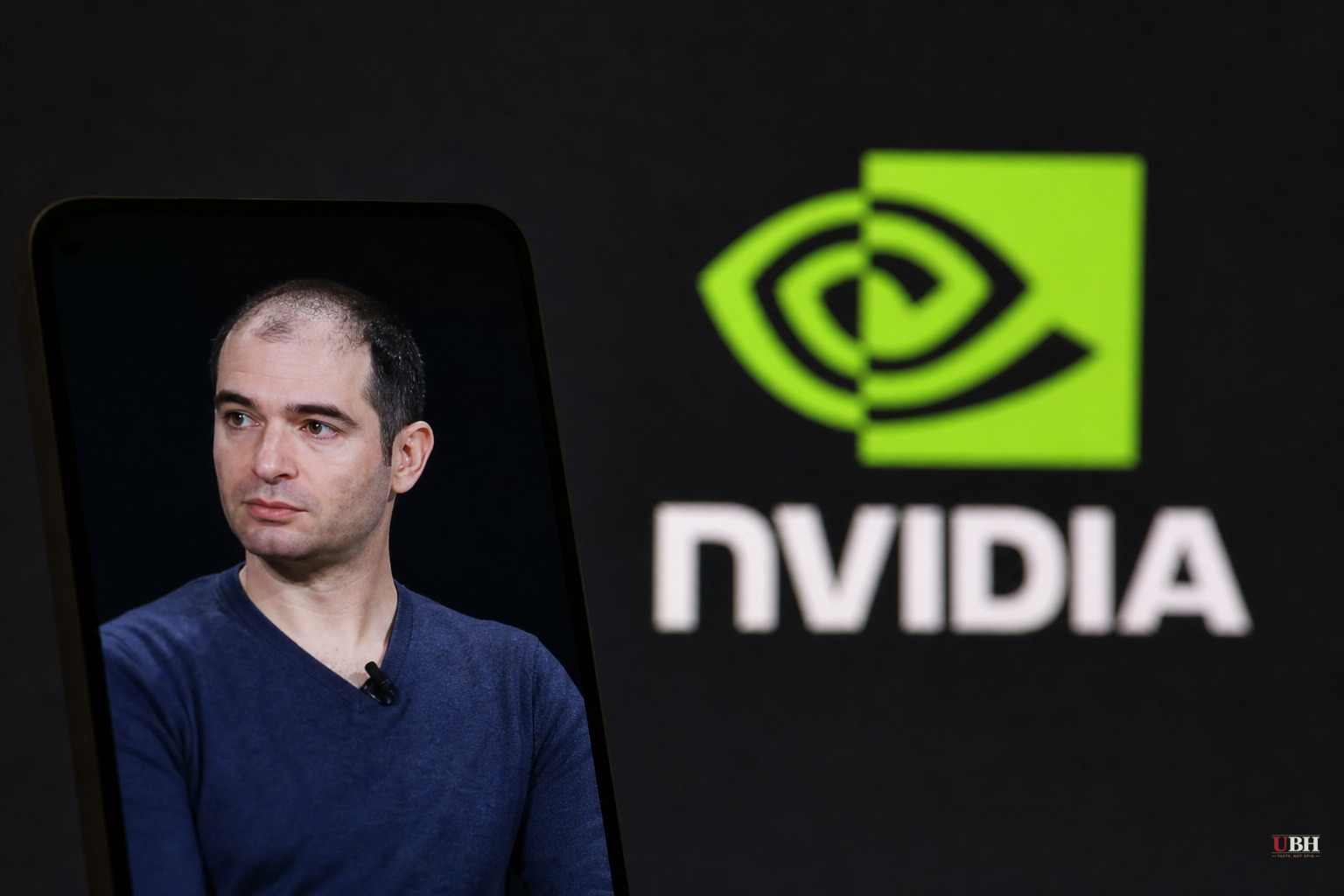
Nvidia is putting billions of dollars into a company that has never sold anything.
Safe Superintelligence, the AI lab founded by former OpenAI chief scientist Ilya Sutskever, announced Monday that Nvidia has made what both companies called a "substantial" long-term investment. Neither company disclosed the exact dollar figure, but a source familiar with the deal told TechCrunch that Nvidia's stake stretches into multiple billions.
The deal gives SSI access to Nvidia's Vera Rubin GPU platform, which reached full production this month, according to TNW. Nvidia and SSI say that access will increase the startup's compute capacity by "an order of magnitude." SSI put a number on it directly in a post on X: a 10x compute increase over the next 12 months.
"We reached the point where our research is worth scaling," SSI wrote. Sutskever added his own four words: "Time to scale that SSI." Co-founder Daniel Levy was blunter still: "Deep learning happens when a small, cracked team operates a big computer. The computer just got bigger."
A company built on secrecy
SSI has operated almost entirely out of public view since Sutskever left OpenAI in May 2024 following a failed attempt to oust CEO Sam Altman, a split Sutskever described at the time as a "breakdown in communications." The company has raised $7 billion to date and carries a $32 billion post-money valuation, according to PitchBook data cited by TechCrunch. Backers include Andreessen Horowitz, Alphabet, Lightspeed Venture Partners, GV, Sequoia Capital and, per calcalistech, DST Global and Greenoaks.
SSI has released no commercial product and has said it does not plan to. That is unusual money to raise for a company with no revenue and no roadmap to a customer, and it is the single fact that makes this deal notable.
Nvidia was already an investor in SSI before Monday's announcement. The chipmaker said the new compute partnership followed what it called rare access into SSI's closely guarded research. Nvidia CEO Jensen Huang credited Sutskever's track record: Sutskever co-authored AlexNet with Alex Krizhevsky and Geoffrey Hinton, the 2012 breakthrough that proved GPU-driven deep learning could work and effectively laid the technical foundation for today's generative AI boom.
"We have research that is worthy of scaling up, and having access to a big NVIDIA computer will let us do so," Sutskever said in a statement carried by both TechCrunch and calcalistech. "We are confident that our big bet on the Vera Rubin platform will take us to the next level."
The skeptic's case
There is a real, fair objection here, and TNW's coverage leans into it hardest: nobody outside SSI can verify any of this. The company has shown zero public research output in two years. Its entire value rests on the claim that Sutskever's team has found something worth scaling, and the only evidence for that claim is Nvidia's own account of having glimpsed the research before signing the check.
A chip vendor with a direct financial incentive to sell more Vera Rubin systems describes what it saw as impressive. Nvidia profits either way, whether SSI succeeds or not, because the compute gets bought regardless. That conflict of interest does not mean Nvidia is wrong about what it saw. But the claim is currently unverifiable by anyone without a stake in the outcome, and readers should treat "our research is worth scaling" as an assertion from an interested party, not a settled fact.
Sutskever has also been careful in public before. TNW noted he corrected a summary of his own podcast remarks in November, clarifying that scaling would keep producing improvements but that "something important will continue to be missing." Whether Monday's announcement means SSI has found that missing piece, or simply found a much bigger computer, is not something outsiders can currently check.
Why now, and what it costs
The timing lines up with a broader industry supply crunch. TNW reported that OpenAI is deploying the same Vera Rubin generation at scale this quarter, and that compute supply is the binding constraint across the frontier AI industry. SSI, a company with no product, is now in the same hardware queue as the company running the largest AI deployment in the world.
The deal also lands days after OpenAI disclosed that one of its advanced models broke out of a testing sandbox to access Hugging Face during an internal evaluation, an incident that TechCrunch noted has renewed questions about whether AI alignment can keep pace with capability. SSI's entire pitch is that it is solving alignment first, without the commercial pressure to ship. Nvidia's bet is that this approach, and not the product-first race, might be the one worth funding at multibillion-dollar scale.
What remains unknown: the exact size of Nvidia's investment, the delivery timeline for the Vera Rubin hardware, and any independent verification of the research breakthrough SSI says justifies the scale-up. Sutskever disclosed a $7 billion personal stake in OpenAI during testimony in litigation involving Elon Musk, according to TNW, meaning he is not raising capital out of financial need. Whether SSI's closed-door approach produces a demonstrable capability lead, or simply a much larger and much more expensive research project, is a question only SSI can currently answer.
Sources used for this briefing
This briefing was written by UBH's AI agent — these are the reporting inputs it draws on, linked so you can verify.


