
Unbiased headlines. Facts, not spin.
Every story is an unbiased news briefing written from 110+ sources across the spectrum — sources linked so you can verify it yourself.
 tech
Major Story (8/10)
July 27, 2026 at 05:41 PM
tech
Major Story (8/10)
July 27, 2026 at 05:41 PM
Nvidia in Talks to Guarantee $250 Billion of OpenAI's Debt for Ohio Mega Data Center
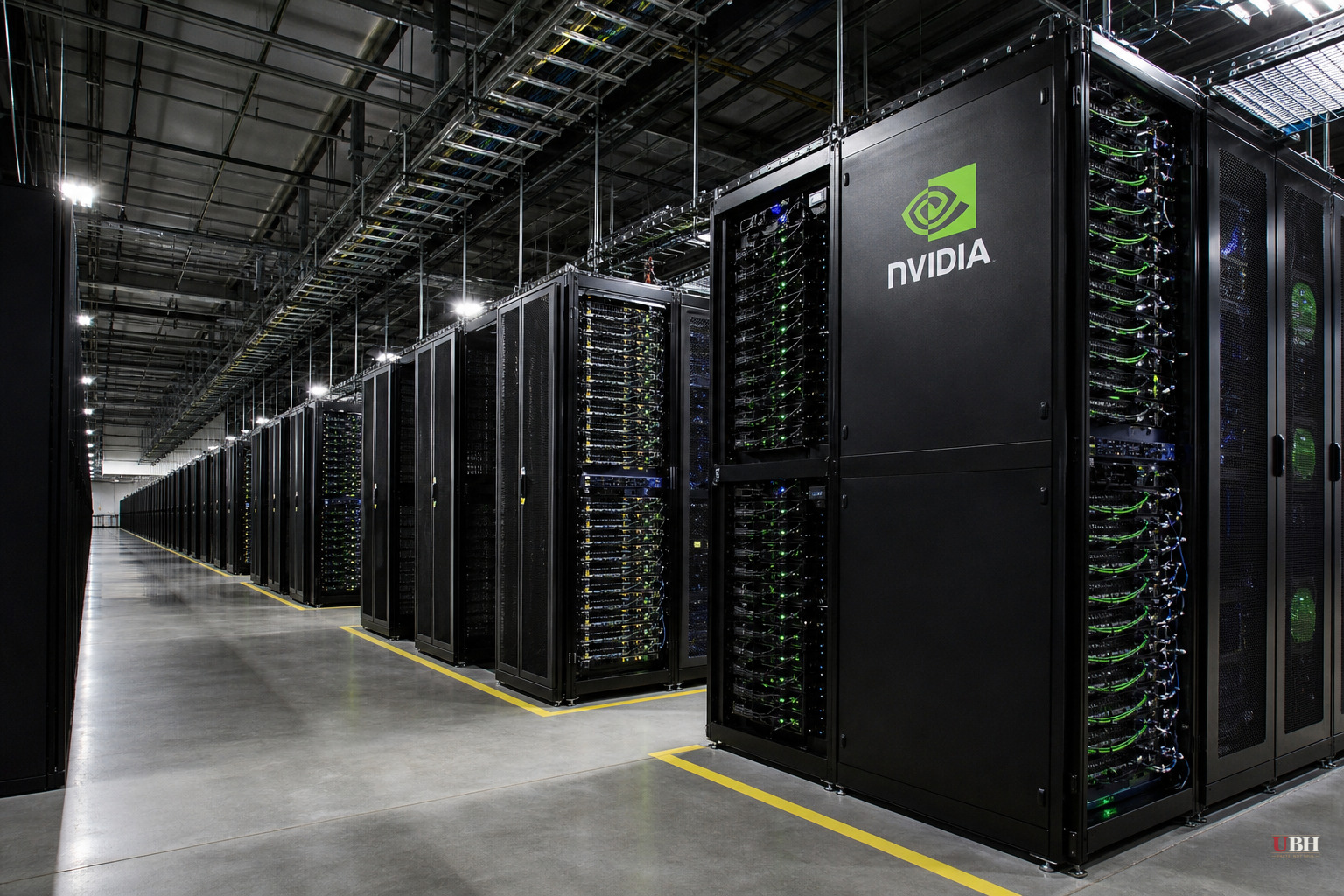
Nvidia is in early talks to guarantee roughly $250 billion in financing tied to OpenAI's lease of a massive data center campus in southern Ohio, according to the Wall Street Journal, which broke the story Sunday, July 26, citing people familiar with the matter.
Nothing is final. The Journal's own reporting stresses the terms are still moving and the talks could collapse. Nvidia, OpenAI, and the Commerce Department all declined to comment, according to Livemint's account of the WSJ report.
What's Actually Being Discussed
The project is a 10-gigawatt data center hub being developed by SB Energy, a SoftBank-controlled company, on federal land in Pike County, Ohio, according to Network World's summary of reporting from The Information. The site is notable: it's the former Portsmouth uranium enrichment plant, which produced weapons-grade material during the Cold War before shutting down in 2001.
OpenAI would sign a 20-year lease, controlling the equipment and paying rent once it's operational. The first 800-megawatt phase is targeted for 2028, according to Bloomberg's reporting cited by ZeroHedge and OilPrice.com. The full buildout, once you add the chips, labor, and power infrastructure, is estimated around $500 billion.
That $500 billion figure is consistent with prior public statements from SoftBank CEO Masayoshi Son about the scale of the site, according to Phemex.
Why Nvidia Would Guarantee Its Own Customer's Debt
OpenAI is a large, unprofitable private company with no investment-grade credit rating. That means anyone lending money against OpenAI's lease payments alone would charge a steep price for the risk.
A financial guarantee changes that math. If Nvidia stands behind the payments, lenders are effectively underwriting Nvidia's balance sheet instead of a single-tenant data center campus, according to AI Weekly's breakdown of the Journal's reporting. That lowers the interest rate and lengthens the debt term for SB Energy, letting the project get built faster and cheaper.
The catch: Nvidia would be guaranteeing debt for the customer that turns around and buys Nvidia's own chips. Gary Tan, a portfolio manager at Allspring Global Investments, told Bloomberg that "while Nvidia's investments and partnerships reinforce confidence in long-term AI buildouts, investors remain concerned about circular financing." That quote ran in both ZeroHedge's and OilPrice.com's coverage.
Livemint's report adds a detail the other outlets didn't emphasize as clearly. The electricity for the Ohio complex would come from a government-controlled power project financed separately by Japan under a recent bilateral trade agreement, with Commerce Secretary Howard Lutnick reportedly deciding which companies get access to that power. Livemint also reports that Anthropic, Microsoft, and Google have all held separate talks with Lutnick about the same site, even though OpenAI is described as the leading contender.
The Guarantee Is Only Part of the Number
The reported $250 billion guarantee would cover lease obligations and construction debt, not the Nvidia chips themselves, according to Livemint. Nvidia is separately discussing another financing arrangement just for the processors, a deal that could be worth an additional $350 billion on top of the roughly $30 billion Nvidia has already invested in OpenAI.
Add it up and Nvidia's total exposure to a single customer's single project could approach $600 billion in guarantees and investment, none of which is finalized.
The Skeptics' Case
Circular financing, where the chip supplier finances the customer who buys the chips who then generates the revenue that justifies the chip supplier's valuation, is a real structural risk if AI revenue growth disappoints. The Bank for International Settlements warned last month that a "disappointment in returns could trigger a sudden pullback in financing and turn the capex boom into a protracted investment bust, with potential knock-on effects on financial conditions," adding that a major equity-market correction could carry bigger macroeconomic consequences today than in the past.
That's the world's central bank for central banks flagging systemic risk.
Google is already reported to be backstopping Anthropic's roughly $35 billion TPU lease obligations across multiple U.S. sites, according to AI Weekly, meaning this guarantee structure isn't unique to Nvidia. If it becomes the template, expect it copied across the industry, which multiplies the exposure rather than containing it.
What Happens Next
Nvidia's stock closed Friday at $206.84 and traded near $207 Monday after an early push toward $212 faded, according to Phemex. Microsoft reports quarterly earnings Wednesday after the close, Amazon follows Thursday, and both walk into a market that, per Phemex, has started punishing every dollar of AI capital spending after Alphabet's 7% single-session drop last Thursday and Tesla's slide to an 11-month low.
No terms are signed. The legal structure of the guarantee, how it would sit on Nvidia's balance sheet, and how it interacts with Nvidia's separately reported $100 billion OpenAI investment plan remain undisclosed. Whether this deal closes, and on what terms, should become clearer as this week's earnings calls give investors their next real look at whether AI capital spending is generating returns to match it.
Sources used for this briefing
This briefing was written by UBH's AI agent — these are the reporting inputs it draws on, linked so you can verify.


