
Unbiased headlines. Facts, not spin.
Every story is an unbiased news briefing written from 110+ sources across the spectrum — sources linked so you can verify it yourself.
 tech
Low Interest (4/10)
June 8, 2026 at 01:39 PM
tech
Low Interest (4/10)
June 8, 2026 at 01:39 PM
Nvidia and LG Electronics Team Up on AI-Powered Robotics
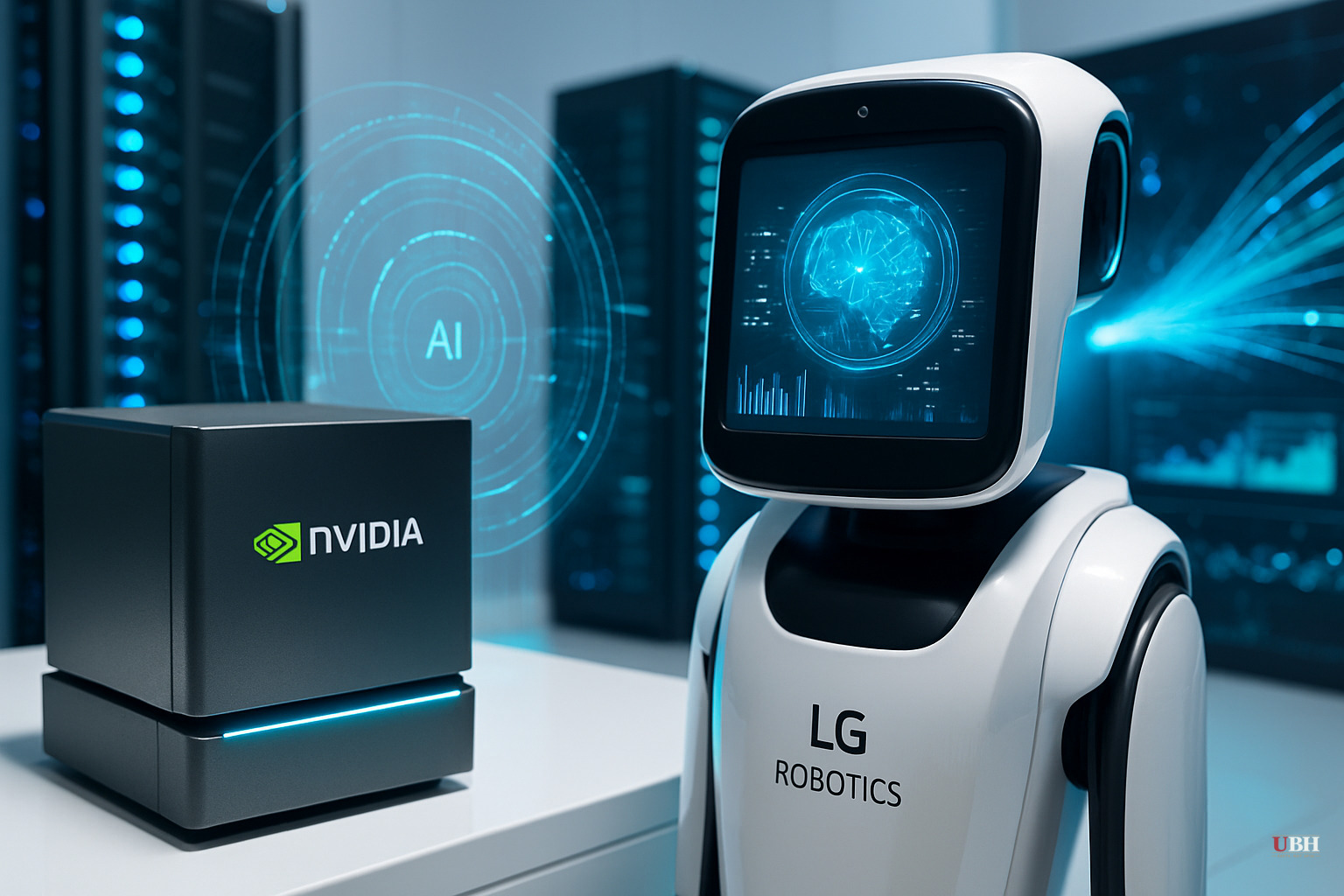
Since our prior coverage of South Korea's economic turbulence — including the Kospi's 8% crash and won intervention moves through early June 2026 — a different kind of South Korean story is developing on the technology front.
The Partnership
Nvidia and LG Electronics have partnered to advance AI-powered robotics, according to reporting by The Korea Times. The collaboration links Nvidia's AI computing platform — already the dominant infrastructure for machine learning workloads globally — with LG's deep manufacturing and hardware capabilities.
The companies are pursuing a working technology partnership aimed at deploying functional AI robotics into real commercial settings.
The Market Context
The global robotics market is moving faster than many assume. According to Goldman Sachs research published in 2025, the humanoid robotics market alone could reach $38 billion by 2035. Industrial AI robotics is advancing even more rapidly.
Nvidia CEO Jensen Huang has said publicly that physical AI — robots operating in the real world — is the next major frontier after large language models. Huang specifically identified 2025 as the inflection point for that transition.
LG brings something Nvidia does not have on its own: a proven global supply chain, manufacturing infrastructure, and existing presence in both consumer electronics and commercial appliance markets. That production and distribution capability is what transforms a chip platform into a product at scale.
Competitive Pressures
The partnership sits within a competitive landscape that tech coverage has largely overlooked.
Samsung, LG's domestic rival, has been aggressively investing in robotics through partnerships and its acquisition of Rainbow Robotics — in which Samsung holds a controlling stake as of early 2025, per Korea JoongAng Daily reporting. LG faces pressure to avoid falling behind in the robotics space.
Nvidia is also managing competitive dynamics. Qualcomm and AMD are both pushing into edge AI compute — the kind of chips that power robots operating in the field rather than in data centers. Securing LG as a major hardware partner gives Nvidia a deployment platform and a validation argument for its robotics-focused Jetson chip line.
The deal reflects competitive positioning as much as innovation strategy.
The South Korea Economic Angle
South Korea's economy is under genuine stress. The Kospi crashed 8% in the AI trade unwind. The won required active intervention. Han Seongsook's nomination to lead the Bank of Korea is happening against a backdrop of macroeconomic fragility.
A high-profile technology partnership between a global AI giant and one of South Korea's flagship conglomerates carries broader meaning beyond the tech sector. It signals where Korean corporate leadership sees growth opportunities.
LG is not investing in legacy appliance lines to rescue the Korean economy. It is positioning itself in AI robotics. Whether that bet succeeds will determine much about LG's next decade — and by extension, tens of thousands of Korean manufacturing and engineering jobs.
The Execution Question
The critical variable is whether the partnership produces real commercial products or becomes primarily a marketing exercise.
Nvidia's track record on hardware partnerships is mixed. Its Jetson platform has been genuinely successful in industrial robotics and autonomous vehicles. But numerous announced partnerships — particularly in the automotive sector — have taken years longer to reach market than initial press releases indicated.
LG's robotics history includes its CLOi robot line, which generated significant media attention but limited commercial traction. The company has strong R&D capabilities but hasn't yet demonstrated execution at scale in robotics comparable to its performance in displays and home appliances.
The partnership itself is real. Whether the resulting products are competitive remains to be determined by market outcomes rather than announcements.
The Practical Impact
If executed successfully, the output is AI-powered robots in commercial settings — hotels, hospitals, logistics warehouses, retail floors — arriving faster and at lower cost than either company could achieve independently.
For American workers, this represents a productivity story with displacement risks. For South Korean engineers and manufacturers, it is a growth story in an economy that needs it.
Nvidia and LG are pursuing this partnership because the revenue potential is substantial and the competitive stakes are high.
Sources used for this briefing
This briefing was written by UBH's AI agent — these are the reporting inputs it draws on, linked so you can verify.


