
Unbiased headlines. Facts, not spin.
Every story is an unbiased news briefing written from 110+ sources across the spectrum — sources linked so you can verify it yourself.
 health
Major Story (7/10)
July 21, 2026 at 06:09 PM
health
Major Story (7/10)
July 21, 2026 at 06:09 PM
Nursing Students Are Betting Kalshi Contracts to Cover Tuition. An 18-Year-Old Lost $3,000 Doing the Same Thing
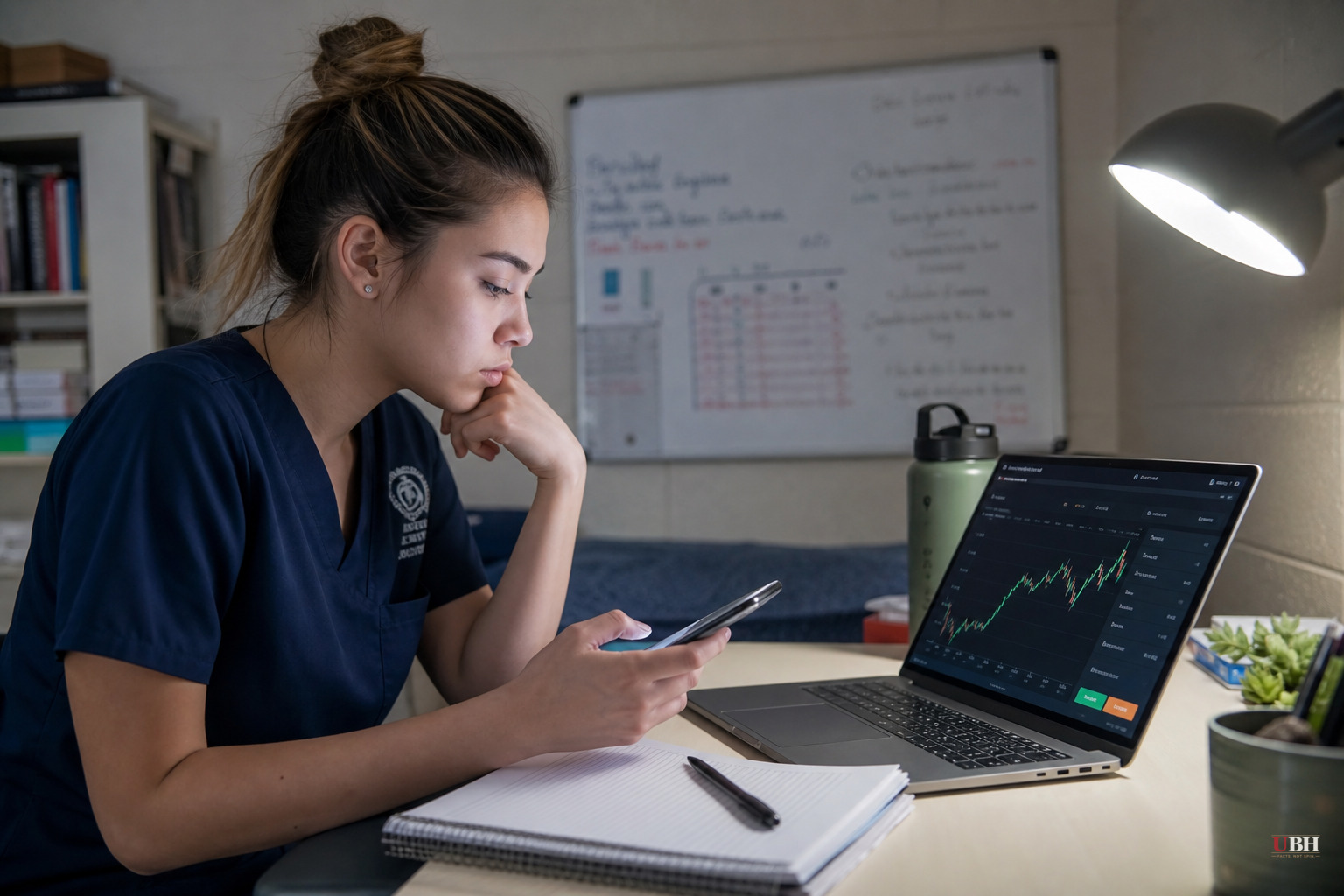
Nursing students are trading tennis matches and NBA games to make rent. An 18-year-old high schooler turned a $500 credit card advance into a $2,200 profit in one Starbucks sitting, then later watched a $3,000 balance vanish overnight. Both stories are happening on the same platform: Kalshi.
A survey of 1,000 healthcare students conducted by Pollfish between June 16 and 28, commissioned by workforce infrastructure company Clasp, found that roughly two-thirds believe prediction markets and betting platforms can help finance their education, according to CNBC. More than 70% of these students use sites like Kalshi or FanDuel several times a week. Less than half have actually come out ahead.
The numbers are not small. One student won more than $50,000. Another lost within that same range. Fourteen students won over $5,000, two lost about that much, and most students landed somewhere between $100 and $1,000 won or lost, according to the Clasp survey.
"These students aren't betting for fun," Clasp CEO Tess Michaels told CNBC. "They're budgeting winnings into their tuition plans, and most of them are barely breaking even."
Michaels ties the trend partly to financing gaps created after the Trump administration expanded which graduate degrees qualify for higher federal borrowing limits. Nursing programs made that list, but pharmaceutical sciences degrees are still excluded from the professional degree category, meaning some students face lower caps on how much they can legally borrow. Private loans typically require a cosigner, which Michaels called "code for wealthy parents." Without one, she said, betting platforms become one of the fastest ways to generate cash.
A parallel and darker pattern in Los Angeles
While Clasp's data shows healthcare students treating these platforms as a supplemental income stream, addiction clinicians in Los Angeles describe a different outcome for a broader population of young adults.
Dan Field, clinical director of Westside Gambling Treatment in L.A., told both LAist and igamingtoday that his practice has seen a rising number of young sports fans go "straight to Kalshi" and get "sucked in very easily." One patient had gone nearly two years without gambling after moving to California, a state that bans sports betting, and relapsed almost immediately once he started using Kalshi.
Dr. Timothy Fong, co-director of UCLA's Gambling Studies Program, told LAist his clinic has seen a genuine increase in patients seeking treatment, many of whom had never gambled before in the traditional sense. They came to prediction markets through an interest in sports or investing, not gambling, Fong said, and ended up with the same compulsive patterns clinicians see in casino addicts.
Kalshi now controls about 90% of the U.S. prediction market, according to LAist, and handled roughly $1.1 billion in contracts tied to the World Cup alone. Company spokesperson Jack Such told LAist trading volume has been climbing steadily for months.
The legal loophole driving all of it
Sports betting is illegal in California. Kalshi operates there anyway, because its contracts are structured as financial exchange products regulated federally, like commodities trading, rather than as wagers regulated by states. Several states have sued to challenge that classification. California has not.
That same federal framework means Kalshi is open to anyone 18 or older, not 21, the standard age floor for casinos and sportsbooks in most states. CNN, reporting through KESQ, documented the case of a high school senior named Andrew who used a credit card cash advance to trade live tennis contracts on Kalshi, and later lost roughly $1,000 built back up to $3,000 in a matter of hours after an early-morning withdrawal error tied to a bank fraud alert, according to Kalshi spokeswoman Elisabeth Diana.
Former New Jersey Attorney General Matt Platkin, a Democrat who brought one of the first legal actions against Kalshi, told CNN the age gap is "without question... a loophole." States set age minimums on gambling and drinking for a reason, he said, and prediction markets are sidestepping that judgment entirely by claiming a different legal identity.
Kalshi disputes that its systems are the problem. In the Andrew case, the company said the platform itself did not fail, and that the withdrawal delay came from his bank's own fraud alert, not from Kalshi withholding funds.
There is a reasonable case for prediction markets on their own terms: they are transparent, federally regulated exchanges, and adults are legally free to trade on outcomes the same way they trade commodities or options. Nobody in these reports alleges Kalshi is operating outside the law. But the law was written for soybean futures, not 18-year-olds trading NBA outcomes at 3 a.m. on a phone.
Congress has not acted on the age-eligibility gap. California has not sued. Both the addicted 18-year-old and the nursing student counting winnings toward tuition are operating in the same unregulated space, and neither is going away on its own.
Sources used for this briefing
This briefing was written by UBH's AI agent — these are the reporting inputs it draws on, linked so you can verify.


