
Unbiased headlines. Facts, not spin.
Every story is an unbiased news briefing written from 110+ sources across the spectrum — sources linked so you can verify it yourself.
 finance
Low Interest (4/10)
May 28, 2026 at 01:19 PM
finance
Low Interest (4/10)
May 28, 2026 at 01:19 PM
Nuclear, Geothermal, and Solar Companies Are Going Public — and AI Data Centers Are the Real Reason Why
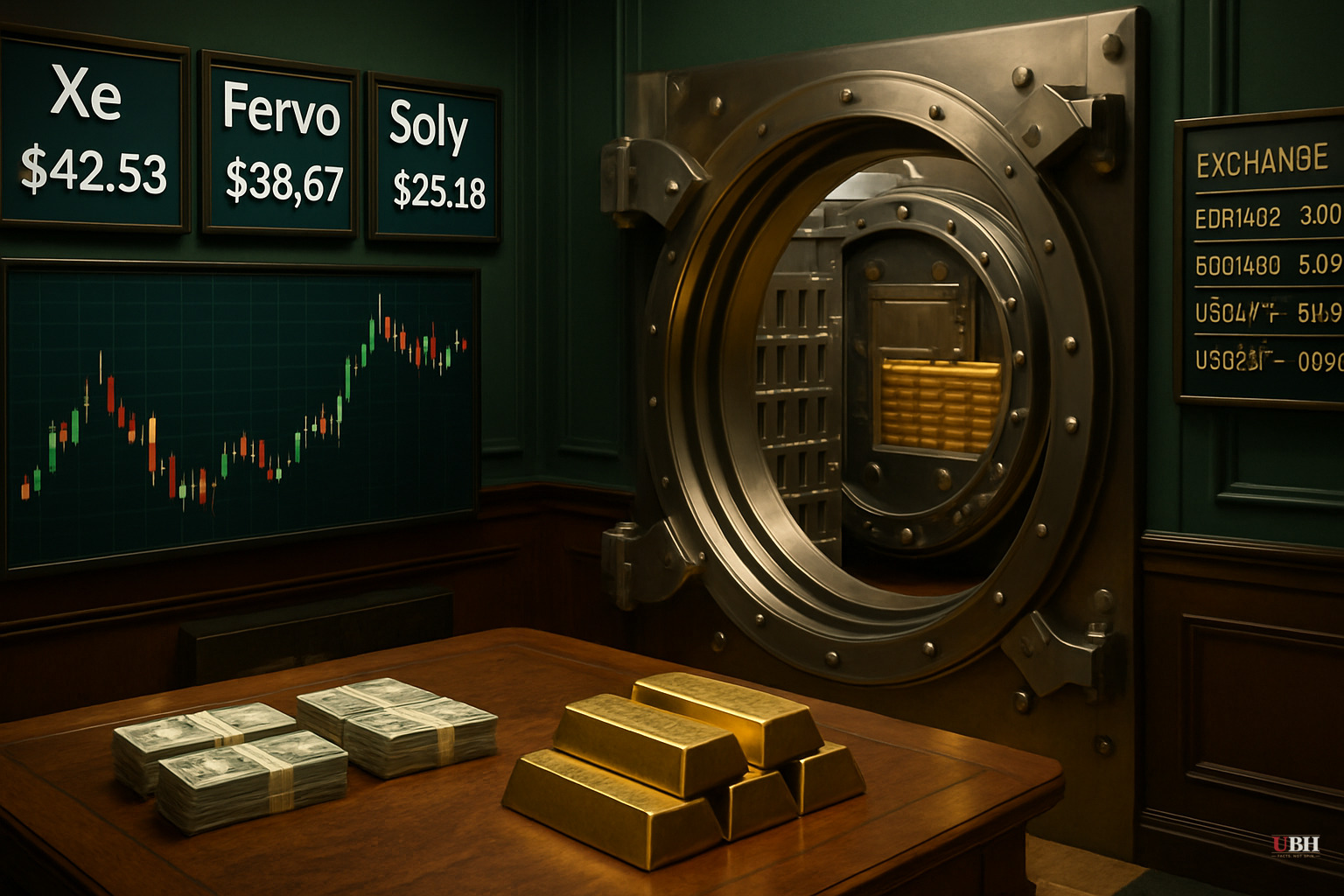
Three Companies, One Real Driver
Solv Energy went public in February 2026. Valuation: $6 billion. X-energy — a small modular nuclear reactor company — followed in April, raising $1 billion in an upsized share offering and hitting an $11.5 billion market cap after its stock jumped 25% in the first hour of trading. Then geothermal company Fervo Energy filed and went public in May, landing at roughly $12.4 billion.
That's three energy companies, three IPO wins, in four months.
According to TechCrunch, investors had been predicting exactly this. At the end of 2025, nearly every investor they surveyed said nuclear fission and enhanced geothermal were the two categories most likely to break through to public markets. Both did. Fervo was specifically named multiple times as a likely candidate.
AI Is Driving the Demand
Yes, these are clean energy companies. But the reason public markets suddenly care is the AI buildout — driven by companies like Microsoft, Google, Amazon, and Meta — which requires enormous, reliable, 24/7 electricity. Solar and wind have intermittency problems. Nuclear and geothermal don't.
Amazon and Google are already investors in X-energy, according to Slashdot. These aren't philanthropic bets. They're vertical integration plays by companies that need guaranteed power for their AI infrastructure.
As MIT Technology Review put it: the AI craze "took a trend of rising demand for electricity and made it sexy and salable." Companies that had been building for years suddenly had a compelling narrative that matched their technological maturity. Timing plus preparation.
What These Companies Actually Do
Fervo Energy, founded in 2017, applies fracking techniques to geothermal energy — creating the hot-rock conditions needed for a power plant rather than waiting to find them naturally. Its first commercial project, Cape Station in Utah, is expected to have 500 megawatts of capacity. The first unit is slated to start generating power by October 2026, with two more units coming online by January 2027, according to MIT Technology Review.
Fervo currently holds over 600 megawatts of binding power purchase agreements and has land leases with potential to generate more than 40 gigawatts. For context, the ENTIRE U.S. geothermal fleet as of 2024 had a capacity of just 4 gigawatts. The scale ambition is real.
Cost-wise, Cape Station is projected at $7 per kilowatt — cheaper than new nuclear but still more than twice the cost of a new natural gas plant in the U.S.
X-energy builds high-temperature gas-cooled reactors that flow helium over self-contained nuclear fuel pebbles. Each reactor generates 80 megawatts — less than one-tenth the output of a large conventional reactor like Unit 4 at Georgia's Plant Vogtle. Smaller, modular, deployable faster. That's the pitch.
Notably, X-energy had planned to go public in 2023 but pulled back due to rough market conditions. The wait paid off.
This Is NOT a Rising Tide for All of Climate Tech
The IPO wave is highly selective.
According to TechCrunch, a wide swath of climate tech will be left out entirely. Companies not directly tied to energy infrastructure — carbon capture software, sustainability consultancies, EV supply chain plays — face a very different market. The funding landscape, per ECIKS.org, is splitting into two distinct paths. Energy-infrastructure companies with clear revenue visibility get public capital. Everyone else scrapes for private funding.
TechCrunch called it a K-shaped climate tech market. The top half goes up. The bottom half doesn't.
Power generation companies have real customers, real contracts, and real infrastructure. Many other "climate tech" companies are still betting on regulatory mandates and ESG-driven capital allocation. When the money gets serious, it goes where the cash flows are real.
The SPAC Test
Fervo and X-energy both took the traditional IPO route rather than going the SPAC path.
SPACs are faster and easier — they're the escape hatch companies use when they're not sure broad investor demand exists. Choosing a traditional IPO signals actual confidence in the product. According to TechCrunch, if this were just about unlocking capital for early investors, SPACs were available. Both companies declined that shortcut.
What This Means for the Grid
The U.S. grid is under pressure it hasn't seen in decades. AI data centers are being built at a pace that existing power infrastructure was NOT designed to handle. Utilities are scrambling. The federal permitting process is slow.
These IPOs are a private-market attempt to fill a gap that government energy policy has completely fumbled. Companies like Fervo and X-energy are raising public capital to build the power generation that AI — and frankly, every American home and business — will need in the next decade.
The market is solving a problem Washington can't move fast enough to address. That's either reassuring or alarming, depending on how much faith you have in either institution.
The electricity is going to be needed. The only question is who builds it and how fast.
Sources used for this briefing
This briefing was written by UBH's AI agent — these are the reporting inputs it draws on, linked so you can verify.


