
Unbiased headlines. Facts, not spin.
Every story is an unbiased news briefing written from 110+ sources across the spectrum — sources linked so you can verify it yourself.
 health
Major Story (7/10)
July 2, 2026 at 02:19 AM
health
Major Story (7/10)
July 2, 2026 at 02:19 AM
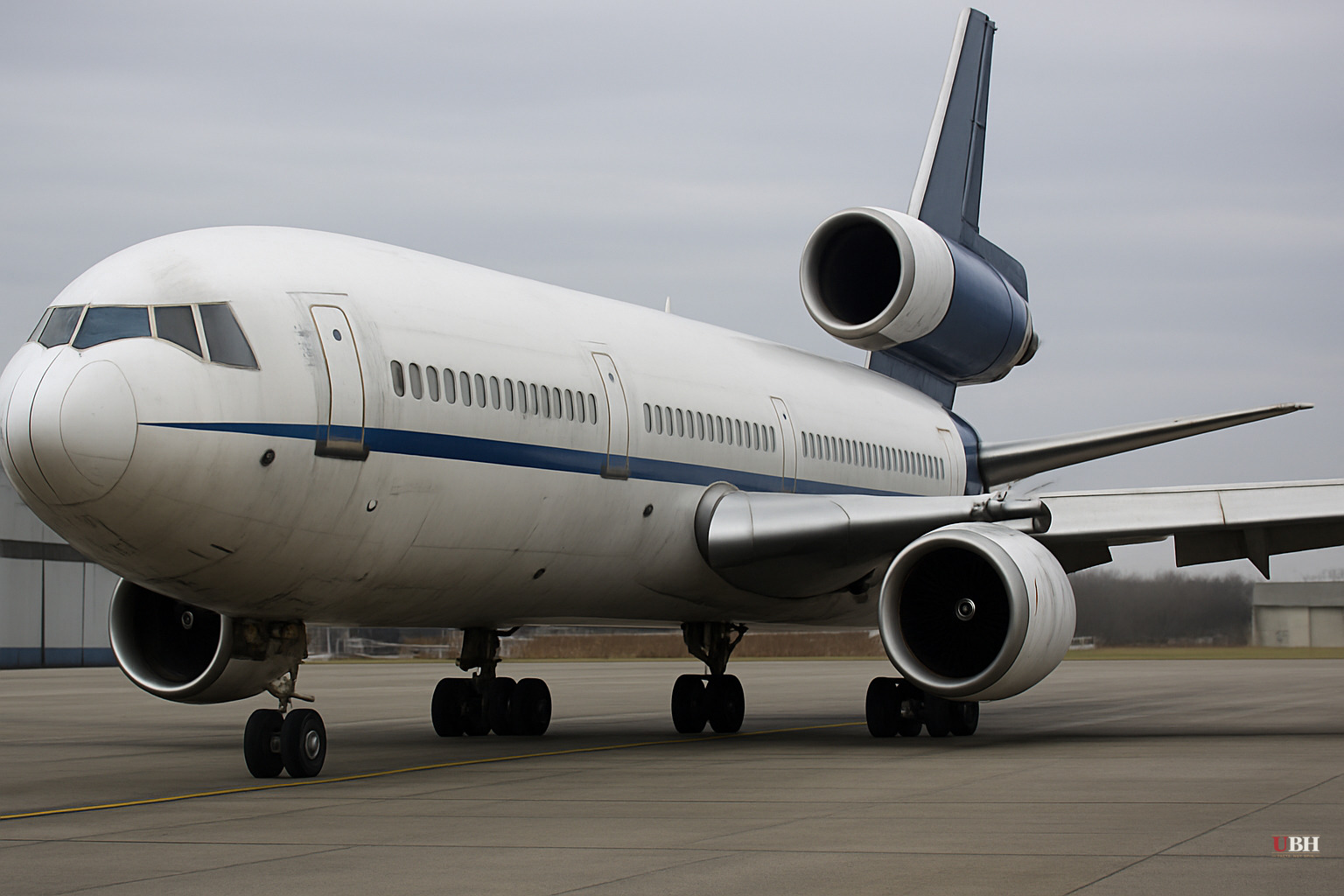
NTSB: Boeing Flagged Engine Defect on MD-11 in 2011 but Did Not Treat It as a Flight Safety Issue. Fifteen People Died in the November 2025 Louisville Crash.
What the NTSB Found
The National Transportation Safety Board released a preliminary investigative update revealing that Boeing issued a service letter in February 2011 warning MD-11 operators about failures of a "spherical bearing race" assembly, the component that helps anchor engines to wings. According to The Guardian's reporting on the NTSB document, the assembly had failed on four occasions across three separate aircraft before the Louisville crash.
Boeing's response at the time was measured. The company "did not consider it a safety of flight issue," the NTSB report stated, and recommended only that operators inspect the part during regularly scheduled general inspections, which occur roughly every 60 months. No immediate corrective action was required.
Fifteen years later, that call is under scrutiny.
The Crash
On November 4, 2025, a UPS MD-11F cargo jet departed Muhammad Ali International Airport in Louisville at approximately 5:15 p.m. local time. Witnesses reported the plane lifted off with fire visible on the left wing. The engine then detached. The aircraft crashed into a nearby industrial complex, producing a large fireball.
All three crew members were killed. Twelve people on the ground also died. The most recent victim died on Christmas Day 2025, according to The Guardian. The plane itself was 34 years old at the time of the crash, a variant of the McDonnell Douglas MD-11, which Boeing inherited when it acquired McDonnell Douglas.
Both UPS and FedEx temporarily grounded their MD-11 fleets in the immediate aftermath.
What Boeing and UPS Said
Boeing issued a statement saying the company "continues to support the investigation led by the NTSB" and offering condolences to affected families. The statement did not address the specific findings about the 2011 service letter or the decision not to classify the bearing assembly failures as a flight safety issue.
UPS spokesperson Jim Mayer said the company "remains profoundly saddened" by the crash and that its "thoughts continue to be with the families and Louisville community who are grieving." UPS has stated it will not comment on existing or pending litigation.
The Strongest Concern From Critics
Relatives of at least one woman who died on the ground have already filed a lawsuit alleging UPS was negligent for keeping the MD-11 in service despite known maintenance problems, according to The Guardian. Critics and plaintiffs argue that if Boeing documented repeated failures of this exact component in 2011 and those failures were structurally similar to what caused the Louisville crash, classifying the problem as a non-safety issue and leaving it on a 60-month inspection cycle was the wrong call.
The MD-11's age compounds the concern. A 34-year-old airframe operating in freight service accumulates significant stress cycles, and critics argue that aging aircraft with documented component failure histories warrant tighter inspection protocols, not looser ones.
Former FAA and NTSB crash investigator Jeff Guzzetti noted to the AP that the now-defunct McDonnell Douglas had sent out a bulletin in 1980 that did identify failures of the spherical bearing race as a "safety of flight condition." "It raises questions regarding the adequacy of the severity of the 2011 service letter, and it also raises questions about how UPS incorporated that information and acted upon it," Guzzetti said.
What the Evidence Actually Shows
The NTSB has released a preliminary report. That means investigators have not yet established the full causal chain, assigned final responsibility, or ruled on whether Boeing's 2011 decision was negligent under the Federal Aviation Regulations in effect at the time. Preliminary NTSB reports document what investigators have found so far, not who is legally or regulatorily liable.
Boeing's 2011 classification may have been defensible under the engineering and regulatory standards of that era. Cargo airlines operate differently from passenger carriers, and component failure rates that trigger mandatory action under one risk model may fall below the threshold under another. Whether the FAA reviewed Boeing's service letter and concurred with the non-urgent classification remains a key question the NTSB investigation has not yet publicly answered.
AP's Coverage Gap
AP News's headline emphasized that UPS "never required detailed inspection" of the failed part, framing the story primarily through UPS's obligations as an operator. The NTSB report, as described by The Guardian, places Boeing's 2011 service letter and the decision not to mandate immediate repairs at the center of the investigative finding. Both angles are legitimate, but the Boeing-originated classification of the defect as a non-safety issue is the more structurally significant detail, and AP's framing risks obscuring it.
What Happens Next
The NTSB's final report, which will assign probable cause and may include safety recommendations, has not yet been released. Those recommendations, if any, could push the FAA to mandate more frequent inspections of the spherical bearing race assembly on remaining MD-11 aircraft still in freight service, or address how Boeing classifies service bulletin urgency on aging fleets. The agency's final determination will be the definitive public accounting of what caused 15 people to die near an airport in Louisville on a Tuesday afternoon in November 2025.
Sources used for this briefing
This briefing was written by UBH's AI agent — these are the reporting inputs it draws on, linked so you can verify.


