
Unbiased headlines. Facts, not spin.
Every story is an unbiased news briefing written from 110+ sources across the spectrum — sources linked so you can verify it yourself.
 finance
Notable (6/10)
July 21, 2026 at 12:12 PM
finance
Notable (6/10)
July 21, 2026 at 12:12 PM
Novo Nordisk Sues Eli Lilly Over Zepbound Ad Comparisons, Alleges Outdated Wegovy Data
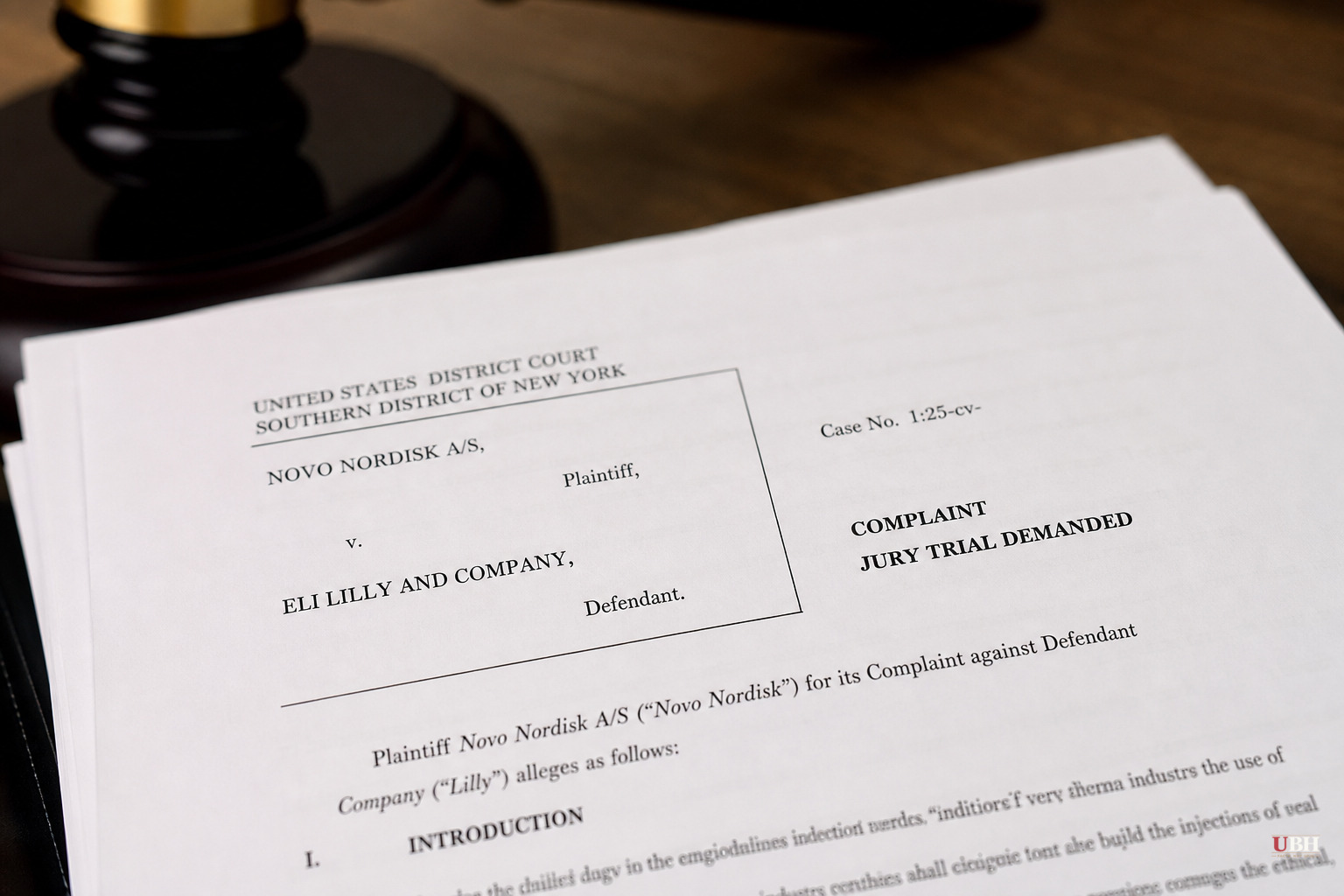
Novo Nordisk filed a lawsuit against Eli Lilly on Tuesday in the U.S. District Court for the District of New Jersey, accusing its top rival in the weight-loss drug market of running false advertising campaigns for years after the underlying science changed.
The core claim: Lilly's national TV and social media ads for Zepbound and Mounjaro compare the highest approved dose of Lilly's drugs against lower doses of Novo's Wegovy and Ozempic, according to Novo. That comparison, Novo argues, is outdated and misleading now that a higher-dose version of Wegovy is on the market.
What the ads actually say
John Kuckelman, Novo's group general counsel, told Reuters the disputed ads show roughly 50 pounds of weight loss for Zepbound versus about 33 pounds for Wegovy. Those numbers, he said, come from mismatched trials, not a head-to-head study of the highest doses of both drugs.
Kuckelman said separate late-stage trials of the highest approved doses tell a different story: about 48 pounds average weight loss for Zepbound and about 47 pounds for high-dose Wegovy. If that's accurate, the gap Lilly's ads imply barely exists at the top dose level.
The 7.2-milligram version of Wegovy that changes this picture was approved by U.S. regulators and entered the market in March, according to CNBC. Novo argues Lilly's ads simply never caught up to that approval, continuing to lean on "outdated" trial comparisons that favor Lilly's product.
The cease-and-desist that went nowhere
Novo says it sent Lilly a formal cease-and-desist letter in April, right after the high-dose Wegovy approval, demanding the company pull or fix the ads. According to Kuckelman, Lilly didn't respond directly. Instead, he said, Lilly added what he called an "inadequate disclaimer" to the advertisements rather than correcting the substance of the comparison.
Lilly did not respond to a request for comment from CNBC. As of publication, the company had not issued a public statement addressing Novo's specific allegations about disclaimer language or the April letter.
What Novo is asking the court to do
Novo's suit invokes the Lanham Act along with federal and state unfair competition and false advertising laws, according to Reuters. The Lanham Act has a long history in pharmaceutical disputes as the go-to tool when one drugmaker accuses another of deceptive marketing.
Novo wants the court to permanently bar Lilly from running the disputed ads and to order a corrective advertising campaign. It's also seeking financial damages, though the amount isn't specified in the filing details reported so far.
Novo said it warned Lilly that if the ads aren't pulled voluntarily, it will move for a preliminary injunction in the coming days to block them while the case is litigated, according to CNBC.
The business fight underneath the legal one
This lawsuit didn't come out of nowhere. Lilly's Zepbound and Mounjaro have taken significant market share from Novo's Wegovy and Ozempic in recent years, with many doctors and patients treating Lilly's drugs as the more effective option, according to CNBC.
Novo is fighting back on multiple fronts: an obesity pill in development, price cuts on its injections, and now the high-dose Wegovy positioned as a direct answer to Zepbound's efficacy edge. The lawsuit is one more piece of that competitive push, not an isolated legal grievance.
Novo's argument rests on the idea that ordinary consumers, unlike doctors, don't have access to the full range of clinical trial data and rely heavily on what they see in commercials to judge which drug works better. "Lilly's advertising campaign deprives consumers of the truthful, current, and complete information they need to make informed decisions about their available treatment options," the suit states, as cited by CNBC.
Direct-to-consumer drug ads carry real weight with patients who then ask their doctors for a specific brand by name. If the comparative claims are built on mismatched dosing, patients could be steering treatment decisions based on a stale picture.
The counter-argument, which Lilly hasn't yet made publicly, would likely note that pharmaceutical ads routinely cite approved-label data from the trials that supported FDA approval, and that Novo's newer high-dose trial results are a recent development Lilly may argue it's still in the process of incorporating. No court has ruled on any of this. No injunction has been granted. Lilly has not been found liable for anything, and it hasn't commented on the specific claims about its April response to Novo's letter.
The next concrete step is Novo's threatened preliminary injunction motion, which the company says it will file within days if Lilly doesn't voluntarily pull the ads. That filing, and Lilly's eventual response in court, will be the first real test of whether a judge finds Novo's dosage-comparison argument persuasive enough to force changes to campaigns already running nationwide.
Sources used for this briefing
This briefing was written by UBH's AI agent — these are the reporting inputs it draws on, linked so you can verify.


