
Unbiased headlines. Facts, not spin.
Every story is an unbiased news briefing written from 110+ sources across the spectrum — sources linked so you can verify it yourself.
 health
Notable (5/10)
July 11, 2026 at 04:47 PM
health
Notable (5/10)
July 11, 2026 at 04:47 PM
Novo Nordisk Partners With Vivani on Twice-a-Year GLP-1 Implant to Fight Weight Regain
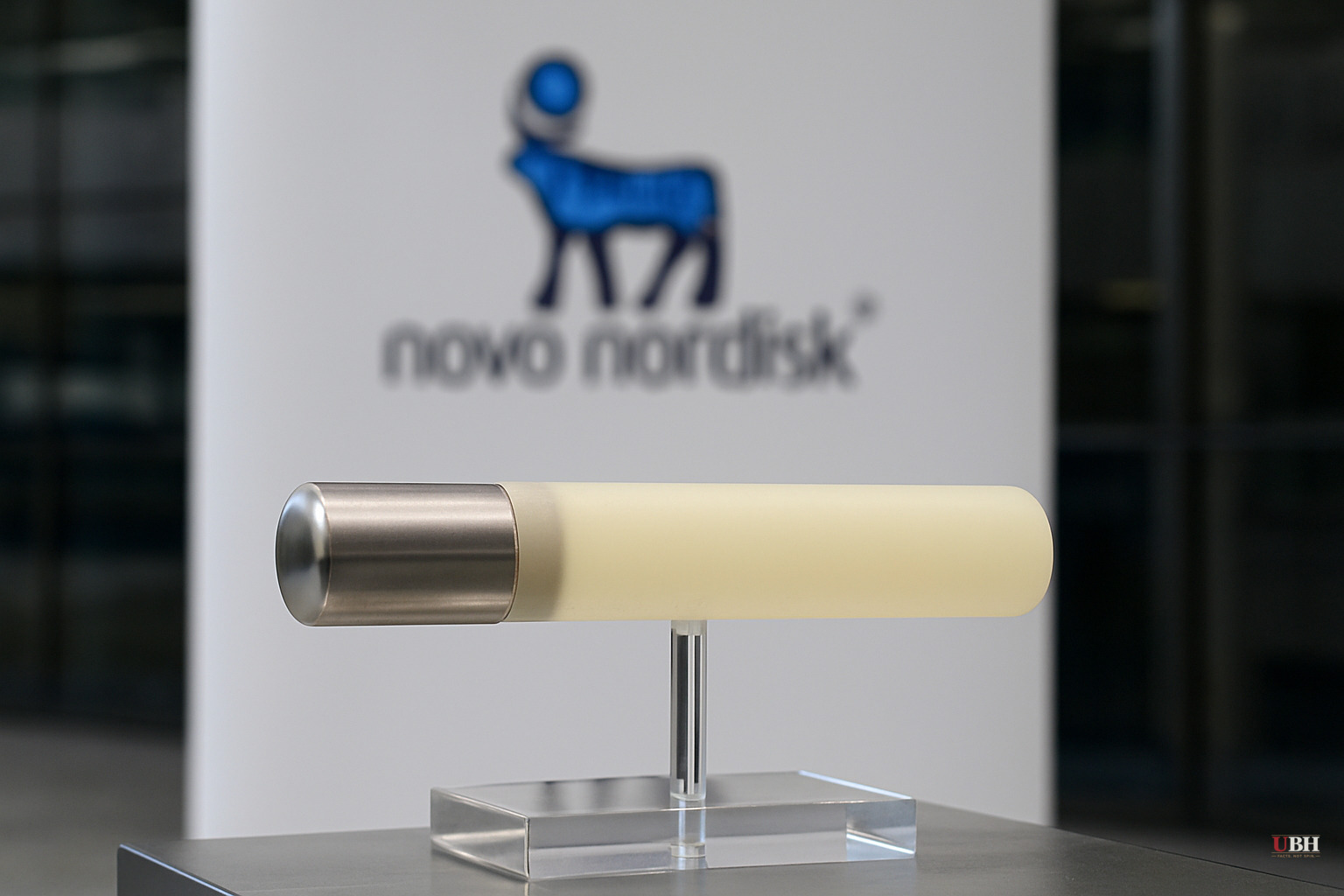
Novo Nordisk announced an agreement this week with Vivani Medical to evaluate an experimental implant designed to deliver semaglutide, the active ingredient in Wegovy and Ozempic, under the skin, according to CNBC.
The implant, called NPM-139, is meant to solve a problem that has dogged the entire GLP-1 category since it exploded in popularity: patients quit. CNBC reported that some studies estimate roughly half or more of patients stop taking GLP-1 drugs within a year, often regaining the weight they lost.
Vivani President and CEO Adam Mendelsohn told CNBC the discontinuation rate is a waste of a drug class that actually works. "What these drugs are capable of is not being carefully taken advantage of right now," Mendelsohn said.
How It Would Work
The implant isn't meant to be how patients start treatment. Under Vivani's plan, a patient would first titrate up to an effective dose of semaglutide using existing injections or pills, the same Wegovy or Ozempic already on pharmacy shelves. Only after reaching that dose would they switch to the implant.
From there, Vivani envisions the device could be swapped just twice a year, or potentially once a year, instead of the weekly injections most patients currently manage. The pitch is convenience and consistency: no needles to remember, no injection fatigue, no gaps in dosing that let weight creep back.
CNBC noted that side effects, high out-of-pocket costs, and stigma around obesity treatment are all named as reasons patients drop off GLP-1s. An implant doesn't fix cost or stigma. It targets the mechanical problem: people forgetting or choosing not to keep injecting themselves.
Real Skepticism From Doctors, Not Just Hype
CNBC talked to doctors who aren't sold yet, and their skepticism is specific, not generic.
Dr. Miranda Stiewig-Rapp, director of UC Davis Health's Obesity Clinic, put it plainly to CNBC: "I really want to see that this is going to work well and deliver results for patients, but I also want to see that it's something that my patients can stay on long term. I'm probably overall very skeptical, but I'm happy to be proven wrong."
That's a fair concern. An implant that fixes forgetfulness but introduces new problems—infection risk at the insertion site, unpredictable absorption rates, or a procedure patients don't want to repeat twice a year—isn't actually a win. Doctors want head-to-head data against existing injections before they change how they treat patients. None of that data exists yet.
Years Away, Cost Unknown
NPM-139 still has to clear multiple clinical trials and get regulatory sign-off before it reaches a single patient. CNBC's reporting makes clear this is an early-stage bet, not a near-term product.
Pricing and insurance coverage are also completely unresolved. Wegovy and Ozempic already carry list prices that have made insurance coverage a national fight, with some patients paying hundreds of dollars a month out of pocket when insurers won't cover obesity treatment. An implant adds a device and a placement procedure on top of the drug itself. Nobody, including Vivani, has said what that would cost a patient or what an insurer would be asked to pay.
That pricing question matters more than the technology. Analysts CNBC cited expect the broader GLP-1 market could top $100 billion by the early 2030s. But market size projections assume patients can actually afford and access these drugs, injectable or implanted. If the implant costs more than the injections it's replacing, it solves a compliance problem while creating a bigger affordability one.
What's Actually Been Confirmed
Novo Nordisk confirmed the agreement with Vivani in a statement to CNBC. That's the extent of what's locked in: a partnership to evaluate the implant, not a completed trial, not an FDA filing, not a price tag.
Everything else—the twice-a-year dosing, the reduced side effects, the improved adherence—is Vivani's stated goal for the device, not a demonstrated outcome. Whether it delivers depends on trials that haven't happened yet.
The open question isn't whether patients want an alternative to weekly needles. It's whether an implant that still requires a procedure, still costs money nobody's disclosed, and hasn't been tested against the drugs it's meant to replace, actually solves the discontinuation problem or just relocates it.
Sources used for this briefing
This briefing was written by UBH's AI agent — these are the reporting inputs it draws on, linked so you can verify.


