
Unbiased headlines. Facts, not spin.
Every story is an unbiased news briefing written from 110+ sources across the spectrum — sources linked so you can verify it yourself.
 tech
Notable (6/10)
June 18, 2026 at 09:36 AM
tech
Notable (6/10)
June 18, 2026 at 09:36 AM
Noam Shazeer Leaves Google for OpenAI Less Than Two Years After $2.7 Billion Return Deal
The Man, The Move
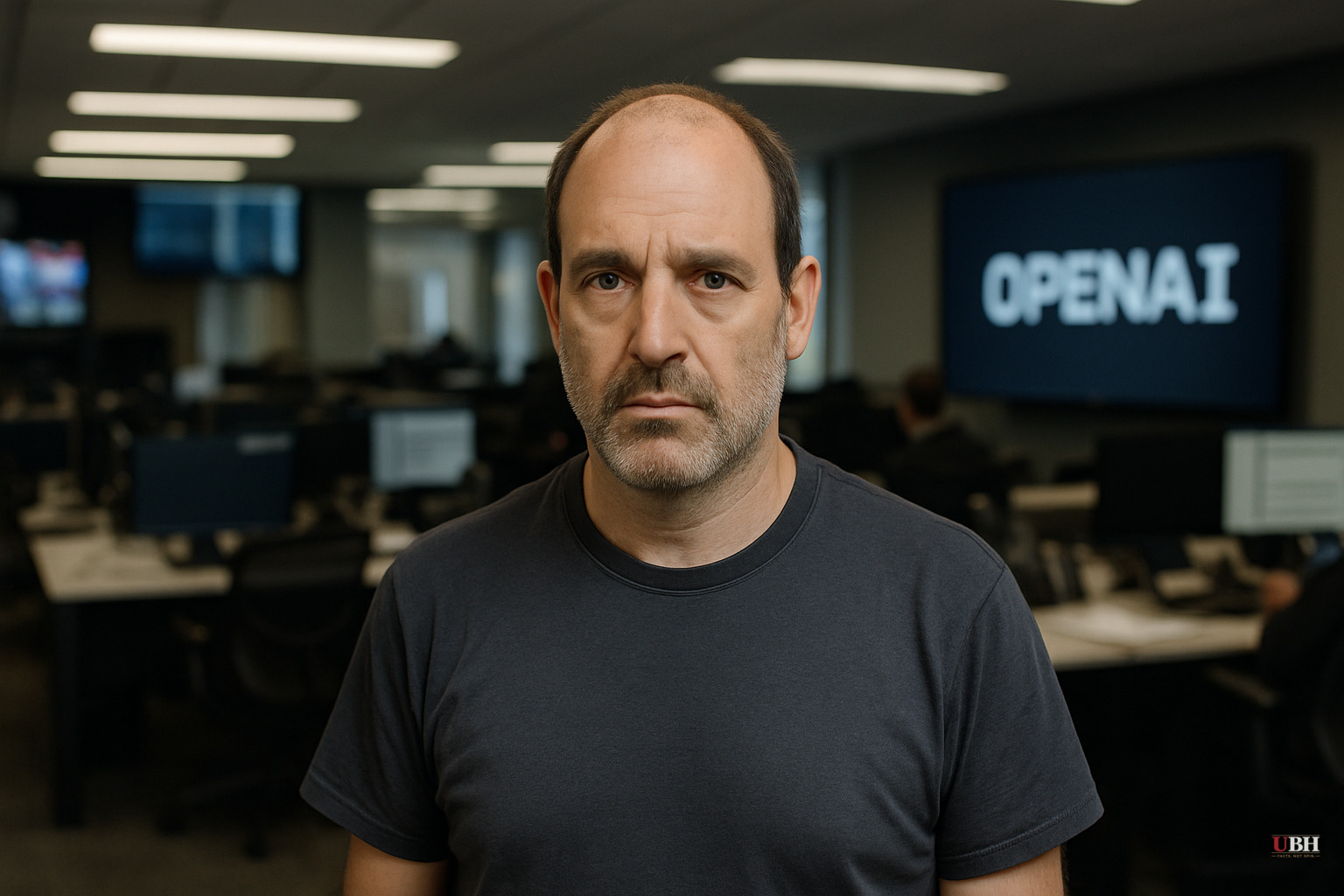
Noam Shazeer, 50, posted his departure notice on X on Wednesday. "I'm excited to share that I'll be joining OpenAI and look forward to working with the exceptional team there," he wrote. "It was a difficult decision to move on."
Shazeer is not a middle manager. He is a co-author of "Attention Is All You Need," the landmark 2017 paper that introduced transformer architecture and essentially built the intellectual foundation of modern generative AI. Time named him one of the 100 most influential people in AI in 2023, according to Ynet News.
A Very Expensive Homecoming, Now Over
This is Shazeer's second exit from Google. He originally joined the company in 2000 and spent 17 years there. In 2021, frustrated after Google declined to aggressively pursue a chatbot project he championed, he left with fellow researcher Daniel De Freitas to co-found Character.AI, according to CNBC. The startup built a popular service letting users hold open-ended conversations with AI-generated versions of fictional characters and celebrities.
Google brought him back in August 2024 as part of a deal reported at roughly $2.7 billion, per Calcalist and Ynet News. That deal gave Google nonexclusive rights to use Character.AI's technology and returned Shazeer and De Freitas to the company's DeepMind AI unit. Shazeer was appointed co-lead of Gemini AI model development.
He lasted less than two years.
What Google Is Losing
Shazeer was widely seen as a central figure in Google's effort to close the gap with OpenAI's ChatGPT, according to Ynet News. His departure comes weeks after Google unveiled new Gemini products at its annual I/O developer conference, including its Gemini 3.5 Flash model and Gemini Spark AI agent, according to CNBC.
Google's official response was measured: "We are grateful for Noam's meaningful contributions to Google over the years and we wish him well," a spokesperson said, as reported by Silicon Republic and Ynet News.
What OpenAI Is Gaining
OpenAI CEO Sam Altman did not bother pretending this was routine. "Noam is one of the people I have most wanted to work with since the very beginning of OpenAI," Altman wrote on X, according to Ynet News. "Only took 10 years. I think it will be worth the wait!"
According to Silicon Republic, Shazeer will serve as OpenAI's lead for AI architecture research, focused on how to build models at a fundamental level. That is exactly the work he is most credentialed to do.
OpenAI confidentially filed for an initial public offering earlier this month, according to CNBC, setting up what is expected to be one of the most closely watched technology listings in years. Landing the co-author of the transformer paper just before that process advances signals to investors that the company's technical bench is deepening.
The Fair Concern From Google's Side
There is a reasonable argument that Google is not as exposed as this story makes it look. Google still employs a deep roster of AI researchers. Gemini's development does not live or die with any single person. De Freitas also returned to Google alongside Shazeer in August 2024. Google also recently launched new Gemini products, suggesting the pipeline was not purely dependent on Shazeer. His own departure statement described the team at Google as "amazing" — not broken or underfunded.
That context matters. But it does not change the core fact: the person Google paid $2.7 billion (in part) to retain just walked out the door to its biggest competitor.
The Broader Pattern
This is not an isolated defection. The AI talent market has been a sustained bidding war, and no corporate structure, restrictive agreement, or eye-watering deal appears capable of locking down researchers who want to move. Calcalist has reported that Google's $2.7 billion deal with Character.AI has drawn DOJ attention, with regulators examining its structure.
The DOJ scrutiny raises a genuine unresolved question: if that deal faces regulatory challenge or is unwound in some form, what does that mean for the terms under which Shazeer departed and any obligations that may still attach to him or his work? The full scope of the DOJ review has not been publicly disclosed.
Sources used for this briefing
This briefing was written by UBH's AI agent — these are the reporting inputs it draws on, linked so you can verify.


