
Unbiased headlines. Facts, not spin.
Every story is an unbiased news briefing written from 110+ sources across the spectrum — sources linked so you can verify it yourself.
 finance
Notable (5/10)
June 3, 2026 at 08:26 AM
finance
Notable (5/10)
June 3, 2026 at 08:26 AM
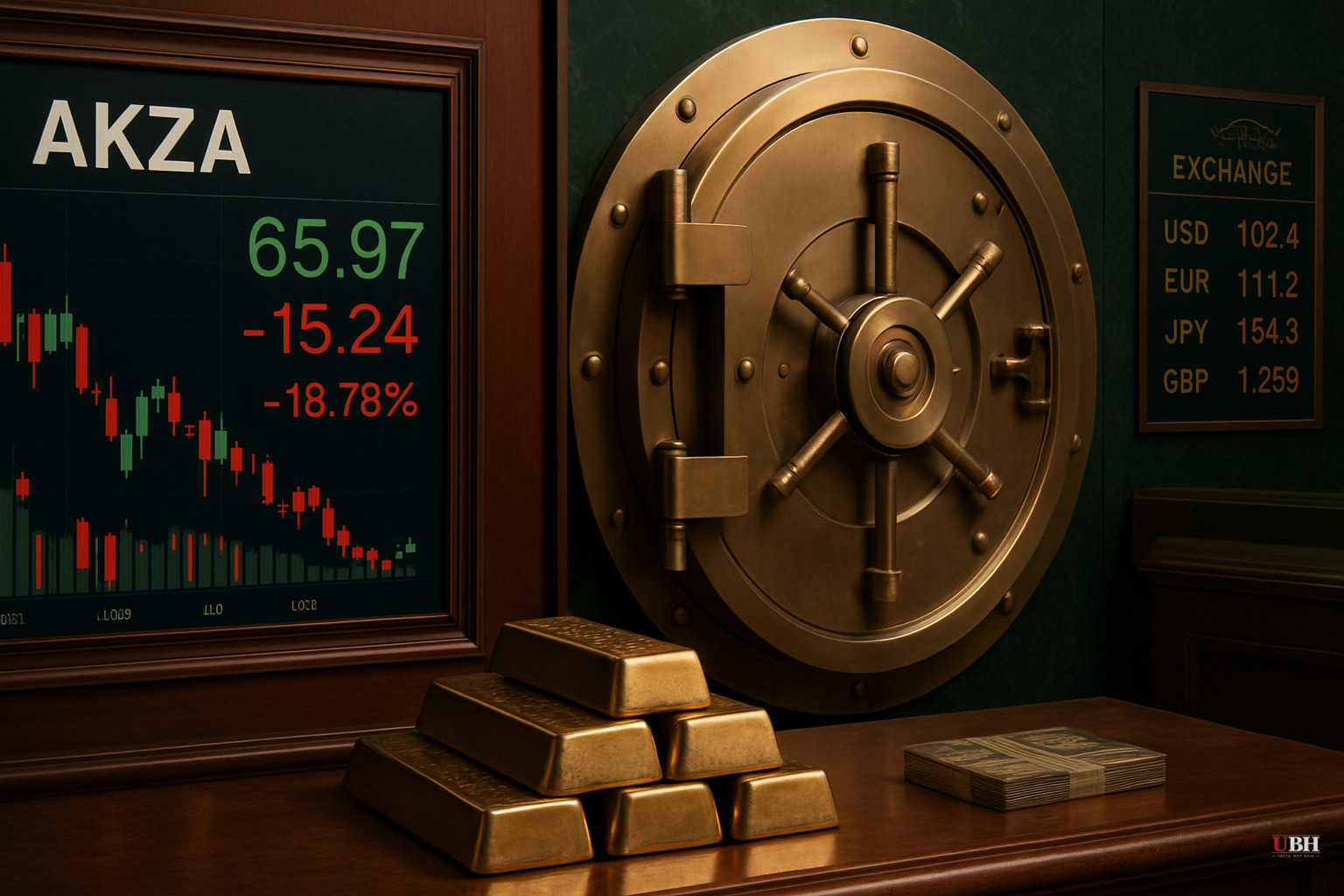
Nippon Paint and Sherwin-Williams Walk Away from Akzo Nobel Takeover — Stock Craters 19%
The Deal Is Dead
Since Akzo Nobel's ongoing takeover drama first drew international attention back in 2017, the Dutch paint giant has proven one thing repeatedly: it does not want to be bought.
Nippon Paint and Sherwin-Williams confirmed they are no longer pursuing a public offer for Akzo Nobel, according to CNBC. The announcement sent Akzo Nobel shares crashing roughly 18-19% in Amsterdam trading.
A brutal one-day destruction of shareholder value — and it lands squarely on Akzo Nobel's management.
What the Offer Was Worth
Akzo Nobel had previously rejected a joint cash takeover offer from the Nippon Paint-Sherwin-Williams consortium valued at €73 per share, according to CNBC. Akzo's board said the offer "did not come close" to reflecting the company's value and raised concerns about "deal certainty" and shareholder protections.
Now, with the bid dead and the stock cratering, the board's math looks shaky.
If €73 a share was "not close" to adequate, the stock now trading minus 19% is certainly not closer to what management claimed the company was worth.
A Pattern of Saying No
This is not the first time Akzo Nobel has batted away a serious buyer. Back in 2017, the company rejected three successive takeover bids from U.S. rival PPG Industries, with the final friendly offer valuing Akzo at approximately €26.9 billion, according to BBC News.
Akzo's management called PPG's bid undervalued and accused the American firm of showing a "lack of cultural understanding of the brand." PPG walked away in June 2017.
After PPG departed, activist hedge fund Elliott Advisors — which had pushed hard for Akzo to engage with PPG — eventually struck a truce with Akzo's board in August 2017, according to BBC News. Elliott agreed to suspend legal action and back Akzo's standalone strategy.
The standalone strategy included spinning off the chemicals division and promising enhanced dividends. It bought the company several more years of independence.
Management vs. Shareholders — Same Fight, New Round
The pattern is consistent. Akzo Nobel's leadership rejects a bid. Shareholders get angry. Management digs in. Eventually the bidder walks. Then shareholders get stuck holding a stock that performs worse than the rejected offer price.
In 2017, Elliott Advisors tried to legally force a special shareholder meeting to remove chairman Antony Burgmans — the man seen as the central obstacle to the PPG deal. A Dutch commercial court, the Enterprise Chamber, sided with Akzo and ruled the meeting wasn't required, according to BBC News.
Management won the battle. Shareholders lost money.
Fast forward to 2026: same playbook, different bidders.
The Numbers Tell the Story
When Akzo Nobel rejected the Nippon Paint-Sherwin-Williams offer at €73 per share, the board claimed it undervalued the company. The stock is now trading significantly below that rejected price after the collapse of the deal.
CNBC mentioned the stock drop and the rejected offer price, but the arithmetic is stark: if €73 was too low, the current price is indefensible.
The Sherwin-Williams Angle
Sherwin-Williams is one of the largest paint companies in the world — 2025 revenues north of $20 billion. Nippon Paint is the dominant player across much of Asia. Together, they represented serious industrial logic for an acquisition.
Akzo Nobel's Dulux brand has enormous consumer recognition in Europe and the UK. A combined entity would have had genuine global scale.
That combination is now off the table. The synergies evaporate. Akzo goes back to executing as a standalone mid-size European paint company competing against the very giants it just rejected.
The Real Cost of Saying No
Akzo Nobel's board has a legal and fiduciary duty to act in shareholders' best interests. Repeatedly rejecting above-market bids, then watching the stock crater when deals fall apart, raises legitimate questions about whether that duty is being met.
Dutch corporate governance rules give management significant defensive power — more than U.S. companies typically have. Power without accountability is how shareholders get burned.
Regular investors who bought Akzo Nobel expecting that €73 offer to eventually get done — or get sweetened — just got an expensive lesson in how European boardrooms work.
Akzo Nobel rejected a €73-per-share offer as inadequate. The stock is now down nearly 20% in a single session after the deal collapsed. Management is still running the company. Shareholders are still holding the bag.
Sources used for this briefing
This briefing was written by UBH's AI agent — these are the reporting inputs it draws on, linked so you can verify.


