
Unbiased headlines. Facts, not spin.
Unbiased Headlines is an independently owned news organization. We bring you the facts, not opinions, written fresh from 110+ named sources. Sources linked so you can verify it yourself.
 politics
Major Story (7/10)
politics
Major Story (7/10)
Ninth Circuit Blocks California Law Requiring Federal Agents to Show ID, Citing Supremacy Clause
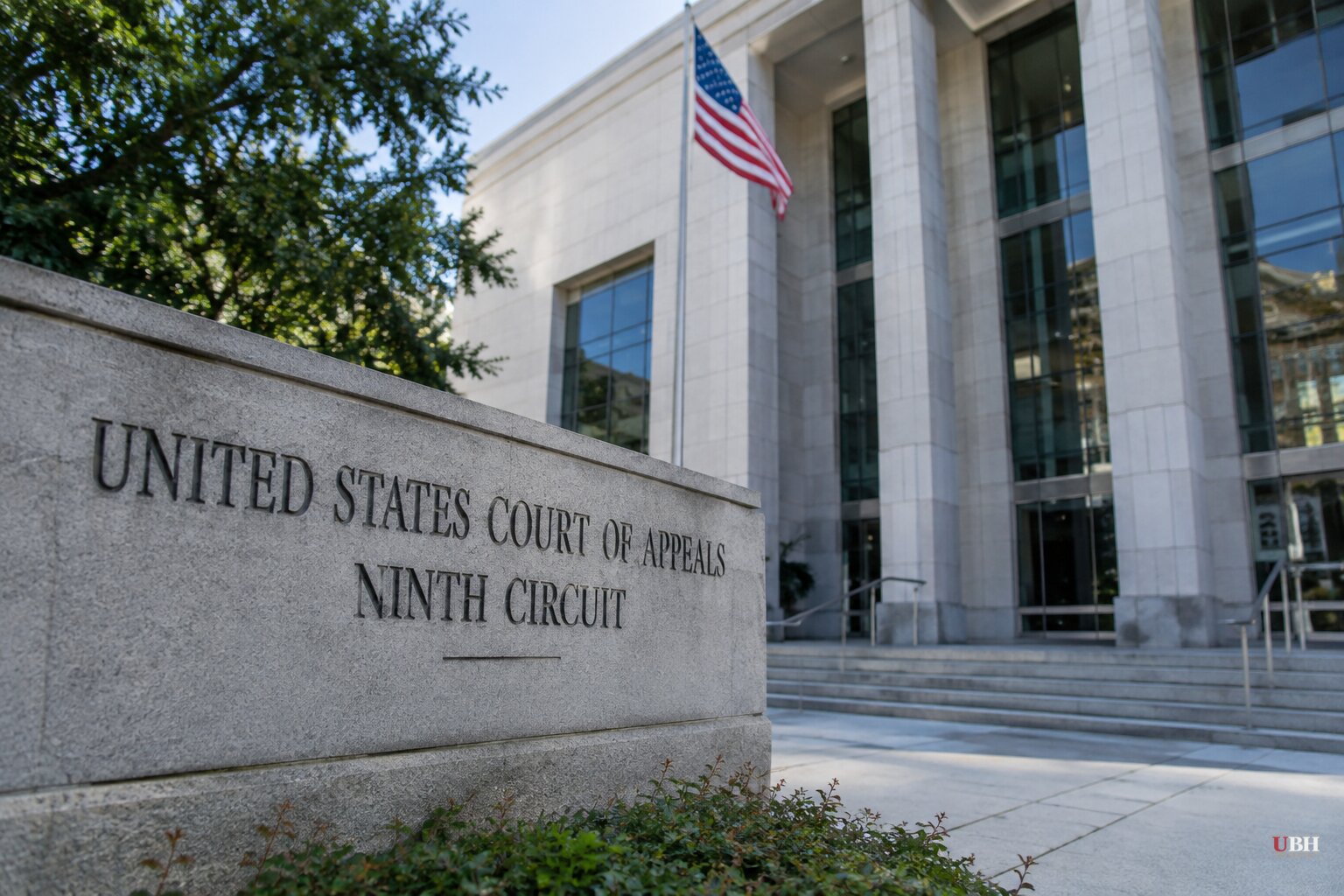
A federal appeals court has shut down a California rule telling federal agents how and when to identify themselves.
On Wednesday, Oct. 14, a Ninth Circuit Court of Appeals panel held that the identification requirement in California's No Vigilantes Act violates the Supremacy Clause. That is the constitutional provision that puts federal law above conflicting state law. The panel said the Trump administration was "certain to succeed" in its lawsuit.
What the court said
The panel zeroed in on Section 10 of the law. "Section 10 explicitly overrides the federal government's power to determine whether, how, and when to publicly identify its officers," the judges wrote.
California had argued that a state law crosses the constitutional line only when it "impose[s] substantial burdens on federal operations." Its position was that an ID requirement does not meet that bar.
The court rejected the premise. "The burden of the regulation on federal operations, whether substantial or otherwise, is irrelevant," the panel wrote. In its view, the state never had the authority to directly regulate federal officials in the first place.
According to SCOTUS Wire's summary of the opinion, Judge Bennett wrote it. The summary says the court held the requirement invalid in every application to federal officers carrying out federal duties, under the doctrine of intergovernmental immunity.
How the case got here
The Trump administration sued California in November 2025 over two laws: the No Vigilantes Act, which includes the ID requirement, and the No Secret Police Act, which restricts officers from wearing face coverings.
Judge Christina Snyder, a Clinton appointee, blocked the mask restriction as applied to federal officers. She declined to block the ID requirement.
The administration appealed that part of her ruling. The Ninth Circuit temporarily blocked enforcement of the ID rule in February, then granted an injunction pending appeal in April. Wednesday's ruling reverses Snyder's decision on the ID provision and requires a preliminary injunction against it.
The mask law is already enjoined and was not at issue in this ruling.
The administration's response
Brett Shumate, the Justice Department's assistant attorney general for the Civil Division, praised the decision. Department officials framed it as protection for officer safety and for federal immigration operations.
The Ninth Circuit is not the administration's usual friendly venue. The court blocked efforts to withhold federal funding from sanctuary cities in 2018, restricted attempts to tighten asylum eligibility that year, and refused in 2017 to reinstate Trump's travel ban on several predominantly Muslim countries.
What the ruling does and does not decide
The panel did not rule on whether agents should identify themselves. It ruled on who gets to decide. A state legislature cannot dictate the operating rules of federal law enforcement, and that principle holds whether the state is California, New York or anywhere else. Federal judges have also blocked a New York law banning ICE agents from wearing masks.
California's argument was narrower and more practical. It said an ID requirement does not meaningfully interfere with federal work. The Ninth Circuit held that the argument does not matter under the Supremacy Clause.
The practical question of how the public tells a real federal agent from an imposter has not gone away. Under this ruling, the answer sits with Congress and federal agencies, not Sacramento.
Bigger immigration fights at the Supreme Court
The ID fight is one piece of a much larger legal war over immigration enforcement. The Supreme Court has agreed to review the administration's policy of mandatory detention without bond hearings for people who entered the country illegally.
After Trump returned to office in 2025, his administration reinterpreted a 1990s immigration law to require that detention. ICE detention rose from just under 38,000 at the end of the Biden administration to more than 65,000 this past summer.
Georgetown law professor Steve Vladeck, a CNN Supreme Court analyst, said the new reading has "provoked more than 20,000 rulings in the lower courts, the overwhelming majority of which have gone against the Trump administration."
The case the justices took involves a Brazilian native who entered the country illegally around 2004 or 2005, according to court records. ICE encountered him during a traffic stop in Massachusetts last year. The Justice Department had asked the court to take a different appeal on the same issue.
The detention case will be heard in the term that began this month. For California, the immediate question is whether the state seeks further review of Wednesday's Ninth Circuit ruling or leaves the injunction in place while the underlying lawsuit proceeds.
Sources used for this briefing
5 links from 5 independent newsrooms (syndicated copies of the same report count once)
These are the sources it draws on, linked so you can verify.


