
Unbiased headlines. Facts, not spin.
Unbiased Headlines is an independently owned news organization. We bring you the facts, not opinions, written fresh from 110+ named sources. Sources linked so you can verify it yourself.
 politics
Notable (6/10)
politics
Notable (6/10)
Supreme Court Hears Arguments on Whether a Newsletter Subscriber Can Sue Under the 1988 Video Privacy Law
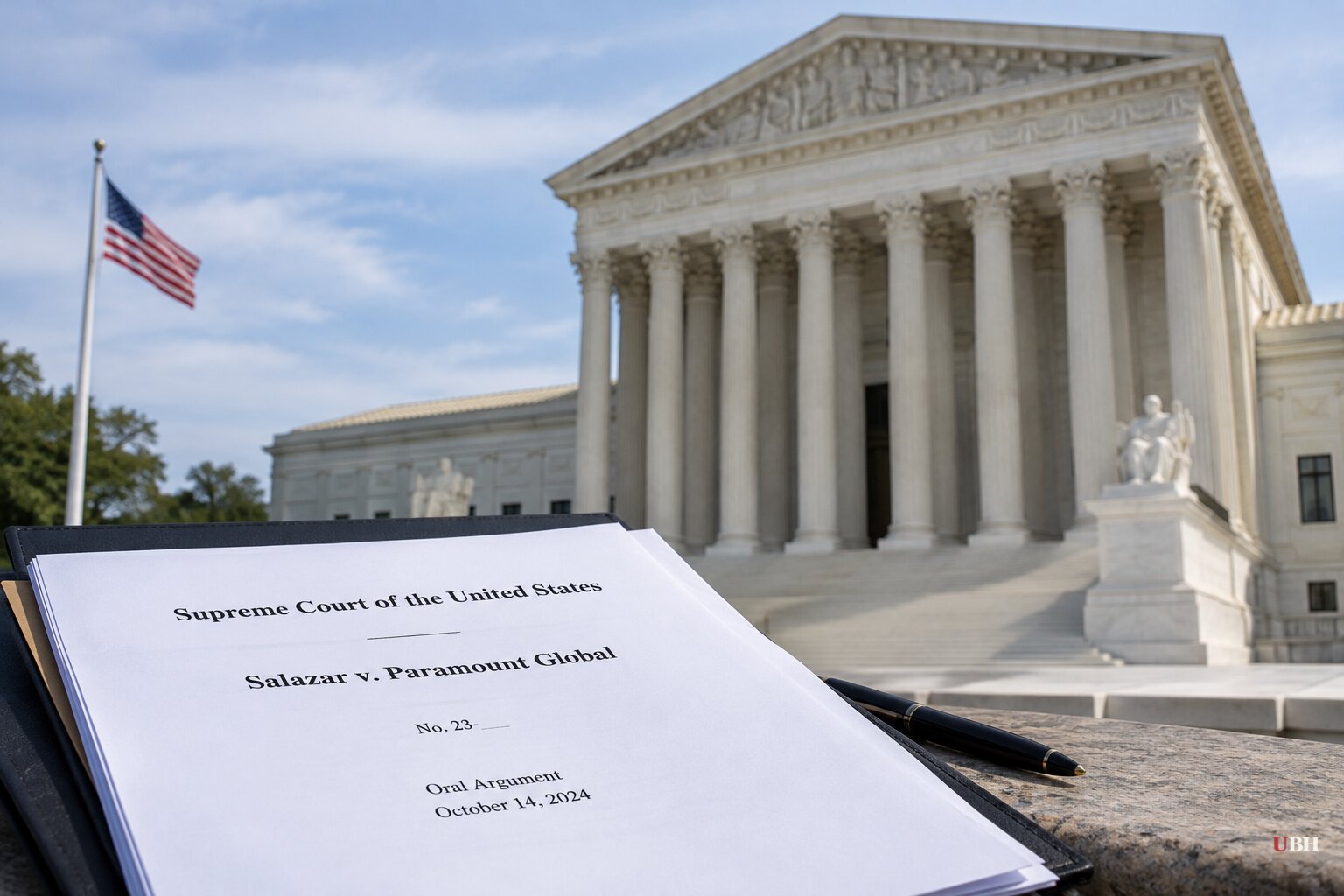
Since Michael Salazar filed a proposed class action against Paramount Global in 2022, his case over a college-sports newsletter has climbed from a Tennessee federal court to the Supreme Court. The justices heard oral arguments today, Wednesday, Oct. 14.
The question is narrow on paper. Does subscribing to any product from a company that also offers video make you a "consumer" under the 1988 Video Privacy Protection Act? Or does the product have to be audiovisual?
The facts of the dispute
Salazar signed up for a newsletter from 247Sports.com, a college sports and recruiting site owned by Paramount, and gave his email address. He later watched videos on the site while logged in to Facebook.
He alleges Paramount ran a Facebook tracking pixel on the site that sent Facebook his ID and his video-viewing history without his consent. Facebook allegedly used that data for targeted advertising.
Paramount says Salazar signed up only for a free email newsletter and never rented, bought or subscribed to any audiovisual material. The company says he watched free videos on the site separately from the newsletter.
The statute bars a "video tape service provider" from knowingly disclosing personally identifiable information about a consumer without written consent. It defines a consumer as "any renter, purchaser, or subscriber of goods or services from a video tape service provider." A winning plaintiff can collect at least $2,500 in liquidated damages, plus possible punitive damages and attorneys' fees.
Congress passed the law after a video store clerk gave a Washington City Paper reporter a list of 146 movies rented by Judge Robert Bork during his 1987 Supreme Court confirmation fight. Congress updated the law in 2012 to allow electronic consent but left the definition of "consumer" alone.
The courts are split
The Middle District of Tennessee found that Salazar had standing, because the alleged disclosure of his viewing history was a concrete injury, but dismissed his complaint. A divided Sixth Circuit affirmed in April 2025. The majority held that the goods or services must involve audiovisual content. Judge Rachel Bloomekatz dissented.
The Sixth Circuit expressly broke with the Second and Seventh Circuits, which read "goods or services" broadly. The D.C. Circuit sides with the Sixth in requiring a connection to video.
What the justices said
Justice Clarence Thomas opened with a question aimed at the narrower reading: "Would it not be natural to think goods or services from a videotape service provider would be video related services?"
Justice Ketanji Brown Jackson pressed Salazar's lawyer, Joshua Hammack, on why Congress would define "consumer" broadly. Hammack conceded there was "some mystery" in the statute's differing definitions. He said the court should "live" with that rather than "rewrite" the law.
Hammack argued that Congress put a video-specific modifier only "where it wanted," namely in the definition of personally identifiable information. He described the disclosures as constant. "They happen constantly, instantly every time someone, including a consumer, watches a video on the website," he said.
Justice Elena Kagan called the statute's language "relatively clear." She also stressed to Paramount's lawyer, Paul Clement, how easily companies can avoid liability. "Going forward, you have two very simple solutions," she said. "One is to get consent. Easy enough. People do it every day. And the other is to stop selling people's private information. Take your pick."
Clement answered sarcastically: "Yeah, or put everything behind a paywall. That would be great." Kagan replied, "Not the same thing."
The business stakes
Paramount argues in its brief that Salazar's theory has pulled the VPPA out of obscurity. It says plaintiffs have used it to file class actions against companies from La-Z-Boy to Chick-fil-A that sell non-video goods and post free promotional or instructional clips online. The company says such suits can be started at no cost, just by signing up for a free newsletter.
Privacy advocates say Congress wrote the law broadly so it would adapt to new technology and protect consumers' personal information. Companies and other critics of the law call it a relic that plaintiffs' lawyers are exploiting in ways Congress could not have foreseen. They argue a broad reading would cut off a vital source of revenue from targeted online advertising.
Salazar's side points to the text. His brief argues that the newsletter came "from a video tape service provider" and that the statute limits liability by the type of information disclosed, not by the type of subscription.
The case does not ask the justices to decide whether every website using Facebook tracking technology violates federal law. It decides only who counts as a protected consumer. The question of whether a given disclosure was made without valid consent is separate.
What happens next
The court has not issued a decision. Whichever way it goes, the ruling will replace the current patchwork. Today a plaintiff in the Second or Seventh Circuit can sue over a non-video subscription, while one in the Sixth or D.C. Circuit cannot.
If the court rules for Paramount, the Sixth Circuit's dismissal stands and the broad class-action theory is largely closed off. A ruling for Salazar would send his case back to proceed on the merits.
Sources used for this briefing
7 links from 7 independent newsrooms (syndicated copies of the same report count once)
These are the sources it draws on, linked so you can verify.


