
Unbiased headlines. Facts, not spin.
Every story is an unbiased news briefing written from 110+ sources across the spectrum — sources linked so you can verify it yourself.
 finance
Low Interest (3/10)
August 14, 2026 at 12:18 PM
finance
Low Interest (3/10)
August 14, 2026 at 12:18 PM
Ninety One Fund Manager Bets Against Wall Street's Consensus Treasury Trade
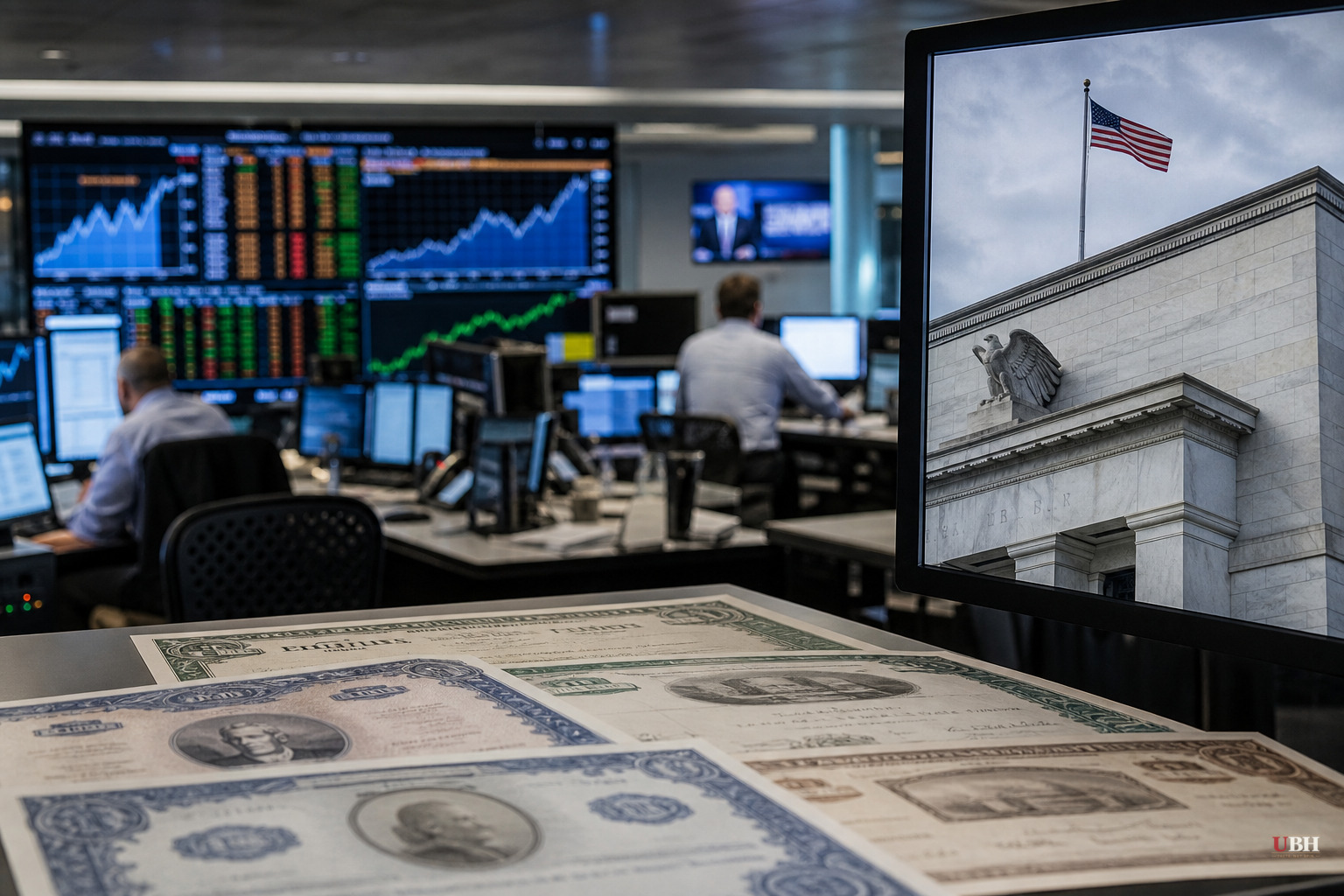
A portfolio manager at Ninety One is making a bet that runs against most of Wall Street's playbook. Jason Borbora-Sheen is going long on 30-year Treasuries, betting they'll outperform 10-year notes, according to Crypto Briefing. This is the opposite of the steepener trade that's been the consensus position among fixed-income managers for months.
Long-dated bonds have sold off hard since July 2026. That selloff pushed 30-year yields up and prices down, on the theory that inflation risk over three decades is high and the Fed can't be trusted to keep it in check.
Borbora-Sheen sees that selloff differently. He thinks the market overcorrected, and that 30-year paper is now priced for more inflation than the country is actually going to get.
His reasoning leans heavily on Fed Chair Kevin Warsh. Warsh has said repeatedly he has "no soft inflation target," a phrase meant to draw a hard line against the idea that the Fed would tolerate inflation running above 2% for extended stretches, a criticism leveled at prior Fed leadership. Borbora-Sheen is betting that's not just talk.
The Fed has held its benchmark rate steady in a range of 3.50% to 3.75% through recent meetings. That's the central bank signaling it thinks it's done enough tightening to get inflation back toward the 2% target. Progress has been choppy, though, and that unevenness is exactly what's kept bond traders split on where rates go next.
Warsh's public comments in July 2026 rattled long-dated yields, according to Crypto Briefing, with markets swinging as investors tried to figure out whether his hawkish rhetoric would actually show up in policy. That volatility is the backdrop for Borbora-Sheen's trade.
The bet, in plain terms
If Warsh's approach works and inflation grinds down toward 2% durably, the bond market has to reprice. Yields on long bonds would fall, prices would rise, and that gain would concentrate at the long end of the curve, exactly where Borbora-Sheen has placed his chips.
If it doesn't work, and inflation proves stickier than the Fed thinks, the skeptics who pushed 30-year yields higher since July get vindicated, and the selloff continues.
Ninety One is a global asset manager with roots in South Africa, running money across fixed income, equities, and multi-asset strategies. A contrarian relative-value trade like this is consistent with how active fixed-income shops position when they think the crowd has overshot.
The case for skepticism
It's fair to ask why Wall Street has piled into the steepener trade if Borbora-Sheen's thesis is right. Institutional inflation forecasting has been wrong plenty of times in the last five years, and traders who got burned betting on quick disinflation are in no rush to do it again. A Fed chair saying the right words is not the same as inflation data actually cooperating, and bond markets have been repeatedly humbled trying to front-run the Fed's credibility before the numbers confirmed it.
That's a reasonable, non-partisan reason for caution, not a dismissal of Warsh's stated goals. The steepener trade isn't a bet against the Fed succeeding eventually. It's a bet that the path there is longer and bumpier than a single trade can capture.
What decides it
The next several inflation reports are the whole ballgame here. If CPI and PCE data show sustained movement toward 2%, Borbora-Sheen's trade could pay off fast, since long bonds react hardest to changes in inflation expectations.
If inflation reaccelerates or plateaus above target, the trade loses, and the steepener crowd keeps winning. The Fed's rate path from its current 3.50% to 3.75% range hangs on that same data, and any move toward cutting would itself reshape the yield curve in ways that could cut either way for a 30-year versus 10-year relative bet.
No Fed meeting has yet delivered a rate cut under Warsh's current hawkish framing, and no source here confirms one is scheduled. Until the inflation numbers move decisively one direction, this remains an open bet, not a settled call.
Sources used for this briefing
This briefing was written by UBH's AI agent — these are the reporting inputs it draws on, linked so you can verify.


