
Unbiased headlines. Facts, not spin.
Every story is an unbiased news briefing written from 110+ sources across the spectrum — sources linked so you can verify it yourself.
 tech
Notable (6/10)
Event date: September 9, 2026
tech
Notable (6/10)
Event date: September 9, 2026
Nine AI Defamation Lawsuits Test Whether a Chatbot Can Libel You, Courts Split as Google Pitches AI to Law Firms
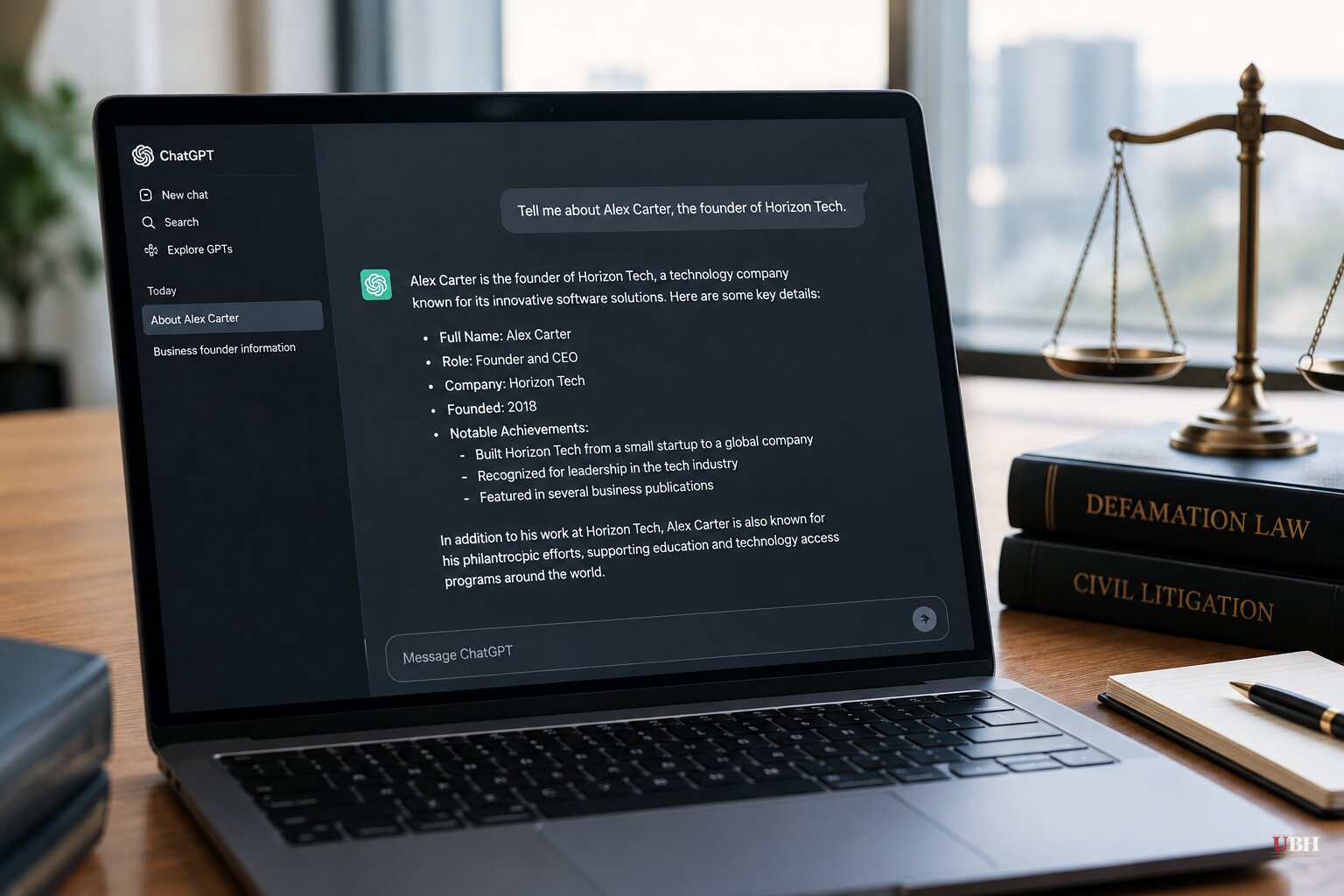
Robby Starbuck, the anti-DEI activist, says Google's AI told searchers he was a child molester. That's not a metaphor for bad publicity. It's the actual allegation behind one of nine libel-by-AI lawsuits now working through U.S. courts since 2023, according to a case tracker compiled by UCLA law professor Eugene Volokh for Reason.
Six of those nine cases are still alive. Three are done.
Walters v. OpenAI, filed in Georgia Superior Court, ended in summary judgment for OpenAI because of the specific facts of that case. Battle v. Microsoft, filed in federal court in Maryland, got sent to arbitration and resolved there. Starbuck v. Meta Platforms, in Delaware Superior Court, settled.
The six still moving: Keene v. Google (motion to dismiss denied), Starbuck v. Google (motion to dismiss denied), LTL LED, LLC v. Google (Google failed to get the case removed to federal court), Murray v. Alphabet, and two cases in federal court in Puerto Rico, Grybniak v. Google and Grybniak v. X.AI, both still at the complaint stage with no judicial action yet. A separate case, Doe v. OpenAI Found. in California state court, alleges reputation-damaging hallucinations but doesn't include a defamation claim at all.
A legal standard built for humans, not machines
Libel law in America runs on New York Times Co. v. Sullivan, the 1964 Supreme Court ruling that requires public figures suing over false statements to prove "actual malice," meaning the publisher knew the statement was false or recklessly disregarded whether it was true.
That standard assumes a reporter with a mind, doubts, and a decision-making process. A chatbot has none of that.
"How do you go about proving a chatbot's state of mind when the chatbot doesn't have a mind?" asked Clay Calvert, a senior fellow at the American Enterprise Institute, according to Bloomberg Law.
Starbuck's case against Google recently cleared a preliminary hurdle, with a court allowing his claim over what Bloomberg Law described as "radioactive lies" generated when people searched his name. University of Florida law professor Lyrissa Lidsky told Bloomberg Law she expects courts to bend toward compensating people harmed by the technology regardless of how awkwardly it fits old rules: "People are going to expect the technology to compensate for the harms it causes."
The opposing concern: don't gut the First Amendment to punish a machine
There's a real argument on the other side, and it deserves to be stated plainly. CUNY law professor Jared Trujillo told Bloomberg Law that judges already skeptical of press protections could use AI panic as cover to weaken defamation law generally, warning that "if you're already looking for a way to overturn what defamation law looks like, this represents a really good opportunity."
Pace University law professor Leslie Tenzer put the underlying problem bluntly to Bloomberg Law: "You can't sue a computer." If liability gets pinned on tech companies simply because their software produced a false statement, without any showing of intent or recklessness, that reasoning could eventually spill over into how courts treat human publishers and platforms too.
Volokh himself floated a more radical possibility to Bloomberg Law: that AI might force courts to "rethink this whole concept of relying so heavily on mental states" in libel law altogether. That would be a bigger shift than anything Sullivan-era courts anticipated, and neither side of the debate has a clean answer yet. No court has issued a final verdict establishing a new liability standard for AI hallucinations. Every ruling so far, including Starbuck's, is preliminary.
The hallucination problem is bigger than nine lawsuits
The libel cases are a small slice of a much larger problem. A public database built by Damien Charlotin, a senior research fellow at HEC Paris, has logged 2,022 court cases worldwide since April 2023 through September 5, 2026, where AI-generated content, mainly fake citations, showed up in legal filings, according to the Daily Caller News Foundation. More than 1,300 of those were in the United States.
Google's models, Gemini and Bard, were cited in 10 of those cases. ChatGPT was cited more than 100 times, per Charlotin's data. Charlotin told the Daily Caller News Foundation the problem has "reached a plateau" after an initial spike, crediting "better tools and higher awareness." Fewer than 160 of the 2,022 cases resulted in disciplinary action, and most fines landed between $1,000 and $5,000.
One of the earliest and most notorious examples: a New York federal judge sanctioned the law firm Levidow, Levidow & Oberman after lawyers submitted a brief built on fake judicial opinions and fabricated quotes generated by ChatGPT.
Against that backdrop, Google is marketing an AI product straight at the legal profession. Halimah DeLaine Prado, Google's general counsel, told Axios her company's Gemini Enterprise for Legal tool is "a complement, not a replacement" for lawyers, saying it already helps Google's own legal team with contract redlining, e-discovery and litigation prep, and could help smaller firms compete with bigger ones.
A spokesperson for Gemini Enterprise for Legal did not comment to the Daily Caller News Foundation before publication.
None of the six pending libel-by-AI cases has reached trial. The next milestones to watch are whether Starbuck's claim against Google survives past the preliminary stage into discovery, and whether the Puerto Rico cases against Google and X.AI produce the first substantive rulings on what a company owes someone when its chatbot simply makes something up about them.
Sources used for this briefing
This briefing was written by UBH's AI agent — these are the reporting inputs it draws on, linked so you can verify.


