
Unbiased headlines. Facts, not spin.
Every story is an unbiased news briefing written from 110+ sources across the spectrum — sources linked so you can verify it yourself.
 tech
Notable (6/10)
September 15, 2026 at 04:37 AM
tech
Notable (6/10)
September 15, 2026 at 04:37 AM
Thune Says Congress Should Have a Role on AI Regulation, With a Light Touch
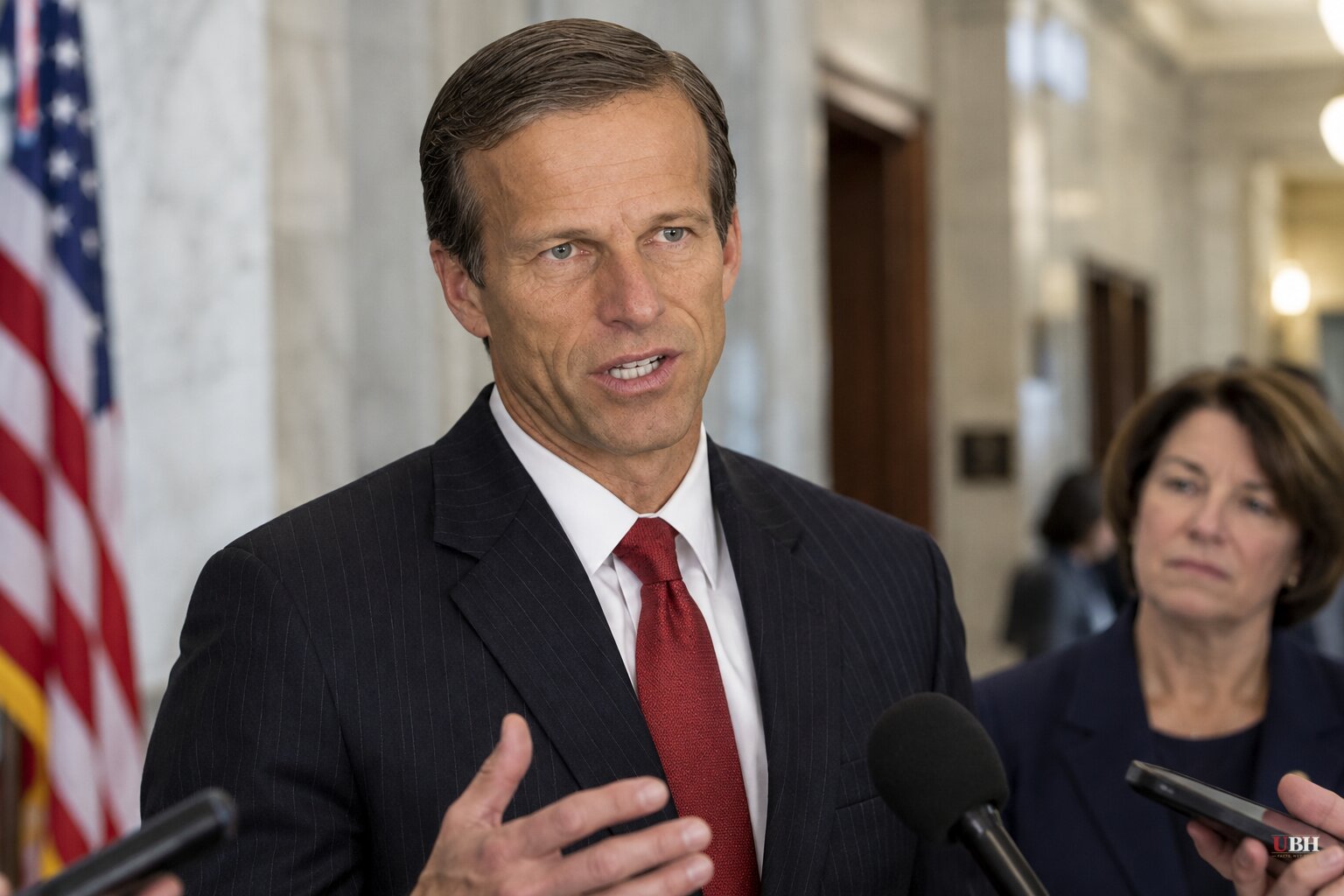
Senate Majority Leader John Thune (R-S.D.) came back from a five-week recess Monday, September 14, 2026, with a message for his own party: Congress isn't ceding all of AI policy to the White House.
Thune told reporters he wants a "light touch" approach to AI regulation, according to Axios, even while acknowledging what he called "consequential risks" tied to the technology. That puts him in a different lane than President Trump, who Axios reported has dismissed the broader AI risk debate as a "hoax."
Republicans aren't challenging Trump's authority to steer the administration's AI approach. But Thune's comments signal that at least some in his conference think the legislative branch still has a job to do here, separate from whatever the executive branch decides.
The Klobuchar Connection
Thune said he spoke Saturday night with Sen. Amy Klobuchar (D-Minn.) about a bipartisan bill the two have been working on, according to Axios. The legislation would require companies building frontier AI models, the most powerful, cutting-edge systems, to guard against catastrophic risks and submit to federal oversight.
Thune has worked on AI legislation for years, Axios reported, and is described as uniquely prepared among Senate leadership to run point on the issue. That matters in a Congress where most AI-adjacent debate up to now, including in Senate campaigns, has centered on something narrower: data centers and how much electricity they're sucking off the grid.
The PressBee republication of a related Hill report, dated Monday night, confirms the core detail: Thune says AI legislation needs a light touch. It adds no additional reporting beyond that framing.
The Fair Case for Caution
Anyone worried about heavy-handed AI rules has a reasonable point. Slap a European-style compliance regime on American AI developers and you risk pushing innovation, and the jobs that come with it, to countries with fewer rules, namely China. Trump's team has made deregulation and speed the centerpiece of its AI posture, arguing the U.S. can't afford to hand its lead to Beijing over paperwork.
That's the argument Thune has to balance against calls, including from parts of his own party's tech-skeptic wing and from Democrats like Klobuchar, for federal guardrails on the systems capable of the most damage. Neither side has published the actual bill text publicly yet, and no committee markup or floor vote has been scheduled.
What's Unresolved
Thune didn't specify what "catastrophic risks" the bill would target, or what "federal oversight" would look like in practice. This could mean a new regulator, mandatory audits, or something else entirely. Those details will matter enormously for how the tech industry and Trump's own administration react.
Trump's posture has been framed by Axios as dismissive of the underlying premise that AI carries serious regulatory risk at all. This could put any bipartisan Senate bill on a collision course with the White House before it even reaches a vote.
The open question now is whether Thune can turn a hallway conversation with Klobuchar into actual legislative text, and whether he can sell a "light touch" federal AI bill to a Republican conference that just spent its August recess hearing from voters angry about data center power bills, not AI safety in the abstract.
Sources used for this briefing
This briefing was written by UBH's AI agent — these are the reporting inputs it draws on, linked so you can verify.


