
Unbiased headlines. Facts, not spin.
Every story is an unbiased news briefing written from 110+ sources across the spectrum — sources linked so you can verify it yourself.
 tech
Notable (6/10)
September 15, 2026 at 02:56 AM
tech
Notable (6/10)
September 15, 2026 at 02:56 AM
Samsung Puts $480 Million Behind Two Nvidia Rivals in Same Week
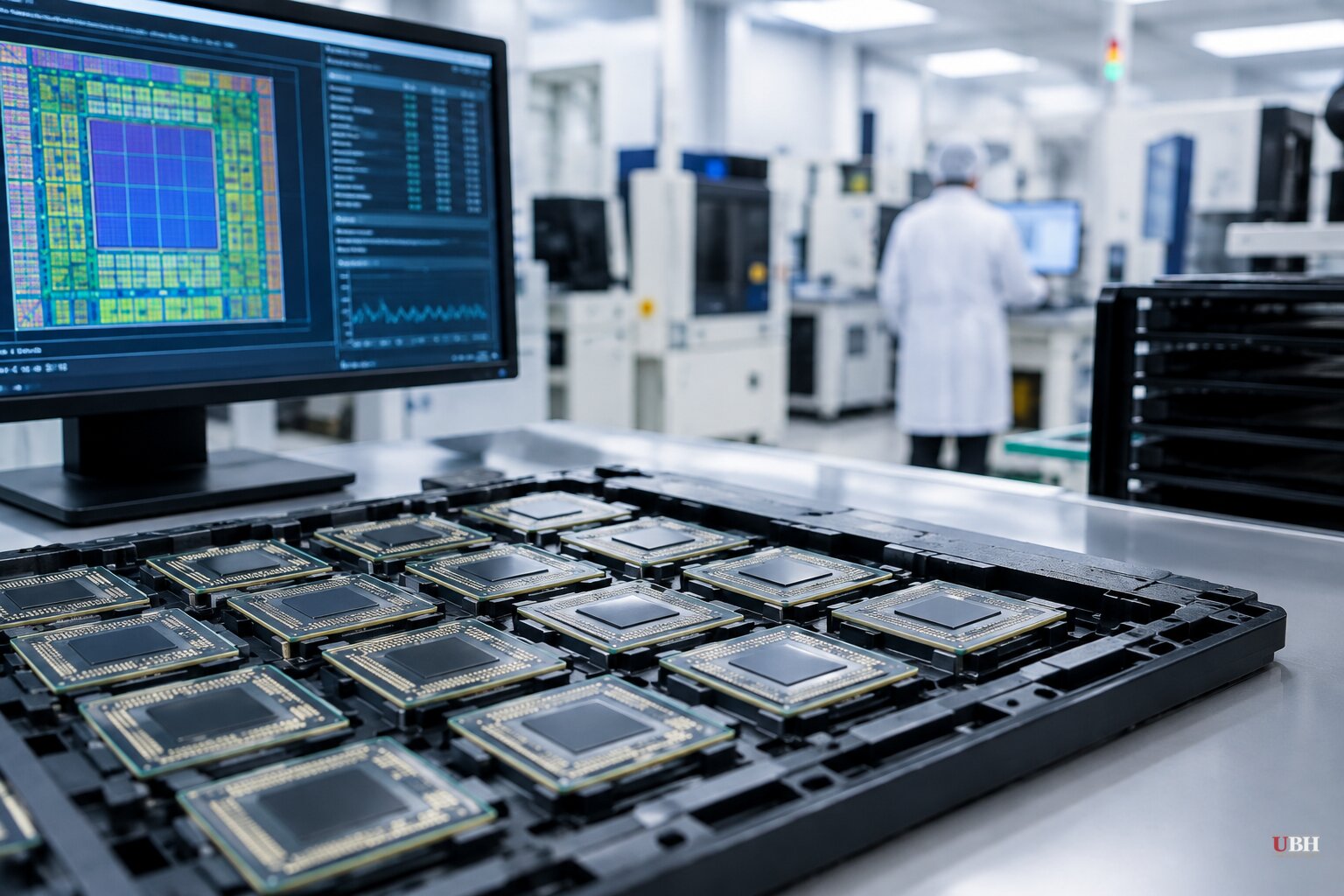
Samsung wrote two separate checks this month aimed at the same target: Nvidia's chokehold on AI chips.
The Korean electronics giant co-led a $230 million (200 million euro) Series A round for Euclyd, a Dutch startup founded in 2024, according to CNBC. Somerset Capital Partners, the Scaleup Europe Fund managed by EQT, and Innovation Industries also co-led the round.
Separately, Samsung Ventures put money into a $250 million Series C round for Rebellions, a South Korean AI chip startup now valued at $1.4 billion, according to Crypto Briefing. Arm, Pegatron VC, and the state-run Korea Development Bank also participated in that round.
Both startups are chasing the same prize. Nvidia's GPUs, originally built for gaming, became the backbone of AI after they were repurposed for training and running AI models, a process known as inference. That turned Nvidia into the world's most valuable company and gave it what CNBC describes as a near monopoly over the highest-end chip market.
Two Different Bets, One Target
Euclyd is designing an entirely different chip architecture, covering both the processor and memory system, specifically for inference workloads. CEO Bernardo Kastrup told CNBC the company is targeting two revenue streams: selling hardware and rack systems to enterprises that want to run AI in-house, and licensing its underlying technology to other chipmakers.
"AI is becoming a foundation of economic growth, scientific discovery and national competitiveness, but its potential will remain constrained unless we fundamentally change the infrastructure beneath it," Kastrup said.
Kastrup said Samsung brings more than cash. "They are one of the biggest memory manufacturers in the world," he told CNBC. "They do a lot of engineering, they know a lot about systems, they know the supply chain, they have a huge network."
Euclyd doesn't plan to ship physical chip systems until 2028, with a goal of serving thousands of enterprise customers by 2030, Kastrup told CNBC. The company's systems have not been proven at scale in any commercial deployment.
Rebellions is further along on the manufacturing side. Samsung's foundry division is already fabricating Rebellions' chips on 4-nanometer and 5-nanometer processes, with a roadmap to 2-nanometer technology, according to Crypto Briefing. The company's flagship design, Rebel-Quad, uses a chiplet-based architecture, linking smaller chip components instead of one massive die, to prioritize energy efficiency at scale.
Why Samsung Wants In
Crypto Briefing lays out the business logic plainly: Samsung's chip manufacturing arm has been losing ground to TSMC, which fabricates chips for both Nvidia and Apple. Every customer Samsung locks into its advanced nodes helps justify the billions it has sunk into fabrication plants. Samsung's memory business also benefits directly, since more AI accelerator makers means more buyers for its high-bandwidth memory products.
Korea Development Bank's participation in the Rebellions round adds a government-backed layer to the deal. South Korea has made clear it wants to stay a semiconductor superpower, and state capital flowing into a domestic AI chip startup fits that stated goal. A chunk of this round came from taxpayer-linked capital rather than pure private markets.
Samsung isn't the only company hedging against Nvidia. OpenAI announced in August that its first in-house AI chip, called Jalapeño, delivered what the company called "industry-leading speed and efficiency." Google, Amazon Web Services, and Meta are all developing their own chips too, according to CNBC.
The Skeptic's Case
The fair pushback: plenty of well-funded Nvidia challengers, including Groq and Cerebras, have been trying to crack this market for years without dislodging Nvidia's grip. Nvidia's advantage isn't just silicon. Its CUDA software platform, built over more than a decade, is what most AI developers already know how to use, and that ecosystem lock-in is harder to replicate than a chip architecture.
A $1.4 billion valuation for Rebellions and an unproven product line for Euclyd are both a long way from denying Nvidia's dominance of the high-end chip market. Neither company has a commercial deployment at scale to point to yet.
The outcome depends on whether Samsung's manufacturing and memory muscle can do what venture capital alone hasn't: get a real customer base off Nvidia's chips. Euclyd says it won't start shipping physical systems until 2028, with enterprise customers scaling up by 2030. Rebellions has a working product on Samsung's fab lines today, but has yet to disclose how many enterprise customers are actually buying it versus using it in pilot programs.
Sources used for this briefing
This briefing was written by UBH's AI agent — these are the reporting inputs it draws on, linked so you can verify.


