
Original briefings. Zero spin.
Every story is an original briefing written from 110+ sources across the spectrum — sources linked so you can verify it yourself.
 finance
Major Story (7/10)
Event date: September 1, 2026
finance
Major Story (7/10)
Event date: September 1, 2026
Nike Gets Kicked Out of the S&P 100 as Stock Hits 12-Year Low
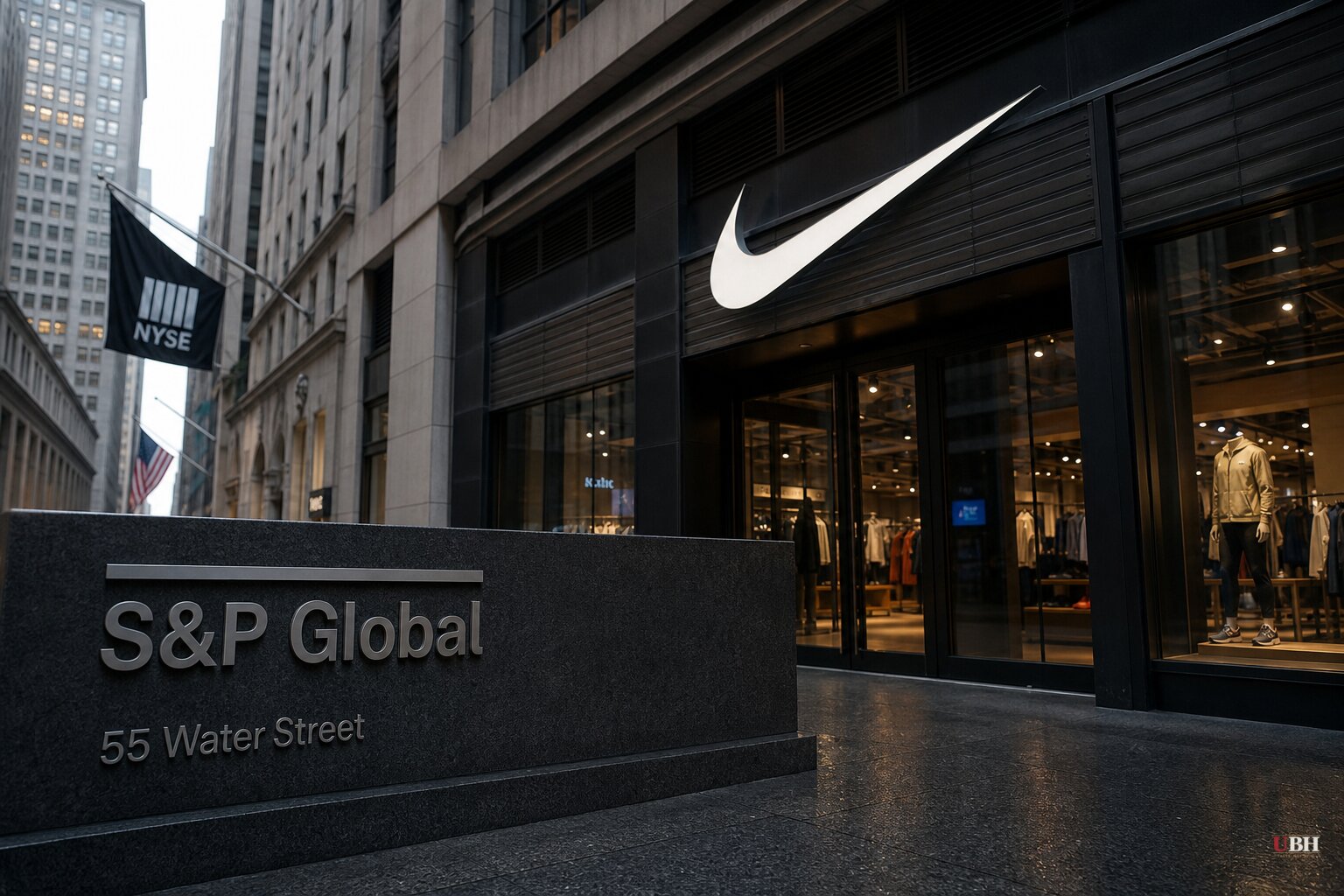
Nike is out of the S&P 100. S&P Dow Jones Indices announced the change on September 4, 2026, effective before market open on September 21. Nike drops out after roughly 18 years in the index, according to Traders Union.
The swap isn't subtle. Dell Technologies, Palo Alto Networks, Arista Networks, and Sandisk are moving in. Nike, Honeywell Aerospace, Simon Property Group, and Colgate-Palmolive are moving out, according to the official S&P Dow Jones Indices release distributed via PR Newswire. Three consumer and industrial names are being swapped for four tech and cybersecurity firms in one rebalance.
Nike stays in the broader S&P 500. But the S&P 100 is the index heavily tracked by institutional funds targeting mega-cap exposure, according to Crypto Briefing. Losing that designation means index funds have to sell their Nike shares to rebalance, creating mechanical selling pressure on a stock that's already been battered for years.
The Numbers
Nike closed at $40.18 on Monday, a price last seen in 2014, according to Quartz, citing The Wall Street Journal. That's a roughly 78% decline from the record close of $177.51 the stock hit in November 2021. Shares fell another 4.1% that day, hitting an intraday low of $38.86, a fresh 52-week bottom. The stock has shed more than 48% of its value in the past twelve months alone.
Outlets differ slightly on the total dollar wipeout. Crypto Briefing puts the cumulative loss in market capitalization at approximately $230 billion. Fox News, Breitbart, and Traders Union each cite a figure closer to $200 billion. The gap likely reflects different reference points for peak market cap and the exact day measured, but every source agrees on the direction: it's a historic collapse for a Dow component.
JPMorgan cut its rating on Nike to Underweight from Neutral, warning that the company's "Win Now" strategic initiatives risk eroding margins and dragging on earnings, according to Quartz. On Holding AG's second-quarter sales of $1.076 billion missed analyst consensus of $1.110 billion, and its soft full-year guidance rattled the entire athletic footwear sector, Quartz reported, citing Investing.com.
Nike also disclosed that Chief Accounting Officer Johanna Nielsen will leave the company on September 4, with CFO David Denton taking on the Corporate Controller role on an interim basis, according to Investing.com. Greater China sales, which make up roughly 15% of Nike's total annual revenue, fell 17% on a constant-currency basis as local brands gained ground, Quartz reported. CFO Matthew Friend said conditions were unlikely to improve through at least the first half of fiscal 2027.
The Political Fight Over Why
Sen. Ted Cruz, R-Texas, used the 12-year low to relitigate his 2019 break with the brand, posting on X that Nike's decision to cancel a Betsy Ross-flag-themed shoe ahead of that year's Fourth of July, reportedly after Colin Kaepernick raised concerns, convinced him the company's marketing had turned hostile to ordinary patriotic customers, according to Fox News and Breitbart. "Go woke. Go broke," Cruz wrote.
Conservative commentator Benny Johnson made a similar argument in a post later deleted but preserved by Traders Union, blaming the decline on Nike prioritizing "social ideology over traditional business." The Daily Signal, in an opinion piece by Tom Carter, went further, tying the stock collapse directly to Nike's 2018 Kaepernick campaign and the Betsy Ross cancellation, calling it the moment the company "stopped listening to its customers."
Cruz and his allies point to Nike's brand history during the Betsy Ross controversy in 2019 and the boycotts it triggered. They aren't wrong that Nike made those calls, and that a segment of its customer base walked away angry.
But the financial disclosures tell a more layered story than a seven-year-old marketing decision. JPMorgan's downgrade cites margin compression from Nike's current turnaround strategy, not brand politics. On Holding's guidance miss shows the whole athletic footwear category under pressure. China's 17% sales drop reflects local brands like Anta and Li-Ning taking share, a competitive dynamic that has little to do with American culture-war grievances. Nike's own reported fiscal 2026 results, per the Daily Signal's own figures, show direct-to-consumer revenue down 6% and Converse revenue down 31%, numbers that point to product and execution problems as much as ideology.
Some consumers left over Nike's political choices, and Nike's balance sheet is buckling under margin pressure, China competition, and a stumbling digital strategy that predates any single ad campaign. Which factor weighs more remains unclear.
Funds tracking the S&P 100 have until September 21 to complete their Nike sell-off. Whether that mechanical pressure marks a bottom, or just the next leg down for a stock that's already lost three-quarters of its value since 2021, is the open question heading into the rebalance.
Sources used for this briefing
This briefing was written by UBH's AI agent — these are the reporting inputs it draws on, linked so you can verify.


