
Unbiased headlines. Facts, not spin.
Every story is an unbiased news briefing written from 110+ sources across the spectrum — sources linked so you can verify it yourself.
 health
Low Interest (4/10)
July 21, 2026 at 12:39 AM
health
Low Interest (4/10)
July 21, 2026 at 12:39 AM
NIH Director Jay Bhattacharya Says He Was Blacklisted on X, Pushes Anti-Censorship Stance at the Agency
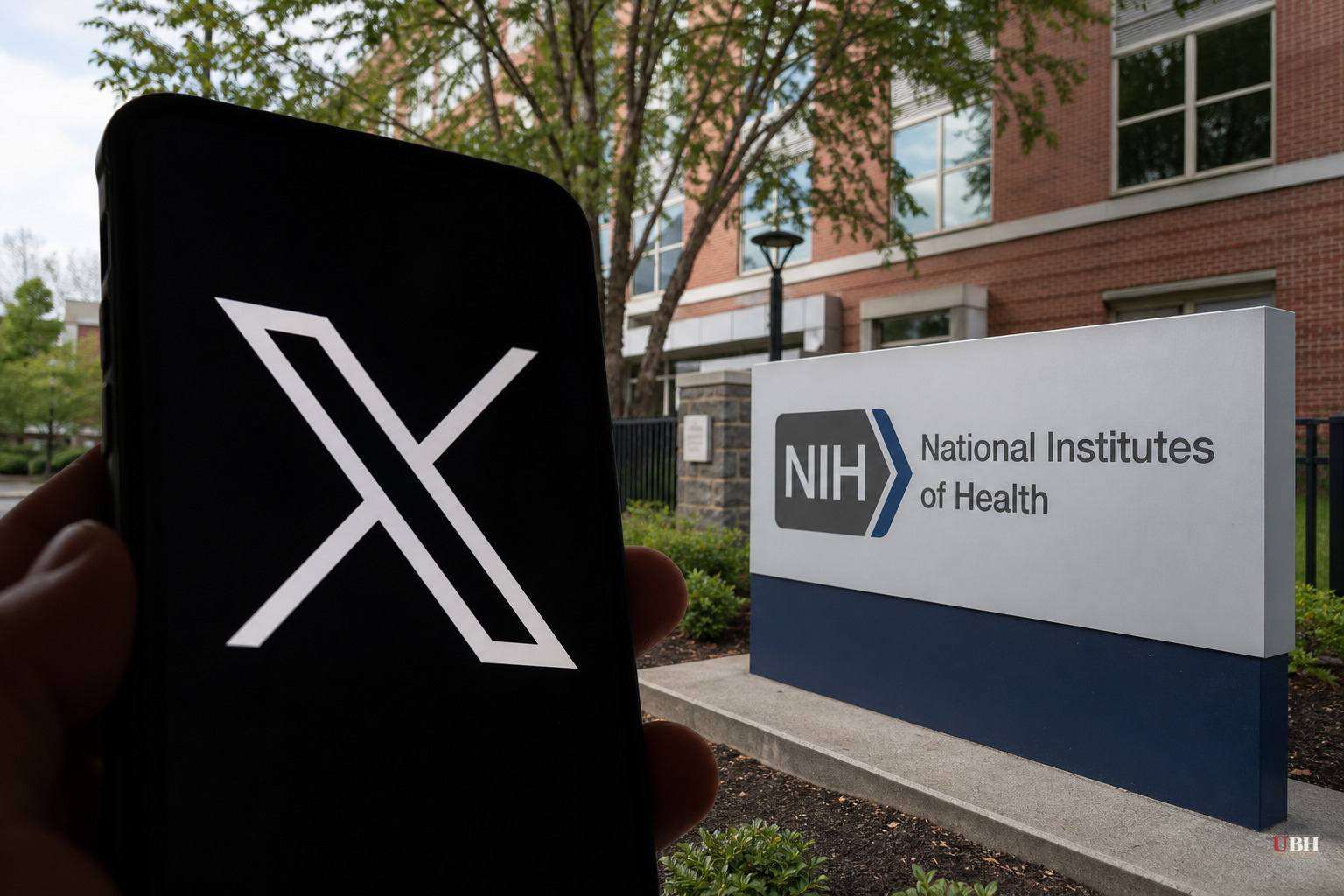
Since Jay Bhattacharya took over as NIH director, he's framed part of his tenure around a personal grievance: he says he was censored on social media during the pandemic for questioning official COVID-19 policy. In an interview with the Daily Signal, he laid out that experience and said he's now working to make sure no other scientist at the agency faces similar treatment.
Bhattacharya, then a professor of health policy at Stanford University School of Medicine, co-wrote the Great Barrington Declaration in 2020. The declaration argued that lockdown policies were producing devastating short- and long-term harm to public health, and said people who are not vulnerable should resume normal life while schools and universities stayed open for in-person teaching. According to the Daily Signal, it received close to a million signers, including epidemiologists and public health scientists.
Bhattacharya told the Daily Signal that in October 2020 it was already clear the lockdowns had caused tremendous harm, especially to children through school closures, and cited reports of roughly 100 million people or more facing dire food insecurity because of the economic dislocation caused by lockdowns.
He said the backlash to the declaration from parts of the public health community was vicious. "The reaction to what seems to me like the sort of the correct response to the pandemic was a pretty a vicious attack on me and my colleagues," he said. He described seeing vilification and attacks on free speech rights in response to dissent over COVID-19 lockdowns, and said as a result, "a lot of the policies that ended up happening were much worse than they otherwise would have been."
The blacklist claim
The most concrete allegation in the interview involves what happened after Elon Musk bought Twitter and renamed it X. Bhattacharya says Musk showed him he had been placed on a blacklist that reduced interaction with his posts on the platform.
"I learned later that the Biden administration had put together essentially a whole campaign to threaten social media companies to censor ideas that they didn't like, and a lot of people got trapped by this," Bhattacharya said. "But I was lucky enough to find out that it actually happened."
Bhattacharya joined a lawsuit, Missouri v. Murthy, alleging the Biden administration induced social media companies to suppress disfavored speech by American citizens. The Biden administration argued throughout the litigation that it was persuading, not coercing, the platforms, stating in a Supreme Court brief that "so long as the government seeks to inform and persuade rather than to compel, its speech poses no First Amendment concern — even if government officials state their views in strong terms, and even if private actors change their speech or conduct in response."
The Supreme Court ultimately ruled that the plaintiffs in the case lacked standing. Bhattacharya said the good news is that, in his view, such censorship is no longer happening under President Donald Trump, and he noted the Department of Justice announced a settlement of the case in March aimed at preventing such censorship from happening again.
What Bhattacharya says he's doing differently now
"I'm a big believer in free speech," Bhattacharya told the Daily Signal. "I believe very fundamentally that science can't function without free speech, and I've done my best to create an environment both at [the Centers for Disease Control and Prevention] and the NIH where controversial ideas can be discussed without any vilification or attacks on people just because they think something that's different from what everyone else thinks." Bhattacharya also serves as acting director of the CDC.
He described supporting a policy of academic freedom at NIH, saying he will not block a scientist from publishing a study just because it doesn't square with his own views. "If I, the director of the NIH, don't like your discovery, you still get to publish it," he said. "You don't have to ask my permission to publish it. You get to publish it. That policy, I think, protects all the institution pretty fundamentally because it doesn't say that I, I as a political appointee, can't interfere with your science."
Bhattacharya said that although the NIH shouldn't be a political agency, he shoulders many political attacks against his leadership. "The NIH in principle shouldn't be a political agency," he said. "It's science that should improve the health and longevity of people."
The interview does not detail a specific new NIH policy change stemming from these remarks beyond Bhattacharya's stated commitment to academic freedom and his general goal of preventing censorship of dissenting scientists within agency-funded research. What concrete rule, if any, follows from that stated goal remains to be seen.
Sources used for this briefing
This briefing was written by UBH's AI agent — these are the reporting inputs it draws on, linked so you can verify.


