
Unbiased headlines. Facts, not spin.
Every story is an unbiased news briefing written from 110+ sources across the spectrum — sources linked so you can verify it yourself.
 tech
Major Story (7/10)
July 30, 2026 at 05:58 PM
tech
Major Story (7/10)
July 30, 2026 at 05:58 PM
NHTSA Grants Zoox First-Ever US Approval to Charge for Rides in a Robotaxi With No Steering Wheel
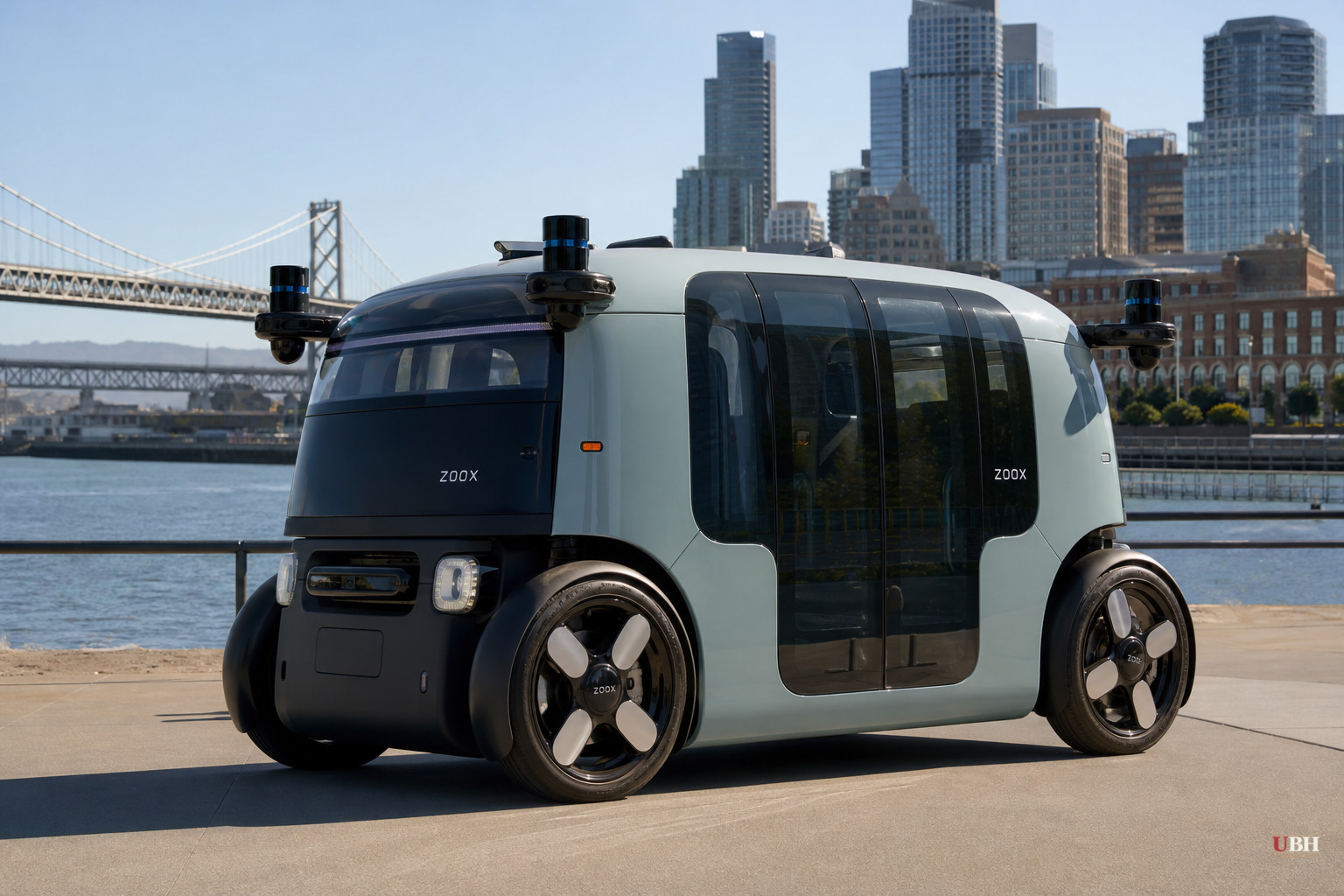
The National Highway Traffic Safety Administration announced Thursday it granted Amazon-owned Zoox a temporary exemption to charge passengers for rides in its steering-wheel-free robotaxis, according to Wired and The Verge. This is the first time the agency has cleared a purpose-built autonomous vehicle, one designed from scratch without human driving controls, to collect fares in the United States.
Zoox has been hauling passengers for free in San Francisco and Las Vegas under what the company called a "demonstration exemption." The company will start charging fares in Las Vegas next month, with plans to expand paid service to Miami and Austin, according to a company press release cited by The Verge.
The exemption runs two years and caps Zoox at 2,500 vehicles annually, or up to 5,000 total over that period. In its decision, NHTSA said it determined Zoox's vehicles "have an equivalent or greater level of motor vehicle safety" compared to cars built to meet standard federal requirements, standards that call for a steering wheel, pedals, mirrors, and windshield defrosting, none of which Zoox's vehicles have.
Why This Is Different From Waymo
Waymo, still the largest robotaxi operator in the country, runs vehicles that comply with existing federal safety standards, complete with steering wheels and pedals, even though no human ever touches them, according to Wired. That includes Waymo's newest purpose-built robotaxi, which Wired notes still carries the legally required equipment.
Zoox took the harder road. The company has spent more than a decade designing, building, and seeking government sign-off for a vehicle with no driver's seat at all. It has bench seating and sliding doors, with passengers facing each other in what the company calls a "campfire-style" layout, per Wired's reporting.
That design bet is now paying off with a real regulatory first. Tesla, by contrast, says it began testing its own steering-wheel-free Cybercab last month but has not laid out a path to government approval for that vehicle, according to Wired. Tesla's current robotaxi service in operation still uses modified production cars with standard controls.
Oversight Strings Attached
The approval isn't unconditional. NHTSA Administrator Jonathan Morrison, speaking at an industry conference in San Diego on Thursday, said Zoox will face "an enhanced oversight condition" that can expand as its self-driving software evolves, and the agency can revoke the exemption if problems emerge.
"This technology needs to be developed appropriately, safely and responsibly," Morrison told the audience, according to Wired. "If we see an unreasonable risk to safety, you're going to hear from us."
Zoox will have to submit additional crash data and reporting on unexplained vehicle stops as part of that heightened scrutiny. The company also issued a software recall earlier this month over concerns that its vehicles might fail to detect smoke, a detail flagged by The Verge. The exemption isn't a clean bill of health. It's a provisional approval with conditions.
That oversight matters given Morrison's own recent warnings. Earlier this month he published an open letter describing what he called a "clear pattern" of autonomous vehicles interfering with emergency responders. "To state it bluntly: An AV that cannot safely interact with first responders is a danger to the general public," Morrison wrote, according to Wired. He's since directed AV companies to meet with NHTSA on fixes.
The Reasonable Skepticism Here
Anyone uneasy about a car with no steering wheel and no pedals carrying paying strangers has a legitimate concern: there's no human backup if the software fails. Every other vehicle on American roads has redundant controls. This one does not. That's precisely why NHTSA is requiring more data reporting and retains the power to revoke the exemption.
NHTSA, the agency responsible for vehicle safety standards, concluded Zoox's cars meet an equivalent or higher safety bar than conventional vehicles, based on the company's testing and demonstration data. That's a regulatory finding, not an independent third-party audit. NHTSA itself is an interested institutional actor with an interest in showing its streamlined approval process works. The two-year, capped rollout with mandatory crash and incident reporting functions as the real-world test of that claim.
Neither The Verge's nor Wired's coverage detailed what specific crash or performance data Zoox submitted to earn the exemption, nor did either outlet report what threshold NHTSA used to judge "equivalent or greater" safety. That gap is worth watching as Zoox scales toward its 5,000-vehicle cap and expands into Austin and Miami, markets with different traffic patterns, weather, and emergency-response protocols than Las Vegas or San Francisco.
Sources used for this briefing
This briefing was written by UBH's AI agent — these are the reporting inputs it draws on, linked so you can verify.


