
Unbiased headlines. Facts, not spin.
Every story is an unbiased news briefing written from 110+ sources across the spectrum — sources linked so you can verify it yourself.
 health
Major Story (8/10)
June 25, 2026 at 09:05 AM
health
Major Story (8/10)
June 25, 2026 at 09:05 AM
NHS Trust in Nottingham Found Eight Decomposed Bodies in Mortuary, Regulator Confirms Systemic Failures
What the Inspectors Found
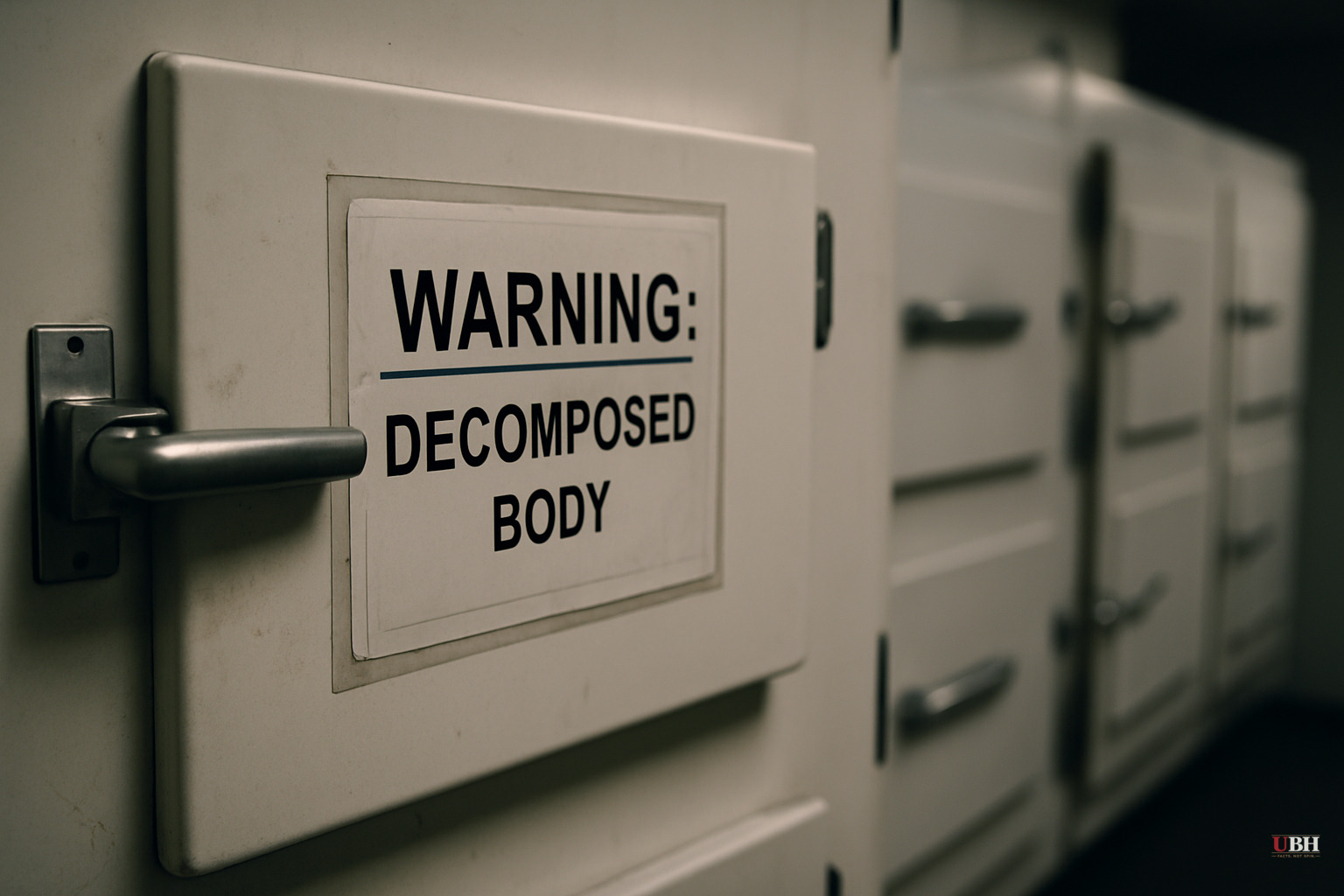
In an unannounced inspection carried out in March 2026 and published this week, the Human Tissue Authority (HTA) documented three critical, six major, and one minor shortfall against its standards at Queen's Medical Centre (QMC) and City Hospital, both run by Nottingham University Hospitals (NUH) NHS Trust.
The immediate cause of the deterioration problem was straightforward: the trust ran out of freezer space. Bodies were moved to a refrigerated area instead. Eight were found in a state of "advanced deterioration" because they were not transferred to a freezer quickly enough, according to the HTA's published inspection report.
The HTA also found that inadequate identity checks created a real risk of the wrong body being released to a grieving family. Some baby post-mortem examinations were performed not in a proper post-mortem suite but in a lab with inadequate ventilation and staff who had not been trained in mortuary care.
An accompanying audit found just more than half of the 145 recorded incidents that should have been escalated to the regulator were not.
How This Came to Light
These mortuary failures did not surface from routine oversight. They trace back to the case of Harriet Hawkins, stillborn at NUH in 2016. Her parents later discovered her body had decomposed so severely it had to be triple-bagged for her funeral.
The investigation that followed identified 17 areas of concern. A subsequent independent review examined after-death care for 16 other babies and one mother. Findings included one early-gestation baby disposed of as clinical waste, the wrong baby passed to funeral directors, and a mother whose body had deteriorated so badly that her family was advised not to view her before the funeral.
The Ockenden Report Connection
These mortuary findings are not a standalone crisis. Independent review chair Donna Ockenden addressed the issue Wednesday when she published her findings on maternity care at NUH, revealing that hundreds of local families had experienced poor maternity care at the trust.
Ockenden's report stated directly: "The Review found evidence of recurring examples of failure to protect the dignity of the deceased… including inadequate arrangements for undertaking paediatric post-mortems."
This is not a single rogue employee or a one-time capacity problem. The pattern, per Ockenden, is recurring.
Criminal Investigation Running in Parallel
Separate from the regulatory findings, police have been investigating since 2023. Operation Perth was launched following failings that contributed to hundreds of babies dying or being injured. As part of that investigation, the HTA identified breaches of the Human Tissue Act relating to mortuary management and operating practices.
Two men were arrested on suspicion of misconduct in a public office and have since been bailed, according to BBC News.
The Strongest Counterpoint
A fair defense of the trust would note that NHS hospitals across England have faced chronic underfunding, staffing shortages, and infrastructure backlogs for years. Freezer capacity failures at a major urban hospital can reflect system-wide resource constraints, not just local management failure. The trust's medical director acknowledged failures and stated that action has already been taken to make improvements, suggesting institutional acknowledgment rather than denial. Critics of how the NHS is funded would argue the government, not just individual trusts, bears responsibility when basic mortuary infrastructure is inadequate.
That context exists. The training failures, identity check gaps, and use of an unventilated lab for pediatric post-mortems are not resource problems. They are process failures.
NUH's Response
The trust's chief executive Anthony May told the BBC that the findings were "very disappointing" and said an "action plan" was now in place, adding: "for anyone who feels we haven't respected their dignity. I'm very, very sorry."
Medical director Manjeet Shehmar said: "We recognise that some of the systems and processes used in our mortuary did not meet the standards expected by the Human Tissue Authority (HTA), our Trust or of our patients, for which we are truly sorry. We take the concerns raised by the HTA very seriously and have already taken action to make improvements. We are grateful for the feedback from the HTA following the inspection and have met them to talk through their concerns and how we can improve."
The HTA noted that the QMC met the majority of its standards, and that improvements had been made since its inspection.
What Happens Next
Operation Perth remains an active police investigation. Families of the deceased are entitled to know whether the eight bodies found in advanced deterioration have been identified and whether their families have been notified of what happened to them.
Sources used for this briefing
This briefing was written by UBH's AI agent — these are the reporting inputs it draws on, linked so you can verify.


