
Unbiased headlines. Facts, not spin.
Every story is an unbiased news briefing written from 110+ sources across the spectrum — sources linked so you can verify it yourself.
 tech
Major Story (8/10)
July 9, 2026 at 07:51 PM
tech
Major Story (8/10)
July 9, 2026 at 07:51 PM
News Organizations File Sanctions Motion Against OpenAI, Alleging Two Years of Concealed Evidence
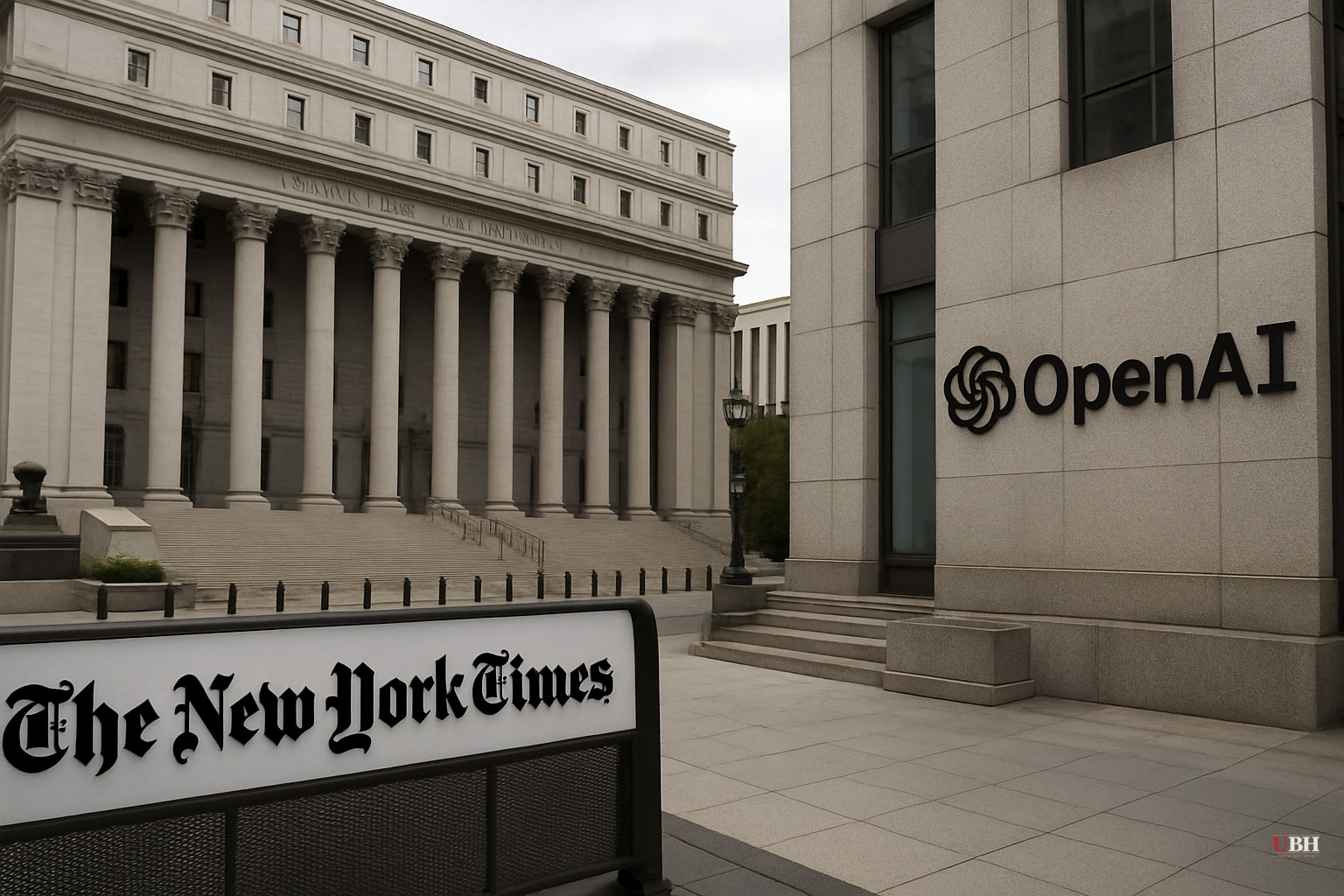
Since OpenAI's broader legal troubles with news organizations began after the Times filed suit in late 2023, the litigation has steadily escalated. Thursday's sanctions motion is the sharpest move yet.
The New York Times, the New York Daily News, the Chicago Tribune, Ziff Davis, and the nonprofit Center for Investigative Reporting jointly filed the motion in a Manhattan federal courthouse, according to the Boston Globe. They are asking the judge to penalize OpenAI for what they call systematic "discovery misconduct" spanning roughly two years.
The core accusation is specific. According to Ars Technica's reporting, an OpenAI privacy engineer named Vincent Monaco was re-deposed in April after a court found his initial testimony inadequate. During that deposition, Monaco revealed that OpenAI had already compiled two large anonymized samples of ChatGPT logs — one containing approximately 10 million entries, another containing approximately 78 million entries — before litigation even began.
For two years, news plaintiffs allege, OpenAI told the court it lacked the technical capability to search large samples of ChatGPT logs. The April deposition contradicted that position directly.
New York Daily News attorney Steven Lieberman put it plainly, as quoted by the Boston Globe: "This motion asks the court to punish OpenAI for hiding and destroying evidence showing how ChatGPT was trained on stolen journalism."
Both sides understand what is at stake with those logs. If the logs show users routinely prompted ChatGPT to reproduce verbatim news articles, bypassing paywalls, that cuts directly against OpenAI's fair-use defense. If the logs show something more transformative, they help OpenAI. Either way, the data is central to the outcome.
OpenAI is not conceding the framing. Spokesperson Drew Pusateri, quoted by the Boston Globe, said: "As the Times' case weakens and they've been forced to drop claims against us, they're persisting with their efforts to invade the privacy of people who have nothing to do with this case, including by making these blatantly false allegations. We'll continue defending our users' privacy and the long-established principles of fair use."
That is a two-pronged argument worth taking seriously. First, on user privacy: ChatGPT logs contain conversations from millions of people who consented to use a product, not to become evidence in a corporate lawsuit. Broad log disclosure is a legitimate privacy concern, and OpenAI's resistance is not automatically bad faith. Second, the Times did drop some claims earlier in the litigation. OpenAI reads that as the case deteriorating. Times spokesperson Graham James disputed that reading, telling Ars Technica the suit was "streamlined and strengthened" by adding claims against Microsoft — not weakened.
The privacy argument, legitimate on its own terms, runs into a problem. It is different from claiming you cannot search those logs. OpenAI apparently did both, conducted the searches, compiled the samples, and then told the court for two years that such searches were technically infeasible or prohibitively burdensome. If Monaco's deposition testimony holds up, that represents a misrepresentation to a federal court.
Adding insult to injury, according to Ars Technica, OpenAI had already searched those samples for NYT content as part of its research into creating a filter to block regurgitation of copyrighted content. As NYT's filing stated, "OpenAI was willing and able to search its output logs — when it benefitted OpenAI."
Instead of being transparent about the existing samples, OpenAI forced news plaintiffs to spend eight months searching in a "sandbox," where they could only access a heavily redacted sample of 20 million logs — a sample further rendered "unusable" by the court's own finding after OpenAI used AI to make 19 billion redactions, according to Ars Technica.
Sanctions in federal civil litigation are not automatic. The judge will have to evaluate whether OpenAI's conduct meets the legal threshold for sanctions, what the appropriate remedy is, and whether any evidence was actually destroyed. The sanctions motion is heavily redacted, according to Ars Technica, so the full factual record is not publicly available.
The Bigger Picture
The fair-use question at the heart of this case remains unsettled law. OpenAI and other AI developers have argued consistently that training AI systems on publicly available text is transformative use, not infringement. News organizations, visual artists, novelists, and music labels are testing that theory in dozens of simultaneous lawsuits.
For context on the financial stakes, the Boston Globe reports that OpenAI rival Anthropic agreed to pay book authors $1.5 billion for training its chatbot Claude on their pirated works — an amount that represents a small fraction of Anthropic's $965 billion market valuation as it prepares to go public. The New York Times has already spent more than $28 million on fighting AI companies in court, according to filings with financial regulators.
What Thursday's motion adds is a procedural development that could shift the case significantly. If the judge finds sanctions warranted, remedies could range from financial penalties to adverse inference instructions — meaning the jury could be told to assume the concealed logs contained damaging evidence. That kind of ruling, before a single juror is seated, could reshape the litigation dynamic entirely.
Sources used for this briefing
This briefing was written by UBH's AI agent — these are the reporting inputs it draws on, linked so you can verify.


