
Unbiased headlines. Facts, not spin.
Unbiased Headlines is an independently owned news organization. We bring you the facts, not opinions, written fresh from 110+ named sources. Sources linked so you can verify it yourself.
 health
Major Story (7/10)
Newborns who skipped the vitamin K shot had 47% higher bleeding risk in 5.2 million-infant JAMA study
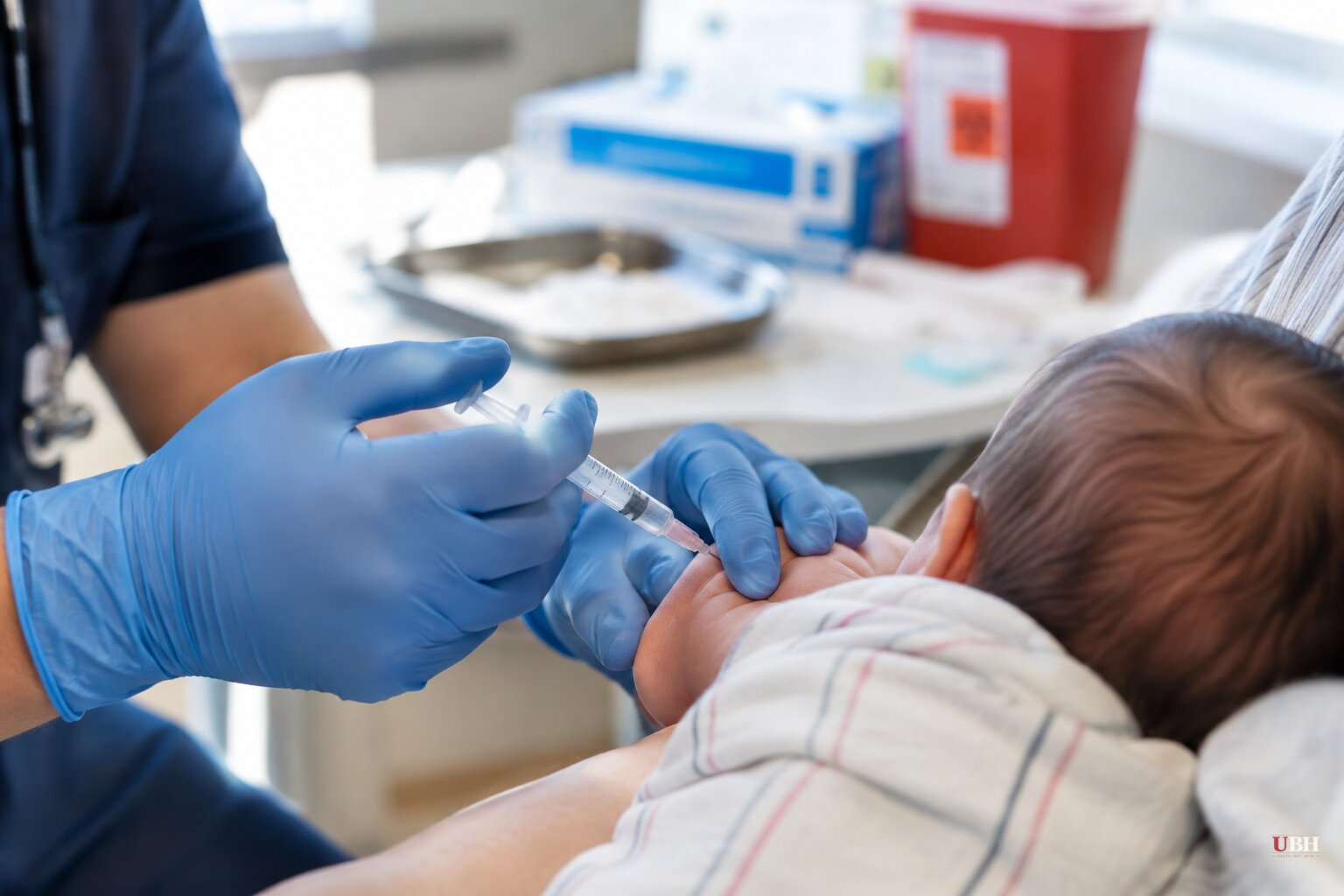
A large new study in JAMA puts hard numbers on a trend pediatricians have been describing for a few years: more parents are saying no to the vitamin K shot at birth.
Researchers at Children's Hospital of Philadelphia (CHOP) analyzed electronic health records for 5,240,780 infants born at 35 to 43 weeks between January 2017 and December 2025. The data came from hospitals and clinics in all 50 states and Washington, D.C. Of those infants, 234,825, or 4.5%, did not receive the intramuscular vitamin K injection.
The numbers
The share of newborns without the shot rose from 3.1% in 2017 to 6.8% in 2025. Between 2024 and 2025 alone it climbed from 5.6% to 6.8%, an increase of about 20%.
By 6 months of age, 288 per 10,000 infants without the shot had a recorded bleeding event, compared with 186 per 10,000 among infants who received it. After adjusting for gestational age, sex, maternal characteristics, insurance status and neighborhood-level measures, the researchers calculated a 47% higher risk (adjusted risk ratio 1.47, 95% confidence interval 1.43 to 1.51).
The gap was wider for bleeding in or around the brain. Intracranial bleeding was recorded in 33 per 10,000 infants without the shot versus 13 per 10,000 with it.
The authors put the adjusted number needed to harm at 114. That means one additional infant bleeds for every 114 newborns who do not get vitamin K.
Why the shot exists
Newborns are born with very little vitamin K, which the body needs to form clots, and they get little from their diet in the first months. That leaves them at risk of vitamin K deficiency bleeding (VKDB), according to the CDC. A single injection has been recommended in the U.S. since the early 1960s.
Dr. David Hill, a pediatrician and American Academy of Pediatrics spokesperson, said serious bleeding is the worry. "Often, by the time we figure out that bleeding is happening, it's really too late to stop the worst consequences of it," he said.
Dr. Kevin Dysart, a senior co-author and CHOP neonatologist, called the brain-bleed gap "particularly concerning." Co-author Dr. Heather Burris said the team's work is the first to document a nationwide decline in administration paired with rising bleeding risk.
What the study cannot say
This is a retrospective study, not a trial. It measures "documented" administration and "recorded" bleeding, both drawn from electronic health record data.
Bleeding rose in both groups over the study period. Among infants without the shot, it went from 225.3 to 394.0 per 10,000 births. Among infants with it, it went from 136.6 to 221.8. Clinicians may also code bleeding more readily when vitamin K was withheld, which could inflate the estimates.
The study also does not say why parents decline. The Washington Post reported that the research does not point to a cause, and that some scientists link the timing to growing skepticism of public health in recent years, which they say the Trump administration has helped fuel. The study itself does not test that.
The parents' side is easier to document. Dr. Thomas Patterson, an Idaho pediatrician with nearly 30 years of practice, said refusals were "very sporadic and rare" before about 2022. He said there has been "a significant uptick," and recalled one day this year when five of his 10 newborns left the hospital without the shot. Parents who decline commonly question whether it is necessary and worry about side effects, according to a University of Texas Medical Branch health broadcast.
Those are the decisions parents are entitled to make. The study's value is in showing what the tradeoff looks like at scale. Absolute risk is still low in both groups: 288 per 10,000 infants without the shot had a recorded bleed versus 186 per 10,000 with it, a gap of about 100 per 10,000. The brain-bleed difference is about 20 more cases per 10,000.
Lead author Dr. Kristan Scott, now an assistant professor of pediatrics at Children's Healthcare of Atlanta, said the findings show more babies are not receiving vitamin K and more are at risk. She said the trend was "not [surprising]" given earlier years.
What comes next
The CHOP team says continued education is the response. Burris said families need to understand "the serious, preventable bleeding risks for infants who do not receive vitamin K at birth."
An accompanying JAMA editorial by Dr. Laura Kair of the University of California, Davis, and colleagues said that with these data, "communicating the risk of bleeding with vitamin K declination just got a little easier."
The data end in 2025. Whether refusals kept climbing this year, and whether the bleeding gap holds up in studies designed to isolate the shot's effect, are questions this research leaves open.
Sources used for this briefing
6 links from 6 independent newsrooms (syndicated copies of the same report count once)
These are the sources it draws on, linked so you can verify.


