
Unbiased headlines. Facts, not spin.
Unbiased Headlines is an independently owned news organization. We bring you the facts, not opinions, written fresh from 110+ named sources. Sources linked so you can verify it yourself.
 health
Major Story (8/10)
CMS Finalizes 340B Hospital Drug Payment Cut, Projects $900 Average Savings for Affected Medicare Patients
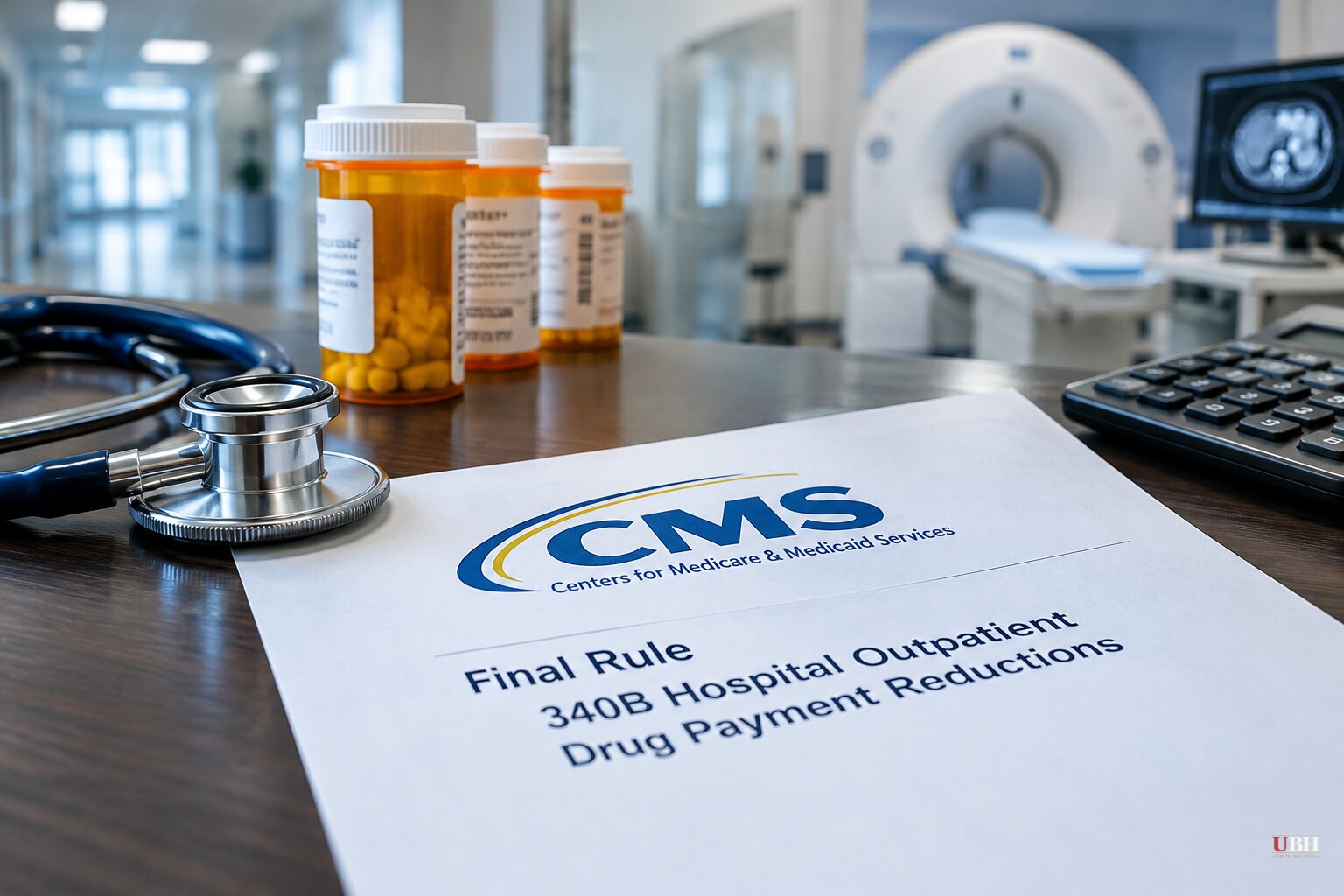
The Centers for Medicare & Medicaid Services issued its calendar year 2027 hospital outpatient payment rule on Wednesday, Nov. 4. It takes effect Jan. 1, 2027.
The headline change targets drugs that hospitals buy through the 340B discount program. Medicare will pay hospital outpatient departments for those drugs at the average sales price minus 28%. Patients owe 20% of the Medicare-approved amount after the Part B deductible, so a lower payment means a lower bill.
CMS projects the average Original Medicare patient who receives a qualifying drug in a hospital outpatient department will save $900 in 2027. That figure is an average for affected patients. It is not a payment to everyone on Medicare, and CMS's fact sheet does not list a copay for any individual drug.
The numbers behind the cut
In the first year, CMS estimates the policy will reduce Original Medicare drug payments by $4.35 billion and beneficiary drug payments by $1.1 billion. Patients see roughly a quarter of the total reduction. The rest is money Medicare no longer sends to hospitals.
CMS justified the move with a drug acquisition cost survey it ran from Jan. 1 through April 7, 2026. The agency says the survey found "significant disparities" between what 340B hospitals pay for drugs and what Medicare pays them. In some cases, CMS says, the patient's cost-sharing exceeded the hospital's own purchase price for the drug.
The 340B program, run by the Health Resources and Services Administration, lets eligible safety-net providers buy outpatient drugs at steep discounts. Participants include disproportionate share hospitals, children's hospitals, health centers and Ryan White clinics.
Medicare Part B drug spending in this setting keeps climbing. The Medicare Payment Advisory Commission found Medicare and beneficiaries together spent $23.9 billion on Part B drugs in hospital outpatient departments in 2024, up from $21.1 billion in 2023.
CMS Administrator Dr. Mehmet Oz said the agency is "committed to spending taxpayer funds wisely and efficiently," and that "right-sizing payments and rooting out waste" will drive affordability.
White House spokeswoman Allison Schuster said seniors will save over $1 billion next year on high-cost drugs such as cancer infusions. An administration official told the Daily Signal that the old payment structure gave 340B hospitals an incentive to buy independent clinics, because those clinics would otherwise earn much smaller margins on these drugs.
Imaging payments pulled toward office rates
The same rule extends a site-neutral payment policy. For 2027, CMS will apply the Physician Fee Schedule equivalent rate to imaging without contrast, including certain bone density scans, X-rays, ultrasounds, CT scans and MRIs. The policy covers services at excepted off-campus provider-based departments.
CMS has used this volume-control method since the CY 2019 rule. It expanded the method to drug administration in the CY 2026 rule.
The White House says seniors will save about $2.4 billion over 10 years on routine imaging, because Medicare will stop paying more for these services in a hospital setting than in a doctor's office. Schuster cited heart ultrasounds, bone density scans and chest X-rays as examples.
Across the broader rule, CMS is finalizing a 2.3% payment update for hospitals and ASCs that meet quality reporting requirements. That is a 3.2% projected market basket increase minus a 0.9 percentage point productivity adjustment. The rule affects about 3,500 hospitals and about 6,400 ambulatory surgical centers.
Physician fee schedule changes
CMS also finalized the CY 2027 Physician Fee Schedule on Nov. 4. HHS Secretary Robert F. Kennedy Jr. said the rule puts "prevention and primary care at the center of Medicare" and closes payment loopholes. Oz said it ends duplicate billing.
The rule sunsets the traditional MIPS reporting option beginning with the CY 2031 performance period. Clinicians get through CY 2030 to move to MIPS Value Pathways or Advanced Alternative Payment Models. That is two more years than the proposed rule allowed. The rule adds three new MIPS Value Pathways, for diabetes, hypertension and hospitalists, and requires a specialty-specific core measure starting in CY 2027.
Part D premiums move the other way
The savings on Part B drugs come as drug-plan costs rise elsewhere in Medicare. A KFF analysis projects the average stand-alone Part D premium will rise 50%, from $34 a month in 2026 to $51 in 2027, for enrollees who stay in their current plans. Drug coverage through Medicare Advantage plans is projected to average $9 a month.
KFF found that 76% of stand-alone plan enrollees without low-income subsidies, or 10.4 million people, would pay higher premiums if they don't switch. KFF said the actual average could come in lower as people change plans and new beneficiaries choose cheaper options.
CMS projects a far smaller increase in the national average Part D premium, from $35 to $36. CMS based that estimate on September 2026 enrollment, and KFF noted the agency did not explain its calculation methodology.
Open enrollment runs through Dec. 7. A stand-alone plan holder who does nothing is the person KFF says could be hit hardest.
The 340B cut takes effect Jan. 1. The first measurable test of CMS's $900 figure will be the Medicare-approved amounts hospitals bill for qualifying drugs after that date.
Sources used for this briefing
7 links from 6 independent newsrooms (syndicated copies of the same report count once)
These are the sources it draws on, linked so you can verify.


