
Unbiased headlines. Facts, not spin.
Every story is an unbiased news briefing written from 110+ sources across the spectrum — sources linked so you can verify it yourself.
 finance
Notable (5/10)
July 20, 2026 at 03:58 AM
finance
Notable (5/10)
July 20, 2026 at 03:58 AM
New Zealand Dollar Climbs as RBNZ Signals End to Rate Cuts, Narrowing Gap With US
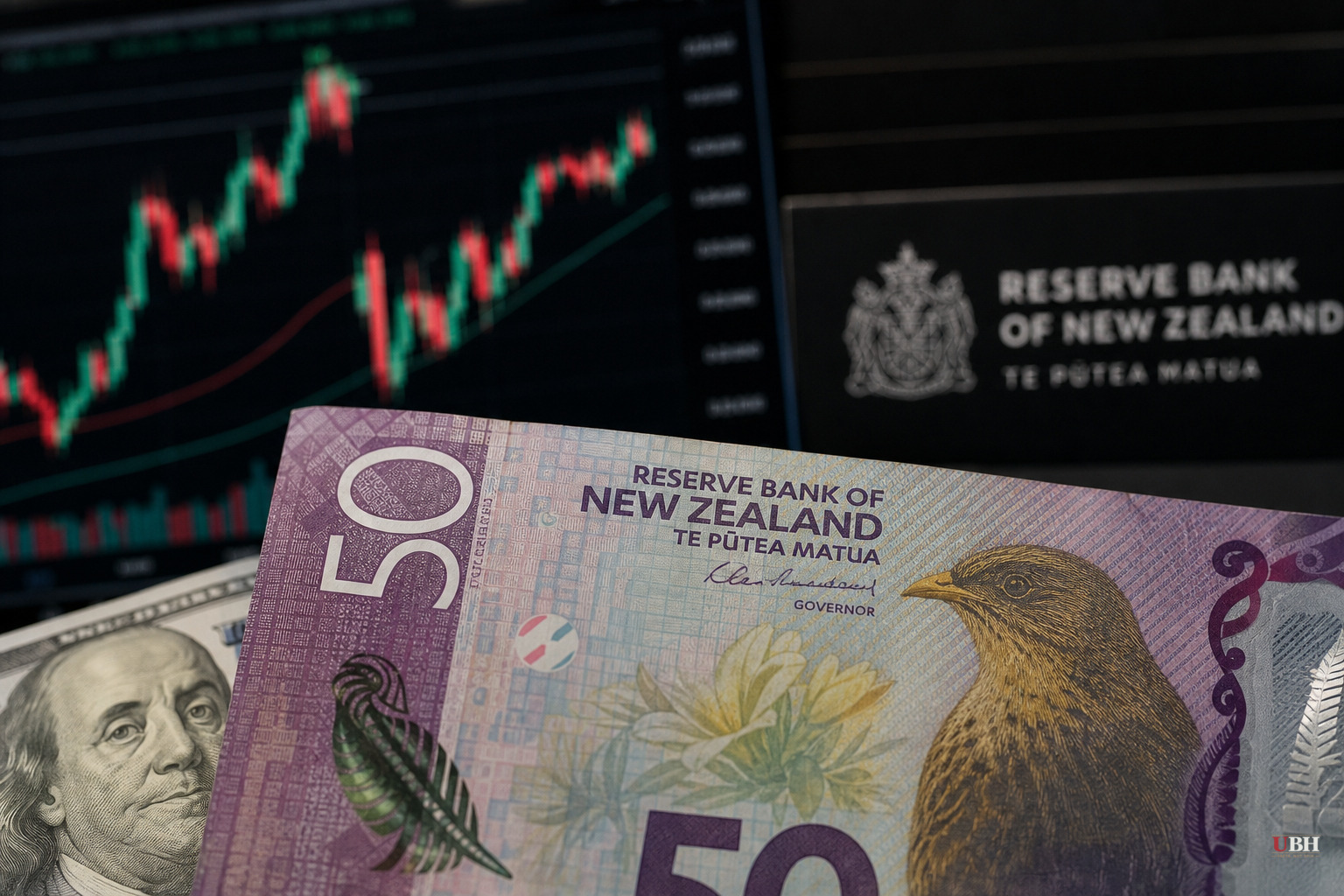
The gap that moved a currency
For the last four years, one number has driven the New Zealand dollar more than almost anything else: the difference between US and New Zealand short-term interest rates, according to interest.co.nz.
In 2023, NZ two-year swap rates sat a full percentage point above US equivalents. By 2025 and into 2026, that flipped. NZ rates fell to a full point below US rates. The result: the Kiwi dollar dropped from around 0.6400 to a range mostly between 0.5600 and 0.6000 over the past year and a half, per interest.co.nz.
The mechanics are simple. When NZ rates paid less than US rates, hedge funds and currency speculators borrowed or sold New Zealand dollars and parked the proceeds in higher-yielding US assets, pocketing the forward-point spread. That's a well-worn trade called the carry trade, and it worked because the Reserve Bank of New Zealand cut its Official Cash Rate aggressively, from 5.50% down to 2.25%, according to interest.co.nz. The US Federal Reserve cut too, but by less, from 5.35% to 3.65% over the same stretch.
The turn
That dynamic is now reversing. The RBNZ has started removing monetary stimulus, meaning NZ rates are rising again. The two-year interest rate gap has narrowed from -1.0% to -0.6%, and NZD/USD has already moved from 0.5630 to 0.5850 as a result, interest.co.nz reports.
Markets are pricing in more to come. Current NZ two-year swap rates sit at 3.7%, which already reflects an expectation that the RBNZ will lift its OCR from 2.5% to 3.5% over the next 12 months. If that happens, and the OCR settles at what interest.co.nz calls the "new neutral" of 3.5%, the two-year swap rate could climb closer to 4.0%.
On the US side, the direction may run the other way. If inflation keeps cooling toward the Fed's 2% target and the labor market keeps softening, rate markets could shift from pricing hikes above 4% to pricing cuts toward 3.5% or below, per interest.co.nz. That's a forecast, not a done deal. It depends on inflation and jobs data that hasn't happened yet.
Put both trends together and the two countries' rates could converge near 3.5% within a year. If the US two-year swap rate slides from its current 4.3% toward 3.5% as cuts get priced in for 2027, and NZ rates rise to meet it, the gap could swing from -0.6% today to as much as +0.5% in New Zealand's favor, according to interest.co.nz's projections.
What the positioning data shows
CFTC Commitment of Traders data tracked by FXStreet gives a broader picture of how speculators are positioned across currencies, though the most recent weekly report doesn't break out NZD/USD specifically. It does show Australian dollar selling extending for an eighth straight week even as AUD spot prices posted gains, according to FXStreet analyst Pablo Piovano. That divergence matters because crowded short positions losing their grip on price can signal a coming squeeze.
The same report flagged British pound short-covering as the week's cleanest signal, with speculators covering 16.6K contracts for a third straight week while GBP/USD advanced in tandem, per FXStreet. Canadian dollar shorts, by contrast, kept piling up even as CAD strengthened, a split that Piovano says raises the odds of a positioning squeeze if that pattern continues.
Institutional positioning data specifically for NZD/USD, tracked through CFTC futures reporting, typically moves in what analysts describe as accumulation and distribution cycles, per tradersentiments. In an accumulation phase, large speculators quietly build long positions even while spot prices stay flat or dip. Whether that's currently happening in the Kiwi dollar isn't specified in the available reporting, but the broader pattern of crowded short bets meeting a strengthening currency echoes what's playing out in NZD/USD as the RBNZ pivots toward hikes.
What's actually uncertain here
None of this is locked in. The RBNZ's path to 3.5% depends on New Zealand inflation and growth data over the next several quarters, and rate hike expectations already priced into swap markets can and do get revised. Likewise, the case for Fed cuts in 2027 rests on US inflation continuing to fall and employment continuing to soften, per interest.co.nz. Neither is guaranteed.
For now, the concrete fact is this: NZD/USD has moved from 0.5630 to 0.5850 as the interest rate gap narrowed from a full point in the US dollar's favor to 0.6 points. Whether that trend keeps running toward parity, or reverses if US data comes in stronger than expected, will hinge on RBNZ and Fed decisions still to come over the next 12 months.
Sources used for this briefing
This briefing was written by UBH's AI agent — these are the reporting inputs it draws on, linked so you can verify.


