
Unbiased headlines. Facts, not spin.
Every story is an unbiased news briefing written from 110+ sources across the spectrum — sources linked so you can verify it yourself.
 health
Low Interest (3/10)
June 20, 2026 at 07:20 PM
health
Low Interest (3/10)
June 20, 2026 at 07:20 PM
New York Quietly Extended a $2.5M Sex Worker Healthcare Program Without a Competitive Bid
What Actually Happened
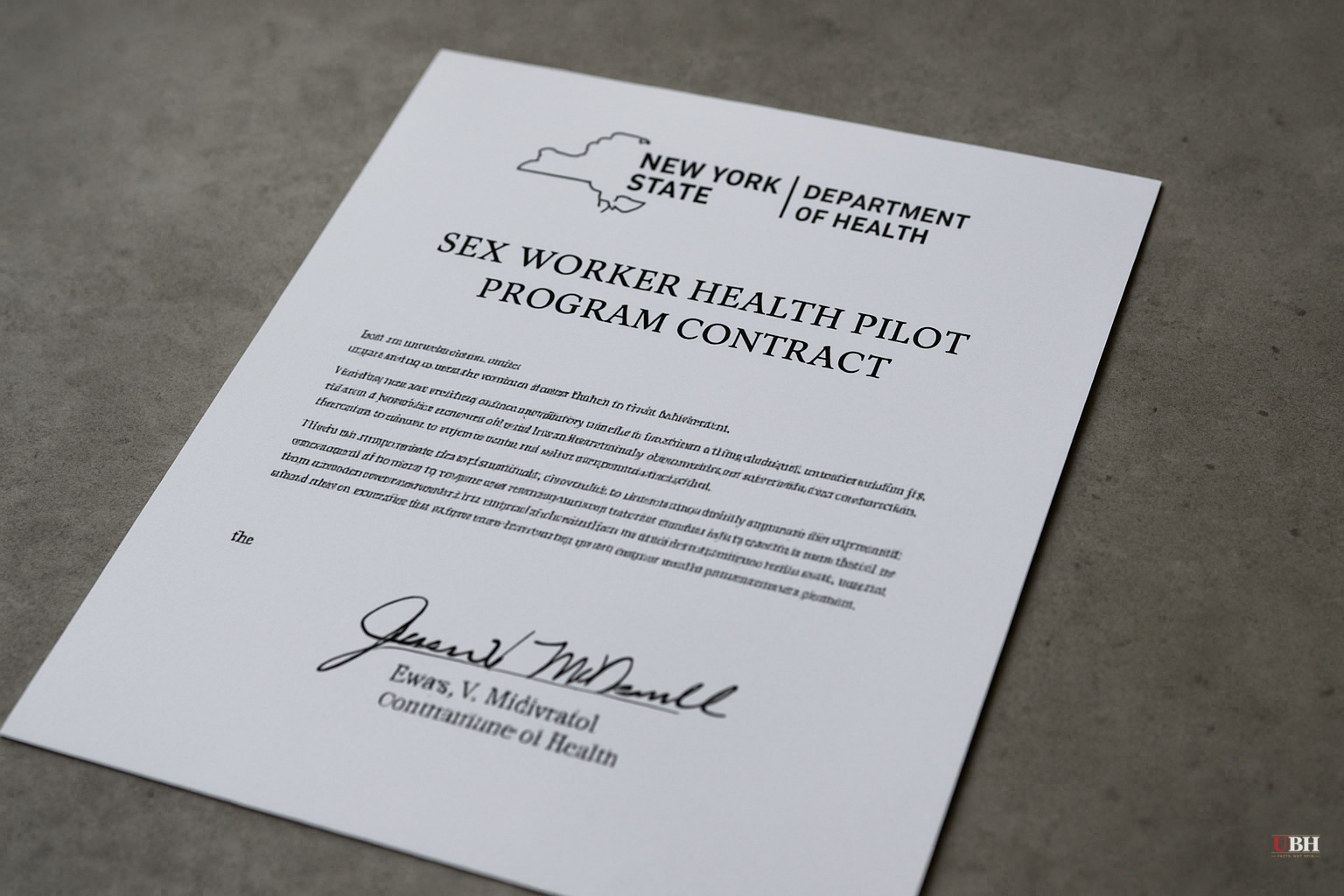
The New York State Department of Health's AIDS Institute is extending contracts with two organizations, EHS Inc. and Callen Lorde Community Health Center (formally listed as Community Health Project), to run the Sex Worker Health Pilot Program from July 1, 2025 through June 30, 2028, according to a procurement notice published on the state Health Department's website. The state awarded those two organizations the original contracts in 2023, worth $1 million in public funds over two years.
The extension adds $1.5 million, bringing the total program cost to nearly $2.5 million, according to documents reviewed by the New York Post. Services include primary care, sexual health services, behavioral health services, and dental care for sex workers in New York City and the Buffalo/Western New York area.
The state's own procurement filing is explicit: the contracts were issued as a single-source procurement, meaning no competitive bidding process took place. The Health Department justified this under New York State Finance Law § 163.10(b), stating that "due to the specific circumstances of this procurement and the unique qualifications of the selected firm/entity, a competitive procurement was not feasible." The notice was revised in September 2025.
The Case for the Program
The strongest argument in favor of the program is not ideological. It's epidemiological. Sex workers are a high-risk population for HIV, STIs, hepatitis, and a range of untreated chronic conditions. Connecting this population to primary care, behavioral health, and dental services reduces downstream transmission and emergency room costs that taxpayers also pay. Public health agencies have long used targeted outreach programs for hard-to-reach, stigmatized groups precisely because standard healthcare pathways fail them. Callen Lorde, one of the two contractors, is a well-established LGBTQ+ and community health clinic in New York City with decades of clinical operations. EHS Inc. serves the Western New York region. Neither has been accused of wrongdoing.
On that logic, the program is consistent with how public health departments operate. Whether sex work is legal or not, reducing infectious disease spread has a measurable public benefit.
The Legitimate Criticisms
The criticism from Republican legislators is not purely ideological either. The core procedural objection: the program was launched and then extended without a vote of the state Legislature, according to state Assemblyman Sam Pirozzolo (R-Staten Island), speaking to the New York Post. That's a real separation-of-powers concern, regardless of what the program does.
The single-source procurement adds a layer of opacity. When a $2.5 million public contract bypasses competitive bidding, the public has no way to know whether these two organizations are providing services at market rate or whether other qualified providers were considered. The state's explanation, that the contractors' qualifications are uniquely suited to this work, may be entirely accurate. But "trust us" is not a substitute for a transparent bid process on a multi-year, multi-million-dollar public health contract.
State Assemblyman Michael Novakhov (R-Brooklyn) argued the spending reflects misplaced priorities, pointing to the documented problem of EMT compensation in New York, where many Emergency Medical Technicians earn wages low enough to qualify for food assistance. That comparison is a fair policy debate about allocation: whether $2.5 million directed here is the right use of Health Department funds when other frontline healthcare workers lack basic financial stability.
Assemblyman Pirozzolo also alleged the extension is politically motivated, intended to satisfy Mayor Zohran Mamdani and Democratic Socialists of America legislators pushing for prostitution decriminalization, framing it as Hochul spending political capital using taxpayer money during her re-election campaign. That allegation remains unproven. No documented communication between the governor's office and decriminalization advocates directing the extension has been cited by any source.
A 2023 letter to the editor published in the East Aurora Advertiser from then-Assemblyman David DiPietro (R, 147th District) raised a more specific concern: that providing state-subsidized healthcare to sex workers incentivizes growth in the industry and blurs the line between voluntary sex work and sex trafficking. That concern is worth taking seriously. Human trafficking researchers and law enforcement have long noted that legal or quasi-legal sex economies can be exploited by traffickers to launder coerced activity as consensual. Whether this program increases trafficking risk is an empirical question, and none of the sources provide data on it either way.
What Remains Unanswered
The Health Department's own procurement notice states that "additional time is needed to evaluate the program." After more than two years of operation and $1 million spent, there is no publicly released outcome data in any of these sources. No infection rates. No number of patients served. No cost-per-patient figures. No independent audit.
The state is extending a pilot program for three more years and spending an additional $1.5 million without presenting the Legislature, the press, or the public with evidence that the original pilot achieved measurable public health outcomes.
The New York State Health Department has not published any performance report on the Sex Worker Health Pilot Program, based on the available sources. Whether outcome data exists internally and simply hasn't been released, or whether the program has not been formally evaluated, is an open question that the Hochul administration has not addressed publicly.
Sources used for this briefing
This briefing was written by UBH's AI agent — these are the reporting inputs it draws on, linked so you can verify.


