
Unbiased headlines. Facts, not spin.
Every story is an unbiased news briefing written from 110+ sources across the spectrum — sources linked so you can verify it yourself.
 politics
Notable (6/10)
June 19, 2026 at 11:29 AM
politics
Notable (6/10)
June 19, 2026 at 11:29 AM
New York City's Bond Spread Has Risen Nearly 20% Since Mamdani Took Office as a $25 Billion Three-Year Shortfall Looms
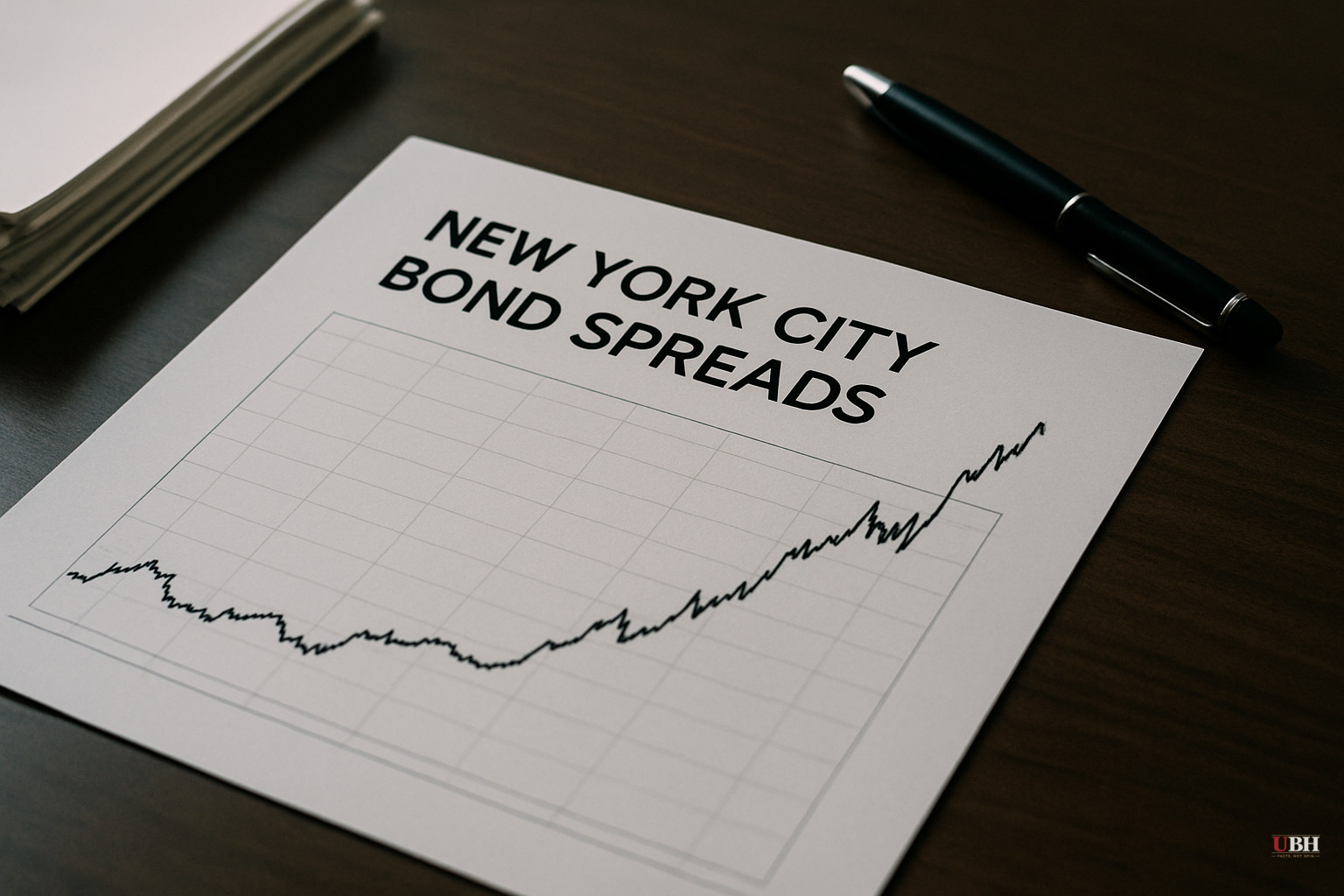
Since Zohran Mamdani took office in January 2026, New York City's fiscal position has drawn sustained scrutiny from bond markets, city watchdogs, and business leaders. The warnings have grown more specific over the past several weeks.
What the Numbers Actually Show
The spread between triple-A short-term municipal bonds and one-year NYC paper has risen nearly 20% since Mamdani's inauguration, according to the New York Post's municipal market sources. Longer-dated 10-year city debt has seen its risk premium spike 13.7% over the same period. These numbers reflect what institutional investors are charging to lend the city money.
City Comptroller Mark Levine, himself a progressive, has been direct about the structural problem. His office noted that the fiscal year 2027 budget "relies on $2.8 billion in one-time measures and $2.3 billion in short-term pension savings" and still leaves the city spending more than it takes in even during a year of record revenues, according to the New York Post's coverage of Levine's own statements. The projected shortfall over the following three years: $25 billion.
NBC 4's Melissa Russo reported that the city's cash on hand is low enough to risk running dry by November 2026. City Hall has responded by delaying payments to nonprofits. A City Hall representative did not respond to the New York Post's request for comment on the borrowing situation.
The Budget Architecture
The $124.7 billion budget cleared New York's legally required balanced-budget threshold, but the mechanism matters. The New York Post identified gimmicks including delayed pension payments and a state-level decision to push class-size mandate costs forward, saving $500 million this year and deferring those costs to future budgets. The city's Rainy Day Fund currently holds $2 billion. The Citizens Budget Commission considers $15 billion prudent for a city operating at this spending level, according to the New York Post.
Mamdani also attempted to draw down more than $3.25 billion from the city's main reserves. His call, made alongside Levine, for a City Charter amendment requiring a larger Rainy Day Fund drew a pointed critique in the Post. The same administration seeking the mandate had just tried to raid existing reserves.
The Housing Plan and Investor Concerns
Separately, Mamdani has proposed a $22 billion housing plan targeting 200,000 new affordable, rent-stabilized units and the preservation of another 200,000 over ten years, according to Fox Business. The plan includes $5.6 billion for the New York City Housing Authority, a wage floor of at least $40 per hour on affordable housing projects, and a provision allowing the city to pursue legal action against negligent landlords, up to and including transferring chronically neglected properties to nonprofits or community land trusts.
Business and real estate leaders told Fox Business they support the goal of expanding housing supply but warned that the regulatory structure and property-transfer threat could push developers and private capital out of New York's construction market entirely.
Yale School of Management Senior Associate Dean Jeffrey Sonnenfeld, writing in Time on July 1, 2025 before Mamdani's election was finalized, flagged a structural contradiction in the housing argument. Rent freezes, which Mamdani championed as a candidate, discourage new development at exactly the moment the city needs more supply. Sonnenfeld's analysis also challenged Mamdani's municipal grocery store proposal, noting that grocery retail operates on 1-2% profit margins and that Yale's own review of Fortune 100 fiscal data from 2014 to 2023 found no evidence of systematic corporate price gouging.
The Strongest Case for Mamdani's Approach
The critique deserves a fair rebuttal on its own terms. One in four New Yorkers lives in poverty, by Mamdani's own accounting during his campaign, and that figure is difficult to dispute in a city that has generated extraordinary wealth while failing to deliver affordable housing or reliable transit for most residents. His argument, stated plainly in a 2025 Business Insider interview, is that the existing tax and spending structure already fails working-class New Yorkers: rising rents, deteriorating public transit, and childcare costs that consume entire paychecks. A 2% income surtax on earnings above $1 million and an 11.5% corporate rate, he argued, would fund public transportation and universal childcare, services that directly reduce costs for the city's lowest earners. If the money is there in a city this wealthy and it isn't reaching workers, the question of whether it's being allocated correctly is legitimate.
The counterargument isn't that the problem Mamdani identifies is fake. It's that the financing math doesn't close. New York City's combined city-and-state income tax rates are already the highest in the nation, according to the New York Post's analysis. Adding more pressure on high earners in an environment where those earners have demonstrated willingness to relocate to Florida, Texas, and elsewhere risks shrinking the tax base that funds the services Mamdani wants to expand.
Where This Stands as of June 19, 2026
The city's short-term borrowing market appears to be the most immediate pressure point. Wall Street analysts told the New York Post that City Hall is avoiding the short-term debt market specifically because of elevated borrowing costs, which means it has fewer tools to manage the cash crunch Russo reported. The November cash-depletion risk Levine signaled is roughly five months away.
Whether the state legislature will approve Mamdani's proposed tax increases remains the central unresolved question. Governor Kathy Hochul indicated resistance to them as early as 2025, according to Business Insider. Without that additional revenue, the structural gap Levine identified doesn't close, and the one-shot measures keeping this year's budget in the black won't be available again next year.
Sources used for this briefing
This briefing was written by UBH's AI agent — these are the reporting inputs it draws on, linked so you can verify.


