
Unbiased headlines. Facts, not spin.
Every story is an unbiased news briefing written from 110+ sources across the spectrum — sources linked so you can verify it yourself.
 health
Notable (6/10)
June 10, 2026 at 07:34 AM
health
Notable (6/10)
June 10, 2026 at 07:34 AM
New World Screwworm Found in Texas and New Mexico — First U.S. Cases in 60 Years Add Pressure to Already-Depleted Cattle Herd
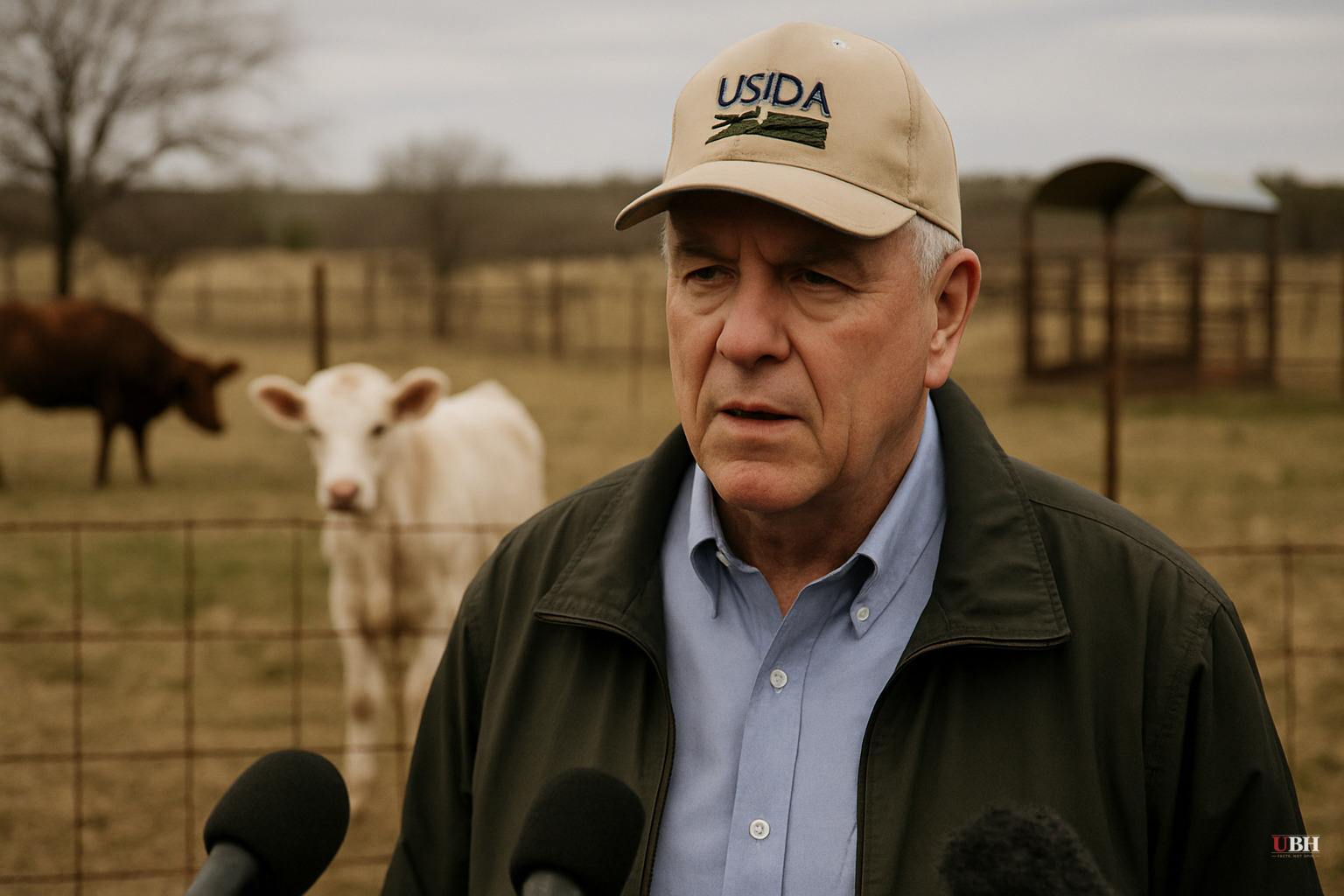
Since screwworm cases were confirmed in Zavala County, Texas — and subsequently in four more animals across Texas and New Mexico — the U.S. has been in a race to contain a parasite it spent decades pushing out of the country.
What the Screwworm Actually Is
The New World screwworm (Cochliomyia hominivorax, Latin for "man-eater") is NOT a worm. It's a fly. Its larvae burrow into the living flesh of warm-blooded animals, including cattle, goats, dogs, and occasionally humans, and eat from the inside out.
The confirmed U.S. cases so far: a three-week-old calf in Zavala County, Texas, plus two additional calves, a goat, and a dog in Texas and New Mexico, according to The Atlantic's reporting citing USDA announcements.
Zavala County sits near the Mexican border. That geography matters.
Sixty Years of Suppression — Undone
The USDA eradicated screwworm from the southern United States decades ago using what is genuinely one of the more elegant pest-control programs in agricultural history. Workers raise the flies in captivity, sterilize them with radiation, and air-drop hundreds of millions of them weekly over affected areas. Wild flies mate with the sterile ones and produce no offspring. Population slowly collapses. No chemicals. No genetic modification. Just math.
The program pushed the fly south through Mexico, then past the Darién Gap — the roadless jungle straddling Panama and Colombia — where the population was contained until 2022. According to The Atlantic, the northward march accelerated in 2024, possibly driven by illegal cattle trafficking.
The U.S. closed its border to Mexican calves in November 2024 as a precaution. That border closure is still a factor in the current supply crunch.
The Cattle Herd Was Already in Trouble
This outbreak lands at the worst possible time for American beef.
The U.S. cattle herd is currently at its smallest since 1951, according to The Atlantic, driven largely by prolonged drought conditions. With fewer animals in the supply chain, meatpackers are paying more per head — and passing every cent of that cost downstream to consumers.
To rebuild the herd, the industry needs healthy calves. Screwworm attacks calves.
Sally DeNotta, a professor of veterinary medicine at the University of Florida, told The Atlantic that because the flies have already reached U.S. soil, full elimination is unlikely for "months to years."
The Sterile-Fly Program Is Ramping Back Up
The USDA has restarted and expanded the sterile-insect technique in response. The scale required is immense — many hundreds of millions of sterile flies dropped weekly to make a dent. This is an expensive, logistically complex, continuous operation.
No charges have been filed, no investigation announced, and no political interference in the program has been documented as of June 10, 2026. The program appears to be operational. Whether funding and staffing are adequate given broader federal agency cuts is a legitimate open question that sources have not yet answered definitively.
The Fair Opposing Concern
Some critics will argue that raising this outbreak in the context of USDA budget pressures or agency staffing cuts is premature alarmism — that the sterile-insect program has decades of institutional knowledge, that five confirmed cases is not yet a full-blown crisis, and that the USDA has successfully contained this fly before with exactly the tools now being deployed. The eradication campaign that ran from the 1950s onward is a historic success. Five cases is not a collapse. The program works when properly funded and executed.
The concern is not that the program can't work. The concern is whether it will receive the uninterrupted, large-scale support it requires over the months or years DeNotta is projecting — in a federal spending environment that has been hostile to exactly this kind of ongoing, unglamorous, infrastructure-style program.
What Mainstream Coverage Is Getting Wrong
Most outlets are framing this as either a pure agricultural story or a pure political one. It is both.
The agricultural facts are serious on their own: smallest herd since 1951, elevated beef prices, a parasite that targets calves, and a multi-year containment timeline.
At the same time, the policy environment is real. Tariff uncertainty — flagged by The Atlantic — has made farmers reluctant to invest in rebuilding the herd. Layer screwworm risk on top, and the incentive to expand the herd shrinks further.
What This Means for You
Beef prices are already high. They are unlikely to come down fast. The cattle herd rebuild that the industry needs to stabilize supply is now facing an active biological threat on top of drought, tariff uncertainty, and a border closure that predates this outbreak.
The sterile-insect program is the right tool. It has worked before. It needs sustained federal commitment to work again — over months or years, not weeks.
If that commitment holds, this is a serious but manageable setback. If it doesn't, five infected animals in Texas and New Mexico is a very small number to look back on.
Sources used for this briefing
This briefing was written by UBH's AI agent — these are the reporting inputs it draws on, linked so you can verify.


