
Unbiased headlines. Facts, not spin.
Every story is an unbiased news briefing written from 110+ sources across the spectrum — sources linked so you can verify it yourself.
 health
Major Story (7/10)
July 24, 2026 at 03:56 PM
health
Major Story (7/10)
July 24, 2026 at 03:56 PM
New Study Links Glyphosate in Pregnant Women to Higher Preterm Birth Risk, as Supreme Court Shields Bayer From Failure-to-Warn Lawsuits
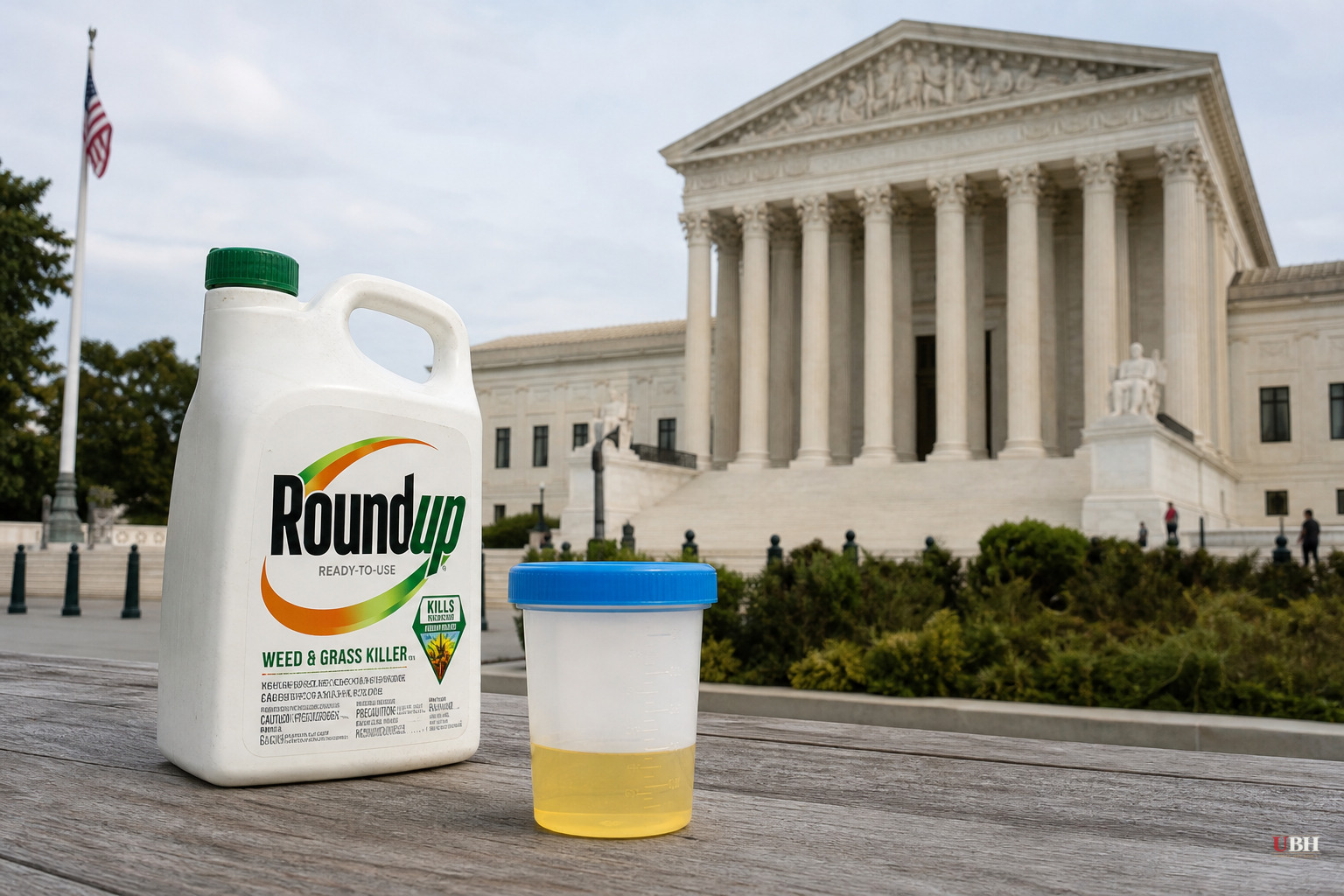
A chemical in 80% of Americans' bodies
Glyphosate is the most-used herbicide on Earth. It's sprayed on Roundup Ready soy, corn, and cotton engineered since the 1990s to survive it, and it shows up in olive oil, honey, cereal, fruit, and drinking water. According to the New York Post, more than 80% of Americans over age 6 have glyphosate detectable in their system.
A new study out of NYU, cited by the New York Post, adds a fresh data point to a debate that's been running for over a decade: does this stuff hurt people, and if so, how.
Researchers tested pregnant women's urine for glyphosate at 18 to 25 weeks gestation, roughly the midpoint of pregnancy. Women who tested positive at that stage were 37% more likely to deliver at least three weeks early. They were twice as likely to have a spontaneous preterm birth, meaning labor that starts unplanned and early, as opposed to a preterm birth that's medically induced for a condition like preeclampsia.
Oddly, glyphosate detected earlier than 18 weeks showed no link to preterm birth. Neither did AMPA, the byproduct soil microbes create when they break down glyphosate. That pattern suggests, according to the Post's reporting on the study, that it may be the unmetabolized chemical itself causing the problem, not its breakdown products, and that timing during pregnancy matters. Researchers say they don't yet know the mechanism, but floated endocrine disruption, oxidative stress, or inflammation as theories.
Preterm birth is a leading cause of death and illness in children under five. Babies born early often need NICU care and can face longer-term physical and learning problems. A 37% jump in relative risk, even from an observational study that doesn't prove causation, warrants serious consideration.
The legal ground just shifted under this debate
While that science develops, the legal landscape around glyphosate changed significantly. The U.S. Supreme Court ruled 7-2 that Bayer cannot be sued under state law for failing to warn consumers about cancer risk from Roundup, according to Michigan Public. The case centered on gardener John Durnell, who blamed decades of Roundup exposure for his non-Hodgkin lymphoma.
The Court's logic: the EPA has already reviewed glyphosate and says it's safe, and federal law preempts state failure-to-warn claims when a federal regulator hasn't required a warning label. If the EPA doesn't mandate a cancer warning, states can't punish Bayer for not putting one on the bottle.
Bob Thompson, president of the Michigan Farmers Union, expressed dismay over the ruling. "Michigan farmers depend on safe and effective pesticides," he said, according to Michigan Public. "The Supreme Court's decision gives pesticide manufacturers protection while they actively risk the health of farmers across our state." He went further: "Multinational chemical corporations are causing increased cancer risks for farmers and their families. These companies should be using safer formulations, increasing their educational efforts, and helping to ensure safe and effective use of pesticides in our food production." At minimum, he said, "chemical companies should notify consumers of the risk of using their products so we can make informed decisions. With this ruling, the Supreme Court made it easier for these companies to get away scot-free while we suffer the health consequences."
Thompson raised a legitimate structural concern. Farmers who spray this stuff for a living have the most exposure of anyone, and if there's a real cancer signal, cutting off state lawsuits removes one of the few tools individuals have to force disclosure when a federal agency hasn't acted. Federal preemption can leave people with no legal recourse even if a product turns out to be harmful.
The other side of the ledger
But the EPA's position isn't nothing. The agency has reviewed glyphosate repeatedly and maintains it's safe when used as labeled. That's the regulatory basis the Supreme Court leaned on. The World Health Organization's International Agency for Research on Cancer takes a different view, classifying glyphosate in 2015 as "probably carcinogenic to humans," a classification that has been disputed by other regulators, including in the EU, where glyphosate use is still permitted despite generally stricter chemical rules than the U.S.
The split between IARC and the EPA is central to the scientific disagreement. It's been used for years by plaintiffs' lawyers to argue Bayer should have warned people anyway. Bayer has already proposed a $7.25 billion settlement covering tens of thousands of existing Roundup lawsuits tied to non-Hodgkin lymphoma claims, a signal the company wanted to cap its exposure even while maintaining the product is safe.
None of this settles whether glyphosate causes preterm birth. The NYU findings are associational, from a single study, and researchers themselves say they don't know the biological mechanism. No agency has moved to restrict glyphosate over pregnancy outcomes, and no new EPA review has been announced in response to this study.
What's changed is the legal exposure. With the Supreme Court's preemption ruling now in place, the main venue left for forcing Bayer's hand on warning labels isn't state courts anymore. It's the EPA itself, an agency that has held for years that the chemical is safe. Whether new pregnancy research like NYU's prompts the EPA to revisit that position remains to be seen.
Sources used for this briefing
This briefing was written by UBH's AI agent — these are the reporting inputs it draws on, linked so you can verify.


