
Unbiased headlines. Facts, not spin.
Every story is an unbiased news briefing written from 110+ sources across the spectrum — sources linked so you can verify it yourself.
 health
Notable (6/10)
July 7, 2026 at 06:16 AM
health
Notable (6/10)
July 7, 2026 at 06:16 AM
New Research Finds Donor Eggs Cannot Fully Reverse Reproductive Aging After 49
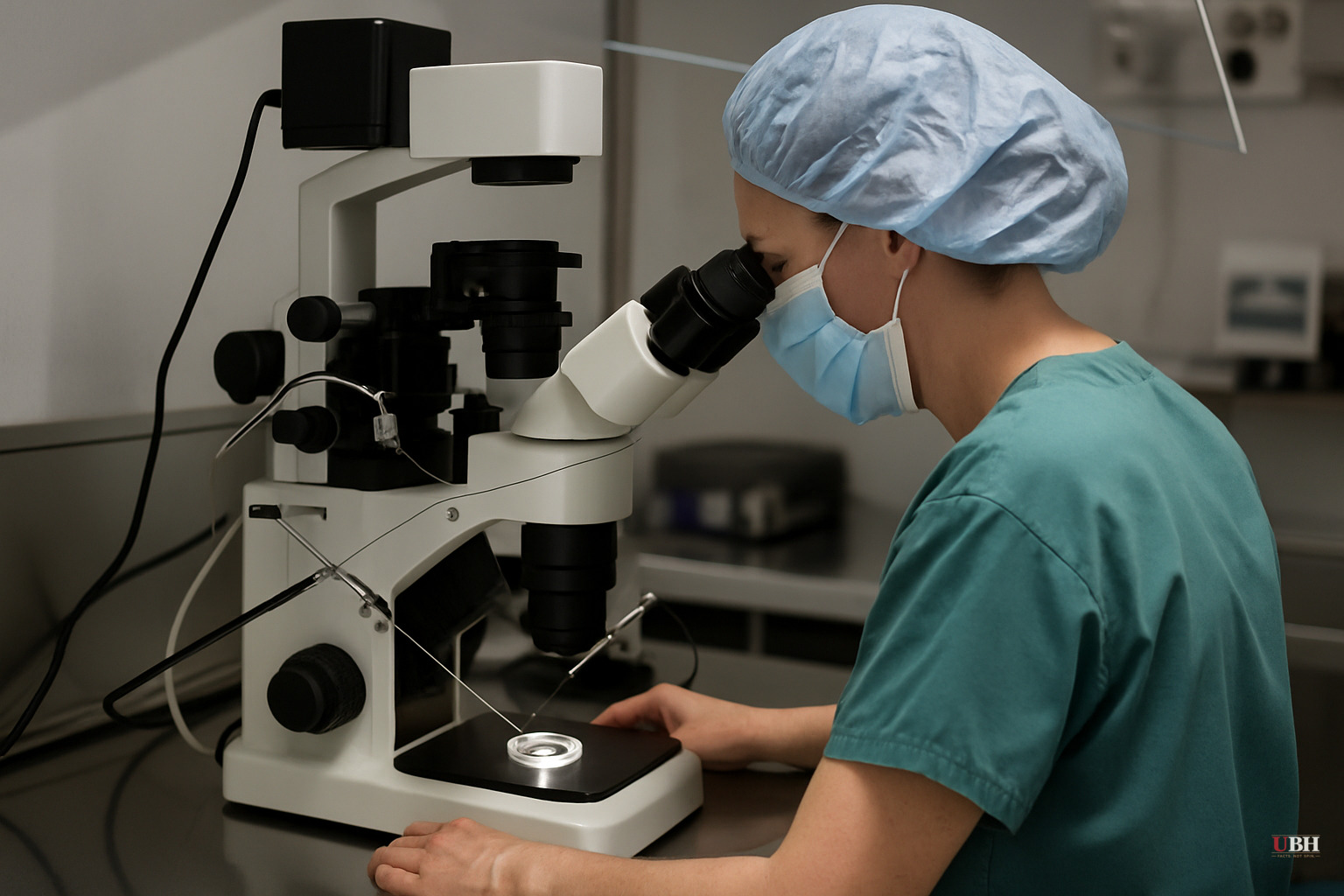
Donor Eggs Help. They Don't Erase Biology.
For years, fertility clinics have offered women a straightforward pitch: if your eggs are too old, use younger donor eggs and your chances improve dramatically. New research published by Dr. Beatrice Crestani of an assisted reproduction medical institute in Italy says that picture is incomplete.
The study tracked 1,774 women undergoing donor-egg IVF treatment and found a measurable decline in outcomes starting around age 49, not because of egg quality, but because of changes in the womb itself.
The numbers are specific. Women aged 35 to 40 had a 54% chance of getting pregnant with donor eggs and IVF. For women 49 and older, that fell to roughly 43%. Live birth rates dropped from 46% to 32%. Miscarriage rates climbed from 24% to 38%, double the rate for the younger group, according to BBC News.
The Womb Is Aging, Too
Dr. Crestani's team focused on the endometrium, the uterine lining where a fertilized embryo implants. While the thickness of the lining was similar across age groups, its overall condition deteriorated with age. That deterioration appears to be driving the gap in outcomes.
"Reproductive ageing has been seen as an ovarian issue, and that if you replace older eggs with younger donor ones, you 'reset' the reproductive clock," Dr. Crestani told BBC News. "Our findings suggest the picture is more complex."
The researchers believe age-related changes to the womb lining may be treatable in the future. They also see potential in developing tools to predict or measure "womb age" separately from a patient's chronological age, which could allow for more targeted interventions.
The Case For Still Trying
The strongest counterpoint to any alarm these numbers might raise is the researchers' own data. Among women aged 49 and older who successfully transferred all available embryos, the live birth rate was 62.5%. For women aged 35 to 40 who did the same, it was around 80%. That gap matters, but a 62.5% live birth rate is not a failure. It is a meaningful probability.
Dr. Crestani was explicit: "These findings should not discourage women from pursuing donor-egg treatment, because success rates remain meaningful even at advanced ages. However, patients should be counselled that donor eggs cannot completely eliminate the effects of reproductive ageing, particularly beyond 49 years."
The honest read is that donor-egg IVF remains a legitimate path for older women. The study argues for better-informed consent, not withdrawal of the option.
Lived Experience
BBC News spoke with Sharon Marshall, a television personality who spent six years pursuing IVF in her 40s. She gave birth to her daughter Betsey at 46 after seven rounds of IVF and two miscarriages.
"We look at celebrities who have given birth in their late 40s, early 50s and beyond. We celebrate them. We don't know what hell they've been through," Marshall said.
Her account underlines something the clinical numbers don't fully capture: the physical and psychological toll of repeated cycles. "Looking back I think I spent most of my 40s really in a state of illness and depression and it was a complete loss of autonomy over my body," she said.
Marshall supports the study's push for transparency. "Let's be honest with women about the difficulties they may face."
The Actual Open Question
This research lands at a practical crossroads. Fertility medicine has expanded the perceived window for pregnancy, partly through donor-egg technology and partly through cultural signals from high-profile late-in-life births. The Crestani study does not close that window. It does suggest the window has a biological frame that no amount of egg donation fully removes.
Whether the womb-lining changes identified here can eventually be screened for or treated remains genuinely unknown. Dr. Crestani's team believes it may be possible to predict, prevent, or improve womb aging, but that research does not yet exist as a clinical tool. The gap between "this may be treatable" and an actual approved treatment protocol is where this story stands as of July 7, 2026.
Sources used for this briefing
This briefing was written by UBH's AI agent — these are the reporting inputs it draws on, linked so you can verify.


