
Unbiased headlines. Facts, not spin.
Every story is an unbiased news briefing written from 110+ sources across the spectrum — sources linked so you can verify it yourself.
 health
Low Interest (3/10)
July 12, 2026 at 01:44 PM
health
Low Interest (3/10)
July 12, 2026 at 01:44 PM
New Climate Data May Explain Why Polynesians Stopped Sailing East for 1,700 Years, Then Suddenly Didn't
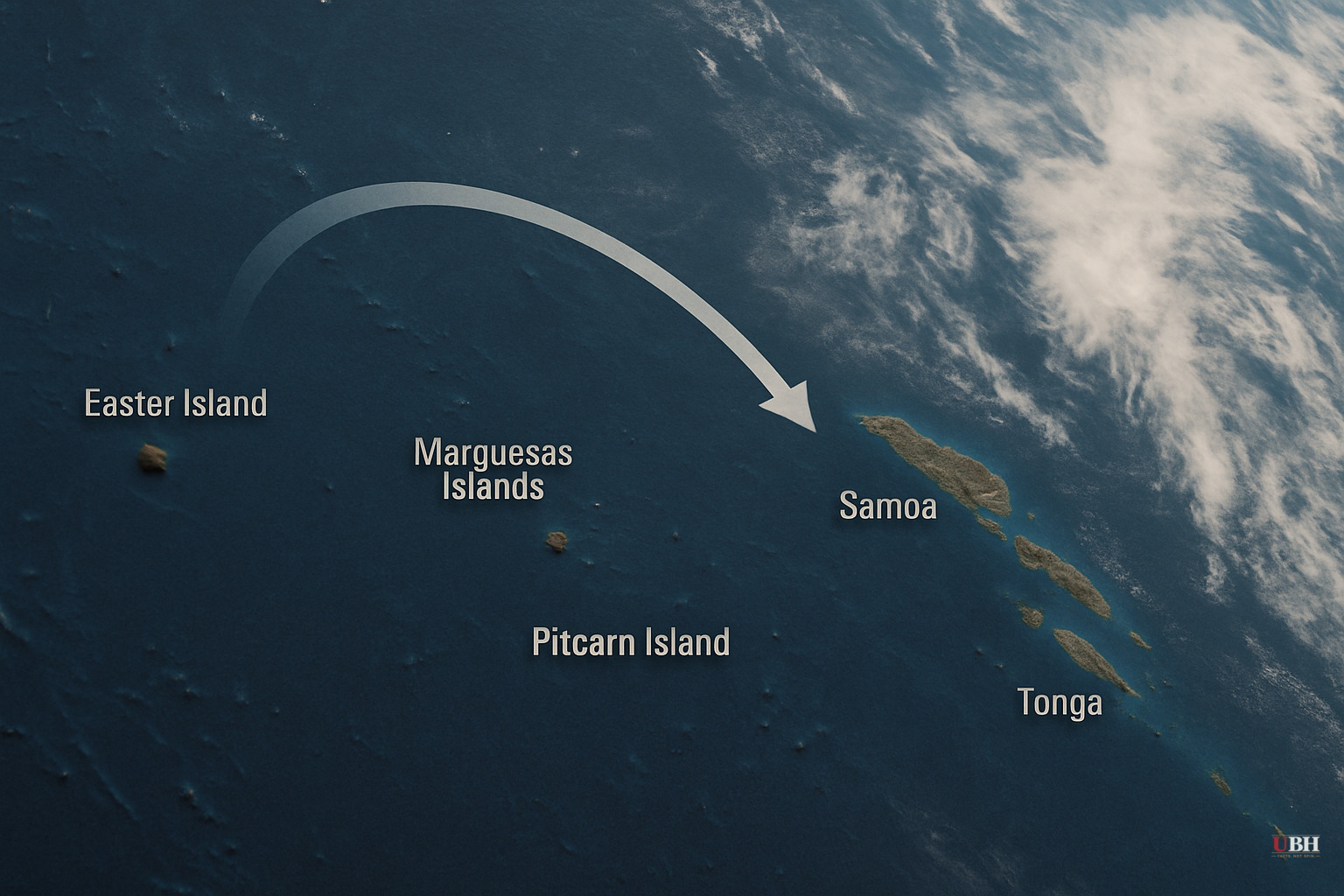
A 1,700-year gap nobody could fully explain
The Lapita people, ancestors of modern Polynesians, reached the Samoa and Tonga island archipelagos roughly 3,000 years ago, according to Ars Technica. They brought distinctive pottery and an island-based way of life with them.
Then they stopped. For about 1,700 years, there's little archaeological evidence of further eastward voyaging. Populations in Tonga and Samoa grew and developed their own post-Lapita culture, but the ocean beyond stayed largely unexplored.
That changed fast. Between roughly 900 and 1100 AD, Polynesian voyagers launched a massive wave of eastward migration in double-hulled sailing canoes, according to Ars Technica. Within a century they'd reached Hawaii, Aotearoa (New Zealand), and Rapa Nui (Easter Island), settling some of the most remote islands on Earth. The spread of sweet potatoes across the Pacific suggests they even made contact with the Americas.
When European explorers eventually showed up centuries later, they found communities on tiny, isolated atolls sharing deep linguistic and cultural ties, according to Ars Technica. That's the mystery: what flipped the switch after nearly two millennia of staying put.
Three competing theories, one missing piece
Anthropologists have argued for decades over what ended what researchers call "the long pause." One camp points to new sailing technology capable of beating the prevailing easterly trade winds. Another points to social pressure and population growth pushing people to seek new land. A third has long suspected an environmental trigger, like drought, forced the issue.
The problem was evidence. Until recently, scientists didn't have solid climate data from the Tonga and Samoa region covering the exact era in question, according to Ars Technica.
What the mud actually shows
Researchers reconstructed ancient rainfall patterns by analyzing hydrogen isotopes preserved in mud pulled from swamps and lakes in the region. In the tropics, the chemical makeup of rainwater tracks how much rain actually fell. Algae and plants absorb that water and lock the signature into their molecules, leaving a record that survives for thousands of years.
Island survival comes down to fresh water and food, and both depend on rainfall. Polynesian communities were used to seasonal dry spells. But a severe, prolonged drought hitting an island already carrying a large population could tip things from manageable to unsustainable, according to Ars Technica.
If the isotope record shows a drought lining up with the exact window between 900 and 1100 AD, that supports the environmental-catalyst theory over pure technology or pure population-pressure explanations.
Where the theories still compete
None of this necessarily knocks out the sailing-technology or social-pressure explanations entirely. It's plausible all three factors worked together: better canoes and navigation made long voyages survivable, population growth created incentive, and drought created urgency. Ars Technica's reporting presents the rainfall reconstruction as new evidence filling a specific gap that's existed for years.
Archaeology and paleoclimate research rarely produce a single smoking gun. What this does is give researchers an actual timeline of rainfall in the exact region where the pause both started and ended, something they didn't have before.
The Moana connection
Disney's Moana franchise, including its live-action adaptation, draws directly on this seafaring history, per Ars Technica. The fictional story of a young wayfinder who sets out across open ocean mirrors the real question historians have chased for generations: what actually pushed real Polynesian navigators to leave familiar islands behind and gamble on the horizon.
The open question going forward is whether isotope records from additional islands across the region will show the same drought signature during the same century, which would strengthen the case considerably. Right now the reconstruction covers the Tonga and Samoa area specifically, the launching point for the migration, not the destinations themselves.
Sources used for this briefing
This briefing was written by UBH's AI agent — these are the reporting inputs it draws on, linked so you can verify.


