
Unbiased headlines. Facts, not spin.
Unbiased Headlines is an independently owned news organization. We bring you the facts, not opinions, written fresh from 110+ named sources. Sources linked so you can verify it yourself.
 defense
Major Story (7/10)
Netanyahu renews unity government call, vows to end Iran threat 'once and for all'; Eisenkot calls it a trick
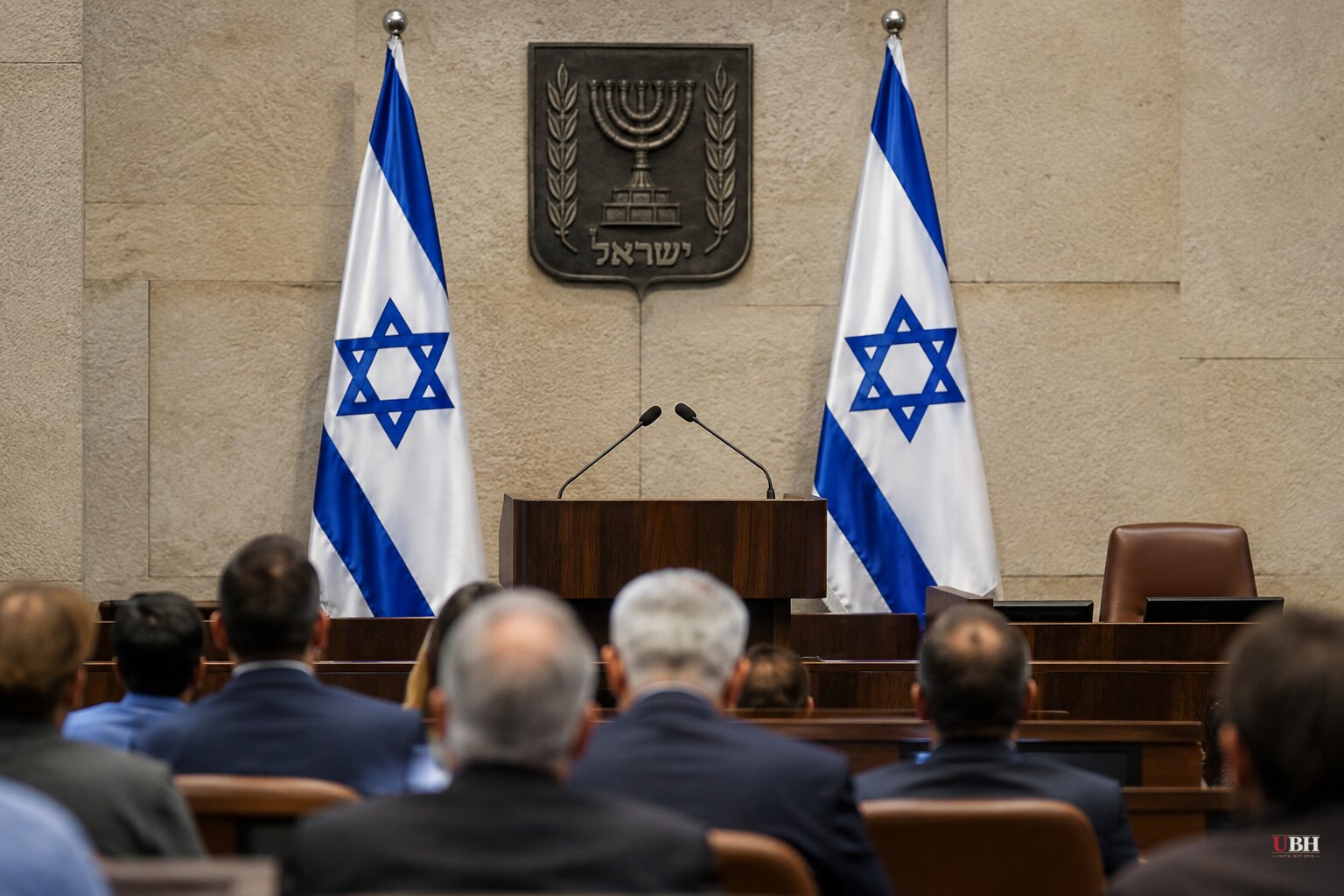
Benjamin Netanyahu has lost his majority and is now asking the man who beat him to share power. His argument is Iran.
In a video statement Saturday, Nov. 14, Israel's caretaker prime minister said his Thursday meeting with opposition leader Gadi Eisenkot "only strengthened the conviction that it is essential to form a national unity government." Such a government, Netanyahu said, could "eliminate the Iranian threat once and for all."
The Iran pitch
Netanyahu said Tehran is "once again working to revive its nuclear program." He added that the Iranian government "will not hesitate to use nuclear weapons against us" once it is able to resume uranium enrichment and accelerate weapons development.
Those are Netanyahu's claims. Iran has said its nuclear program is for peaceful purposes. The statement offered no new evidence of a specific Iranian step.
Netanyahu also said a broad coalition could expand regional peace agreements, according to Xinhua's account of the address. He said the government he wants would be made up of parties that recognize Israel "as a state for the Jewish people." That means centrist and right-wing Jewish parties. The Arab parties would be out.
Eisenkot's answer
Eisenkot answered within minutes. He said Netanyahu "knows he lost the election" and accused him of playing "tricks."
"Netanyahu is calling for negotiations while they are already underway," the former army chief said. "He claims to want unity but... sows division and stokes tensions as if there were no tomorrow. These tricks don't work on me."
Eisenkot has said he could work with members of Netanyahu's Likud and with Bezalel Smotrich's Religious Zionism, if their commitment to unity is "sincere." His condition is a "break with the extremists," notably supporters of far-right minister Itamar Ben Gvir. On Friday he denounced what he called Netanyahu's "racist" campaign against Arab parties.
A deal that keeps Netanyahu himself in the room looks unlikely, given those statements.
The math
In the Oct. 27 election, Netanyahu's right-wing and religious bloc won 53 seats in the 120-seat Knesset. Eisenkot's four-party bloc won 48. Arab-led parties took a record 19. A majority needs 61.
President Isaac Herzog tasked Eisenkot with forming a government last Sunday, Nov. 8, after 67 lawmakers, including those from Arab-led parties, endorsed him. He has 28 days, with a possible 14-day extension.
Eisenkot has floated a minority "national emergency government." Under the arithmetic Netanyahu described, Eisenkot's 48 lawmakers would vote yes and 46 Netanyahu backers would vote no. The remaining 26 lawmakers, from Arab and ultra-Orthodox parties, could abstain, and the government would pass without 61 votes.
Netanyahu called that a "weak and dangerous government." He wondered aloud why Eisenkot would lean on the Arab parties. He has accused those parties of stealing the election and on Saturday called them "supporters of terrorism," according to CBS News. No evidence of election theft was presented in the statements.
Eisenkot has ruled out putting Arab-led parties inside his government. Their abstention or support in a confidence vote is a separate matter, and it is the part Netanyahu is attacking.
Washington and the wider region
Mossad Director Roman Gofman is in Washington for talks with U.S. counterparts, a person familiar with the matter told CBS News. The source did not say what the talks cover. They come amid reports that Netanyahu is seeking a renewal of war with Tehran.
Separately, three people familiar with the matter said President Trump has told senior advisers in recent days that he may hold off on attacking Iran if the U.S. faces no new provocations from Tehran or the Iran-backed Houthis in Yemen. The White House has not been quoted on that in these accounts.
The regional picture is tense. Iranian state TV said three oil tankers struck naval mines and caught fire near the Strait of Hormuz, citing the Revolutionary Guard and the Iranian Navy. The Saudi-led coalition fighting the Houthis said it destroyed two Houthi drones launched toward Riyadh and the kingdom's south on Saturday.
The Iran argument is also a political tool. Netanyahu needs a path to 61 seats or a reason for Eisenkot to deal with him. A security emergency is the strongest card he holds. Eisenkot's camp sees the offer as a maneuver. Netanyahu says it is a plea about national survival.
What comes next
The first test is Tuesday, Nov. 17, when the Knesset is scheduled to elect its speaker. Likud's Amir Ohana holds the post, and the opposition is putting forward Matan Kahana. Eisenkot has challenged Likud and Religious Zionism to back Kahana if they are "truly seeking a sincere political partnership."
How Likud votes on that gavel will show whether Eisenkot's "sincere" test has any takers. Netanyahu remains caretaker prime minister until a new government takes office, and Eisenkot's 28-day clock is already running.
Sources used for this briefing
7 links from 6 independent newsrooms (syndicated copies of the same report count once)
These are the sources it draws on, linked so you can verify.


