
Unbiased headlines. Facts, not spin.
Unbiased Headlines is an independently owned news organization. We bring you the facts, not opinions, written fresh from 110+ named sources. Sources linked so you can verify it yourself.
 defense
Notable (6/10)
Defense Analyst Doubts US Would Use a Nuclear Weapon on Iran but Says It 'Cannot Be 100% Ruled Out'
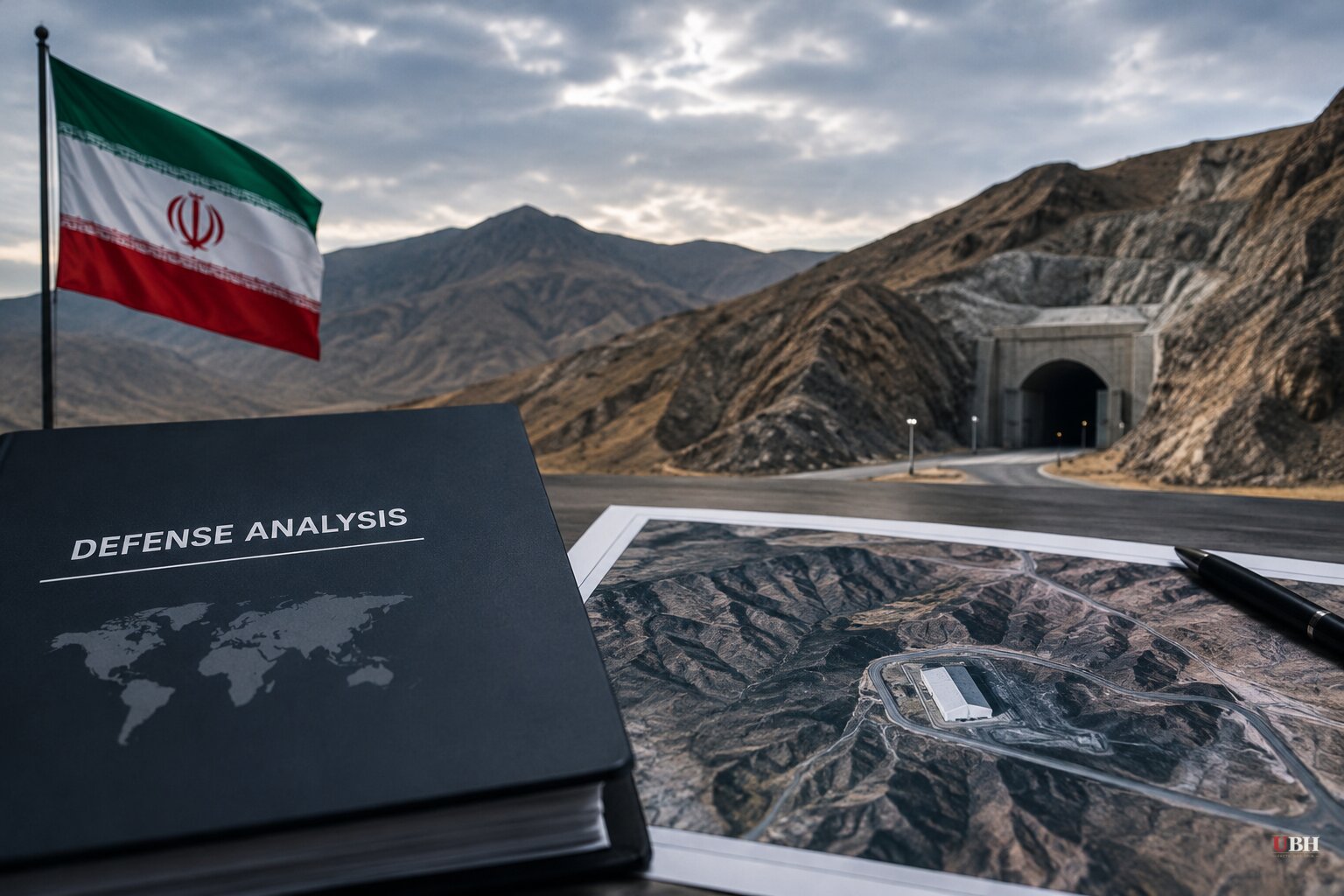
A veteran Wall Street defense analyst has put in writing what Washington officially treats as unthinkable.
Byron Callan of Capital Alpha Partners wrote in a note published on election day, titled "Lots of Variables in Resumption of Middle East War. The Nuke Question," that he very much doubts the United States would use a nuclear weapon on Iran's deepest bunker. But he said the possibility "cannot be 100% ruled out."
A war that keeps swinging between deal and strike
Callan does not claim to know whether the US and Israel will hit Iran at scale again this month or next. "Maybe the U.S. and Israel strike Iran at scale again in Nov.-Dec. 2026, and maybe they don't," he wrote. "Markets seem to have fainting spells every time there is hope of a peace deal, but there is precedent for negotiations being abruptly cut off as strikes commence."
The precedent is recent. Negotiations were also progressing in late February, right up until the morning of Feb. 28.
Monday, Nov. 9, was the date some media reports had floated for a return to major US strikes. Instead, after meeting Qatar's prime minister, President Trump told reporters military action against Iran does not seem necessary at this point. A day earlier he told CNN new bombing is "highly unlikely" if talks progress.
By ZeroHedge's tally, the S&P 500 closed up 2.4% on the news, and Brent crude slid back below $95, extending its biggest weekly drop since the Covid crash.
The fighting has not stopped. Trump has called the recent US strikes on Qeshm Island "minor," and ZeroHedge reports they have continued. The IRGC said three more tankers were ablaze in the Strait of Hormuz. A Houthi missile damaged an Aramco tower in Riyadh, and Saudi Arabia's East-West pipeline was hit in the Medina region, according to ZeroHedge's account. Secretary of State Marco Rubio has said no breakthrough is in sight.
Pickaxe Mountain
The nuclear question centers on Pickaxe Mountain, the granite-covered underground facility linked to Iran's nuclear weapons program. Trump has repeatedly threatened it. "It's not a big deal," he said earlier this week, suggesting an operation could take as little as an hour.
The US struck neither the site during the brief June 2025 war nor in the months of attacks with Israel since late February 2026.
Some estimates put the core of the facility as deep as 100 meters, about 330 feet. That would challenge even the 30,000-pound GBU-57 Massive Ordnance Penetrator, the largest conventional bunker buster in the US arsenal.
Tucker Carlson claimed in a social media post, without providing evidence, that the Trump administration "may be within days of launching a nuclear strike on Iran." The White House responded that the former Trump ally has "no insight into military planning" or the president's thinking.
What a nuclear option would involve
Newsweek, citing analysts, laid out the hypothetical. The US has an estimated 200 B61 gravity bombs, about half deployed at bases in Europe. A strike on a hardened mountain would use a tactical weapon, not a strategic one such as an ICBM.
The upgraded B61-13 is designed to destroy well-defended targets. It has a yield of up to 360 kilotons, roughly 24 times the Hiroshima bomb, and only strategic bombers can carry it.
William Alberque, a former head of NATO's nuclear non-proliferation center, described a hypothetical sequence in which several GBU-57s dig into the mountainside first. A nuclear detonation would then follow, with maximum effect and, he said, hopefully minimal fallout.
Analysts told Newsweek that a first use of a nuclear weapon since Hiroshima and Nagasaki in 1945 could encourage other nuclear powers to use their arsenals, push other states to pursue the bomb, and further radicalize Iran's hardliners.
The stalemate scenario
A study from the Al Jazeera Centre for Studies, which refers to the November 2026 elections, weighs three paths: continued stalemate, limited strikes, or a broader war. It concludes that confrontation below the threshold of full-scale war is the most likely near-term outcome, despite the risk of escalation.
The study says Operations Epic Fury (US) and Roaring Lion (Israel) inflicted significant damage but failed to dismantle Iran's conventional deterrence or settle the two core drivers of the confrontation, Iran's nuclear trajectory and the Strait of Hormuz. It also says the shifting political landscape in Washington after the elections has introduced new constraints on the administration.
It points to signs of preparation on the other side of the ledger. The US has bolstered its CENTCOM posture with additional warships. Israeli fighters reportedly drilled deep penetration into Iraqi airspace. Prime Minister Benjamin Netanyahu has publicly threatened Tehran with another confrontation and raised regime change.
Pressure on Iran's neighbors has produced mixed results. The New York Times reported that Iraq, Turkey and Pakistan have refused US requests to seal their land borders with Iran, stalling an effort to squeeze the Iranian economy.
Treasury Secretary Scott Bessent, who the New York Post reports was moved to a military base after Iranian threats, said: "I'm not going to be cowed by the death threats they have made against me."
What to watch
Trump has tied the absence of new bombing to progress in the talks, and Rubio says there is none yet. Pickaxe Mountain has not been struck in two wars. Whether it survives a third depends on whether the negotiations Trump is citing produce anything before the next round of strikes does.
Sources used for this briefing
6 links from 4 independent newsrooms (syndicated copies of the same report count once)
These are the sources it draws on, linked so you can verify.


