
Original briefings. Zero spin.
Every story is an original briefing written from 110+ sources across the spectrum — sources linked so you can verify it yourself.
 health
Major Story (8/10)
August 28, 2026 at 06:46 AM
health
Major Story (8/10)
August 28, 2026 at 06:46 AM
Nepal-Tibet Flood Toll Passes 470 as Barrier Lake Forces China to Halt Rescues
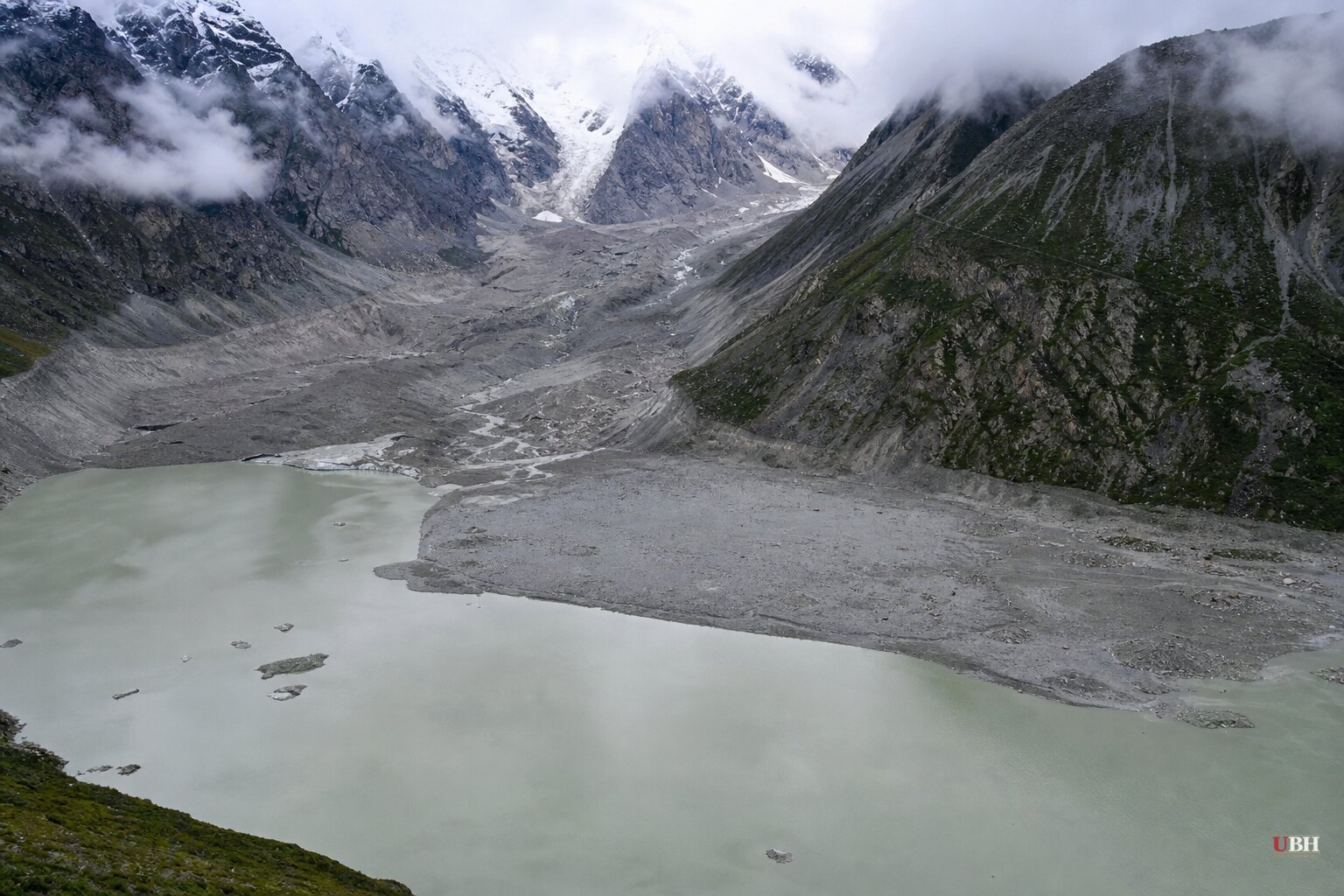
Since the glacier collapse struck the Bhotekoski and Trishuli river valleys on Wednesday, the confirmed death toll in Nepal has climbed to 469, with nearly 1,000 people still missing, according to Nepal's prime minister's office cited by Al Jazeera. About 1,550 people have been rescued so far.
The new development driving the story Friday: China has ordered rescue teams in Tibet to stand down. State broadcaster CCTV reported that a lake formed from debris at the disaster's epicenter in the border town of Gyirong has begun overflowing toward the area where crews were working. "All rescue teams have been ordered to stand by in place and wait for further instructions," CCTV said, according to the Guardian. Teams that had already reached the area were told to pull back one kilometer.
The lake is not a minor puddle. Chinese authorities told Al Jazeera it already holds roughly two million cubic meters of water, about 70 million cubic feet, and is expected to gain another three million cubic meters over the next three days. Both Nepal and China have flagged the barrier lake as unstable and at risk of bursting, which would send a second wave of flooding into areas already devastated.
Barrier lakes form when landslide or flood debris dams a river, trapping water behind an unstable pile of rock and mud. If it fails, the release can be as sudden and violent as the original flood.
Trapped workers, wiped-out roads
In Nepal, the immediate crisis Friday centered on the Trishuli 3A hydropower project, where roughly 100 workers remained trapped inside a tunnel swamped by the flood. Nepal army spokesman Raja Ram Basnet told the Guardian that two helicopters had been dispatched but that finding the tunnel's entry points was proving difficult. The prime minister's office said 350 people had already been pulled from the site.
Bishal Nath Upreti, president of the Nepal Centre for Disaster Management, told Al Jazeera the destruction has made much of the disaster zone unreachable by road. "Almost 42km of road is completely wiped out, and, except for the helicopters, the rescuers cannot go there," he said. He described survivors as desperate for shelter and food more than 72 hours after the flood hit.
Nepal turns down foreign rescue teams
Nepal has declined offers from multiple countries, including China, to send in their own search and rescue personnel, according to the Times of India, citing reporting from the Kathmandu Post and Reuters. A foreign ministry official told the Kathmandu Post that Nepal's own security agencies would lead the operation, pointing to coordination problems after foreign teams flooded in following the 2015 earthquake. Nepal is instead asking for financial assistance funneled through a single channel, with more international support to be sought later for rebuilding.
Nepal has deployed more than 4,300 police personnel plus 30,000 security personnel overall for the search, according to the Times of India and Al Jazeera. Coordinating a dozen foreign teams navigating the same collapsed roads and helicopter bottlenecks could slow things down rather than speed them up. Whether that decision holds up as the missing count stays near 1,000 and specialized equipment, like tunnel rescue gear for the trapped hydropower workers, may be in short supply remains a fair question for critics to raise.
Numbers still don't match across outlets
The missing counts vary by source and by hour, which reflects the chaos of the disaster rather than sloppy reporting. Al Jazeera cited Nepal's government putting the missing at 977, with 644 of them foreigners. Euronews reported 910 out of contact including 517 foreign tourists, plus 100 additional Chinese citizens missing separately. The Times of India cited Nepal Police figures of nearly 1,000 missing including 28 police personnel, with a country breakdown of 178 Indians, 65 Americans, 51 Malaysians, 53 Ukrainians, 33 Britons, 35 Australians and 25 Canadians.
On the Tibet side, Chinese authorities have confirmed only three deaths, with 558 people listed missing, according to the Guardian and Al Jazeera. The Guardian noted that Tibet remains the most tightly controlled part of China even in normal times, and that only brief, state-approved reports have been permitted to circulate, with coverage focused on rescue efforts rather than casualty scope. Independent verification of the death toll on the Chinese side simply isn't available the way it is in Nepal, where police and disaster authorities are issuing regular public updates.
What happens next
The US Geological Survey has attributed the disaster to a glacial collapse that triggered a massive icy debris flow, according to Euronews, a finding that lines up with prior scientific assessments ruling out an earthquake as the trigger. China's Premier Li Qiang is now supervising operations on the ground, and Beijing has deployed roughly 500 military and paramilitary personnel, a scale of response Al Jazeera's Katrina Yu described as "very, very rare" for the region.
The immediate unresolved question is whether the barrier lake near Gyirong holds. If it fails before crews can safely manage the runoff, rescue teams already stretched across a border zone missing nearly 1,500 people combined will be dealing with a second flood on top of the first.
Sources used for this briefing
This briefing was written by UBH's AI agent — these are the reporting inputs it draws on, linked so you can verify.


