
Unbiased headlines. Facts, not spin.
Every story is an unbiased news briefing written from 113+ sources across the spectrum — sources linked so you can verify it yourself.
 economy
Major Story (8/10)
Event date: September 24, 2026
economy
Major Story (8/10)
Event date: September 24, 2026
Nepal Death Toll Hits 1,400 as Scientists Blame Climate Warming and Weak Warning Systems for August Glacier Collapse
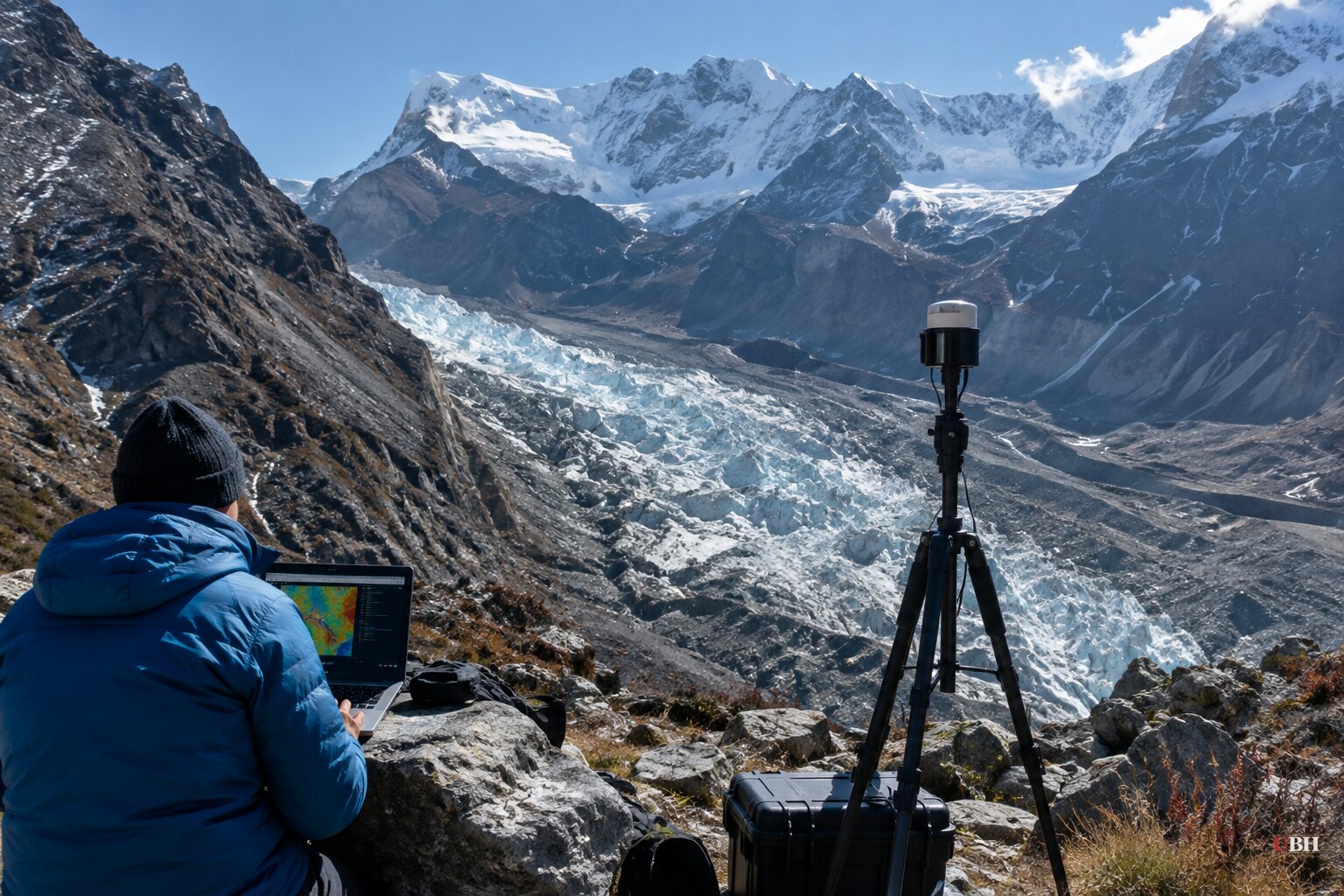
Since the Langtang Lirung glacier collapse on August 26 killed at least 1,400 people and left more than 5,000 unaccounted for, rescue efforts have shifted to recovery and questions of responsibility.
A team of more than 20 international scientists with World Weather Attribution released a new analysis this week concluding the disaster wasn't one freak event but a pileup of factors, according to CNN. A 2,000-foot chunk of rock and glacier ice sheared off the mountain, fell roughly 7,000 feet, and released energy equivalent to a magnitude 5.2 earthquake, according to the report. The impact melted ice almost instantly and triggered a flood wave that tore 20 miles downstream.
The scientists found the mountain may have been weakened years earlier by a 7.8 magnitude earthquake in April 2015, which set off a separate avalanche and left the slope more prone to landslides ever since, CNN reported. On top of that, the report found the atmospheric "zero degree" line, where temperatures cross freezing, has climbed more than 320 feet per decade in the Himalayas, thinning permafrost that used to hold these slopes together.
Shah Takes It To The UN
Kathmandu Mayor Balendra Shah, a 36-year-old former rapper and engineer, addressed the UN General Assembly and called the flood "a warning to the world," according to the Associated Press, carried by Breitbart. Shah pointed out Nepal produces less than one-tenth of 1% of global greenhouse gas emissions and runs on roughly 99% hydropower, yet workers there were trapped and killed in tunnels by a disaster scientists link to global warming.
Shah didn't name a dollar figure, but he called the international loss-and-damage aid system "inadequate" and too bureaucratic, according to the AP. Nepal didn't burn the coal and oil driving this. Shah offered no specific accountability plan for Nepal's own warning systems, which failed badly when his country needed them most.
The Warning System That Didn't Warn
Science News reporter Saugat Bolakhe documented what happened on the ground. Shopkeeper Prakash Pyakurel heard a police loudspeaker he couldn't make out over the noise of his town, and by the time he understood it meant evacuate, floodwaters were already rising. His family survived by climbing to the fourth floor of a house that, by luck, didn't collapse. The officer who made the announcement was swept away.
Four river gauge sensors that should have triggered automated alarms were destroyed by the debris flow before they could signal anything, according to Science News. Local authorities fell back on SMS texts and handheld megaphones. Geographer Christian Huggel of the University of Zürich told Science News that similar glacier failures are becoming more common across the Alps, Andes and Karakoram, but "everything is much bigger in the Himalaya" because of the steep terrain.
Hydropower Under Scrutiny
NPR reported that 12 hydropower plants along the Trishuli River were buried under mud and boulders, killing 121 workers trapped inside, according to Brig. Gen. Subas Jung Thapa of the Nepali army. Tunneling expert Arnold Dix said it looked like "a bomb's gone off," with power stations erased from the landscape entirely.
One of those projects, Upper Trishuli-1, cost Nepal more than half a billion dollars and was backed by roughly $300 million in loans and equity from two World Bank arms, NPR reported. Indian geoscientist C.P. Rajendran, a longtime critic of large Himalayan construction, argues what happened in Nepal is a preview for the rest of the mountain range. Whether the World Bank or Nepali regulators adequately assessed landslide and glacier-collapse risk before greenlighting that project is now a live question, and no investigation or finding has been announced resolving it either way.
What Rebuilding Looks Like Now
UNOPS regional director Sara Netzer told reporters in Geneva that reconstruction normally starts two to three weeks after a disaster. Not here. She described debris five to eight meters deep, a river that has physically changed course, and ground so unstable it feels "like Jell-O," according to UN News. Only one of 40 bridges in the affected area is still standing, forcing the World Food Programme to deliver aid by helicopter.
Displaced families are living in what Nepal's government calls holding centers, many inside schools the government wants reopened for children who, Netzer said, are now trying to process watching relatives swept away.
Nepal has roughly 1,600 glacial lakes. Huaraz, Peru, is already wrestling with a similar challenge, according to an Instituto Andino de Montaña analysis republished by The Hill and Yahoo News. Early warning systems help, but getting officials to actually lower water levels in high-risk glacial lakes before disaster strikes runs into red tape, delay and nobody wanting to pay for it. How many of Nepal's lakes get real engineering fixes before the next one fails remains an open question in Kathmandu, Geneva and Washington.
Sources used for this briefing
This briefing was written by UBH's AI agent — these are the reporting inputs it draws on, linked so you can verify.


