
Unbiased headlines. Facts, not spin.
Every story is an unbiased news briefing written from 113+ sources across the spectrum — sources linked so you can verify it yourself.
 economy
Notable (6/10)
October 4, 2026 at 12:10 AM
economy
Notable (6/10)
October 4, 2026 at 12:10 AM
Hemp THC Industry Built on a 2018 Loophole Faces Dec. 11 Federal Deadline
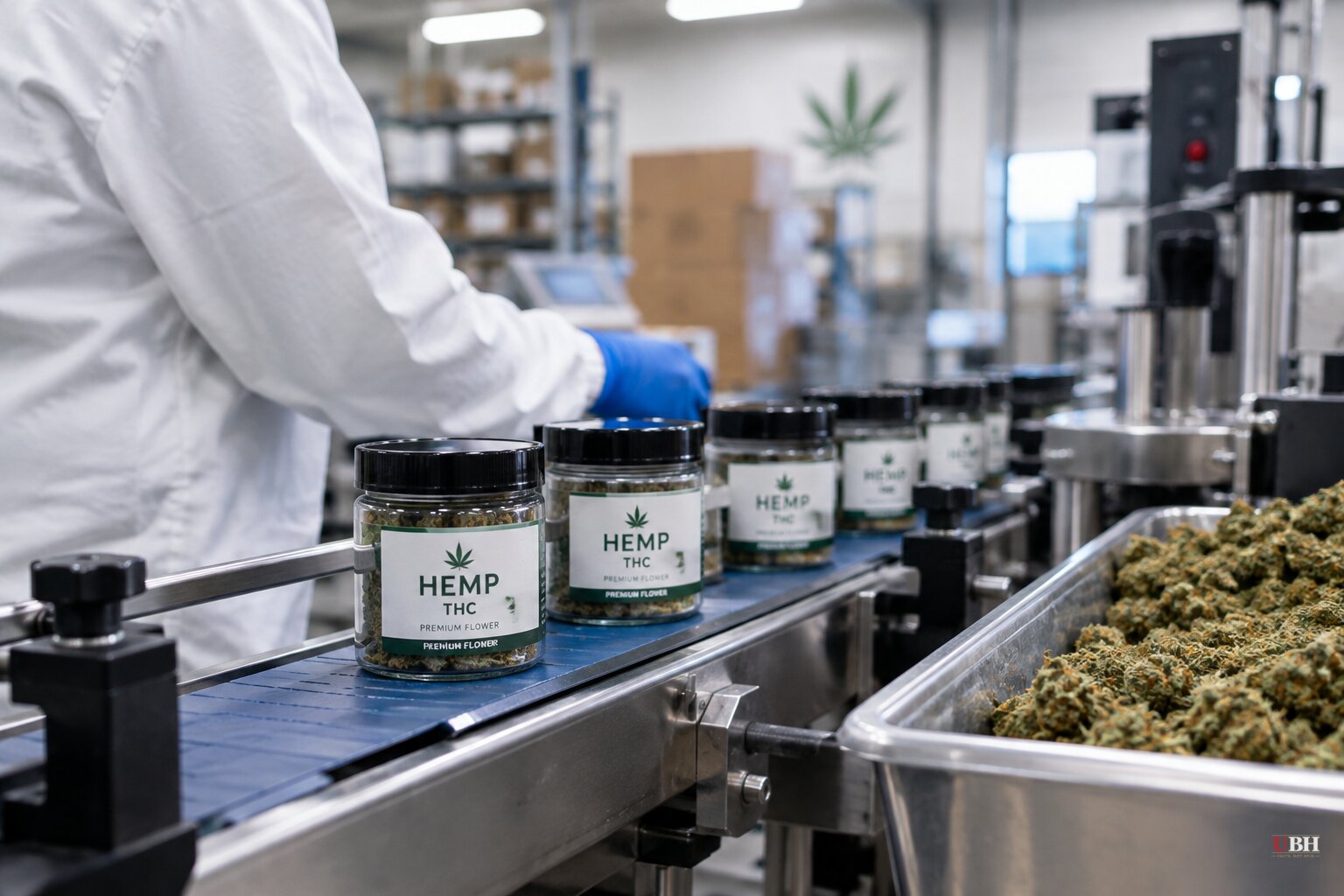
Nicholas Hohns spends his days in a commercial kitchen outside Raleigh, North Carolina, spreading blue-green goo into molds to make THC gummies. According to the Associated Press, Hohns has built that business over the past four years working 100-hour weeks. He may soon have nothing to show for it.
Congress has voted to close a federal loophole that let Hohns and thousands of others sell intoxicating hemp products nationwide with essentially no federal oversight. The ban was originally set to take effect Nov. 12. A short-term government funding bill signed by President Trump last month pushed that deadline to Dec. 11, buying Congress more time to decide whether to regulate the industry instead of killing it outright, according to the Associated Press.
How a farm bill for rope became a loophole for dope
The mess traces back to the 2018 farm bill, which Kentucky Republican Sen. Mitch McConnell pushed through to legalize industrial hemp and give farmers a new cash crop. The old slogan was "rope, not dope." McConnell's law defined hemp as cannabis containing less than 0.3% delta-9 THC by weight, the Associated Press reports.
That threshold sounds tight, but a product can hit 0.3% THC by weight and still pack enough THC per serving to get someone high, especially in a drink or a gummy where the "weight" includes water, sugar and filler. Businesses exploited that math. Within a few years, THC seltzers, vape oils, gummies, chips and sodas were sitting on shelves at gas stations and convenience stores nationwide, according to the Associated Press, sold with zero federal testing requirements and, in plenty of places, zero age verification.
Some sellers went further, marketing raw marijuana flower as legal "hemp" under the theory that its THC exists in a non-impairing form called THC-A until it's heated or burned. That theory let smokable cannabis flower move through the same loophole, undercutting state-licensed, heavily taxed marijuana markets in states that had legalized recreational weed.
Dozens of states eventually passed their own laws to regulate or ban these products, the AP reports. McConnell closed the federal loophole late last year by inserting a hemp THC ban into the bill that ended the longest government shutdown in U.S. history. The new rule caps THC at 0.4 milligrams per container, a limit so low it would effectively end intoxicating hemp products as they currently exist.
The industry's case, and its price tag
A report from Whitney Economics, commissioned last month and cited across multiple outlets including PBS, ABC News and the Associated Press, estimates the ban would cut $28.3 billion in retail revenue, eliminate 225,000 jobs, and cost states $2.1 billion in lost sales tax potential.
Those numbers are driving the industry's last-ditch push. Matt Swanson, co-founder of Drinkin' Buds, told the Associated Press he mothballed production this week because "there's just so much uncertainty." Cornbread Hemp owners Eric Zipperle and Jim Higdon are capping their products at 5 milligrams of THC, hoping a voluntary dosage limit wins them political cover. Zipperle didn't mince words about what happens if the ban takes effect in December: "this place is toast."
The industry's pitch to Congress is regulation, not elimination: restrict sales to adults 21 and older, cap potency, require lab testing and child-proof packaging. These are essentially the rules a licensed marijuana dispensary already follows. Businesses that built operations under the letter of a federal law Congress itself wrote are now facing a cliff with weeks' notice, and 225,000 jobs is not a trivial number to wave away.
But the industry's own existence is the strongest evidence for why it got targeted. These products spread into gas stations and convenience stores precisely because they avoided the age checks, testing and tax structure that every state-licensed marijuana product has to meet. A teenager with cash could buy a THC seltzer at a Texas gas station in a way they legally couldn't buy a joint at a Colorado dispensary. This gap in enforcement is the business model the loophole enabled, according to the Associated Press's reporting on how the products spread.
Farmers caught in the middle are frustrated too. Detroit Lakes Online reported that Winona LaDuke, the Minnesota hemp farmer and longtime Native American advocate, has criticized the "punishing gyrations" of federal hemp policy, pointing to how a fiscal 2026 farm bill provision reasserts federal control over hemp just as growers were adjusting to the last set of rules.
Congress now has about ten weeks before the Dec. 11 deadline to decide whether to let the 0.4-milligram cap take effect, pass a regulatory framework resembling the industry's own proposal, or push the deadline again. No vote on a replacement framework has been scheduled as of this writing. Whatever lawmakers do, the core question hasn't changed since 2018: a law meant to help rope farmers accidentally built an unregulated drug market, and it took Congress seven years to notice.
Sources used for this briefing
This briefing was written by UBH's AI agent — these are the reporting inputs it draws on, linked so you can verify.


