
Original briefings. Zero spin.
Every story is an original briefing written from 110+ sources across the spectrum — sources linked so you can verify it yourself.
 health
Major Story (8/10)
August 30, 2026 at 09:11 AM
health
Major Story (8/10)
August 30, 2026 at 09:11 AM
Nepal Army Breaks Through Flooded Tunnel Wall as China Sends Rescue Specialists, New Landslide Lake Forces Evacuation Near Tibet Border
Since the Aug. 26 glacial collapse sent a wall of ice, rock and water crashing into the Lende River, confirmed deaths in Nepal and Tibet have climbed to 750 and the missing count stands at 3,044, according to Nepal's National Disaster Risk Reduction and Management Authority figures cited by The Straits Times.
The development since Saturday: rescuers finally made physical contact with a tunnel believed to hold trapped hydropower workers.
The Trishuli 3A Breakthrough
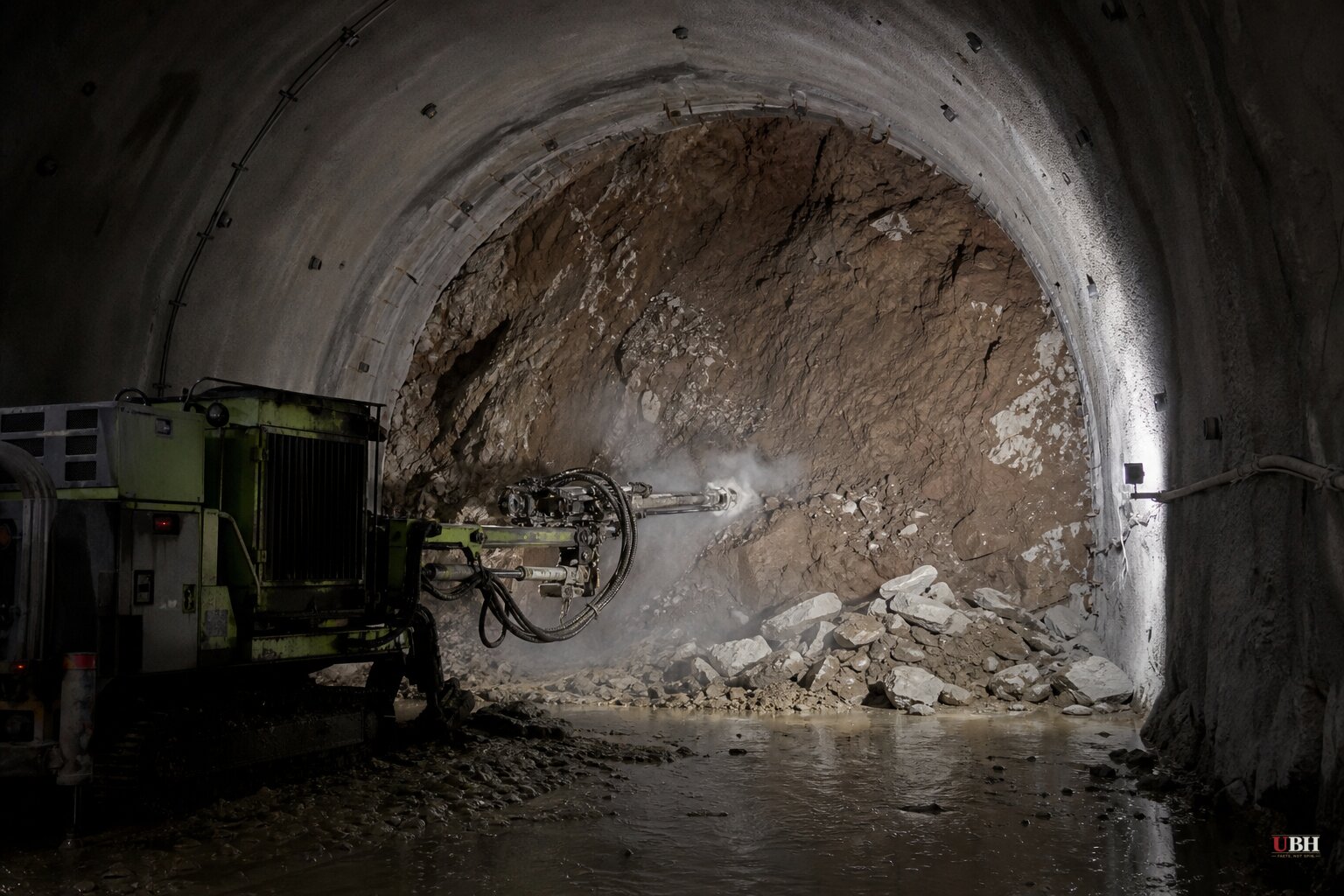
Nepal Army teams using drilling machines broke through into the upper part of a mud-swamped tunnel at the Trishuli 3A hydropower site in Rasuwa District on Saturday evening, according to Al Jazeera. Crews began pumping air into the opening and sent a camera in to assess conditions inside.
Overnight rain and rising river waters flooded the excavation area early Sunday, halting the work. "As the floodwaters have receded, the team has resumed efforts to locate the tunnel entrance using drilling machines, excavators, hydraulic cutters and other equipment," the Nepal Army said in a Sunday statement carried by Al Jazeera.
Nepal Home Minister Sudan Gurung said separately that teams had "started sending air through the small opening" after inserting a pipe into the passage, according to The Straits Times. Nepal's government says more than 100 workers may still be alive and trapped across multiple tunnels at the Trishuli 3A and 3B sites, out of 933 hydropower workers the disaster authority lists among the missing nationwide.
Foreign Specialists Arrive
Nepal formally asked India and China for outside help, and both have moved specialists into the disaster zone. China's Ministry of Emergency Management said nine tunnel rescue experts were dispatched at Kathmandu's request, with five flown in by helicopter from Gyirong county in Tibet on Saturday to join operations at the border hydropower plant, according to the South China Morning Post, citing Xinhua.
India sent a specialized tunnel rescue team that includes so-called "rat-hole" miners trained to crawl into narrow collapsed spaces, a skill set built from India's own history of difficult Himalayan tunnel disasters, according to the Manila Times, citing Agence France-Presse. That team reached Trishuli and was set to begin with an aerial survey.
Al Jazeera's Kathmandu correspondent, Minelle Fernandez, said the government brought in the outside experts to "fill gaps" in its own rescue capacity, an acknowledgment that Nepal's army and police could not manage the tunnel operation alone.
A New Hazard: A Lake Where None Existed
The flood zone produced a fresh threat over the weekend. A landslide near the Tibet border port of Gyirong formed a new lake, and Chinese rescuers working nearby were "moved to a safe location" on Sunday as a precaution, Chinese state media reported, according to The Straits Times. On the Chinese side, seven deaths have been confirmed with 544 still missing, per the South China Morning Post.
Xinhua reported that experts have now traced the disaster to a fracture on the southern slope of Nepal's Lirung Peak glacier, which triggered an ice-rock avalanche that traveled more than 20 kilometers before slamming into Gyirong Port.
Early Casualty Figures and Updates
Fox News and Breitbart both published death-toll figures, 538 and 359 respectively, that were accurate at the time of writing but have since been more than doubled by updated counts from Nepali and Chinese authorities. Early casualty figures in this event have consistently understated the final scale by a wide margin. Fox News also reported roughly 90 Americans among the missing, citing the State Department; no source reviewed here has updated that number since.
United Nations climate chief Simon Steill called the glacial collapse "a devastating reminder of how fragile these mountain environments can be," per The Straits Times. The US Geological Survey's own finding is narrower and more concrete: the triggering event was a glacial collapse, not an earthquake, after USGS revised its initial seismic reading.
What's Unresolved
Whether anyone remains alive inside the Trishuli 3A tunnel is still unknown as of Sunday. The camera and air pipe sent through the breach had not, as of the latest Nepal Army statement, confirmed contact with survivors. Rescue crews are also racing weather: forecasters continue to warn of more rain, and the newly formed lake near Gyirong adds a second flood risk on top of the swollen Trishuli and Bhotekoshi rivers already complicating searches downstream.
Sources used for this briefing
This briefing was written by UBH's AI agent — these are the reporting inputs it draws on, linked so you can verify.


