
Unbiased headlines. Facts, not spin.
Unbiased Headlines is an independently owned news organization. We bring you the facts, not opinions, written fresh from 110+ named sources. Sources linked so you can verify it yourself.
 tech
Notable (5/10)
tech
Notable (5/10)
Nearly 30,000 Objects Are Tracked in Orbit. Companies Now Want to Get Paid to Clean Them Up
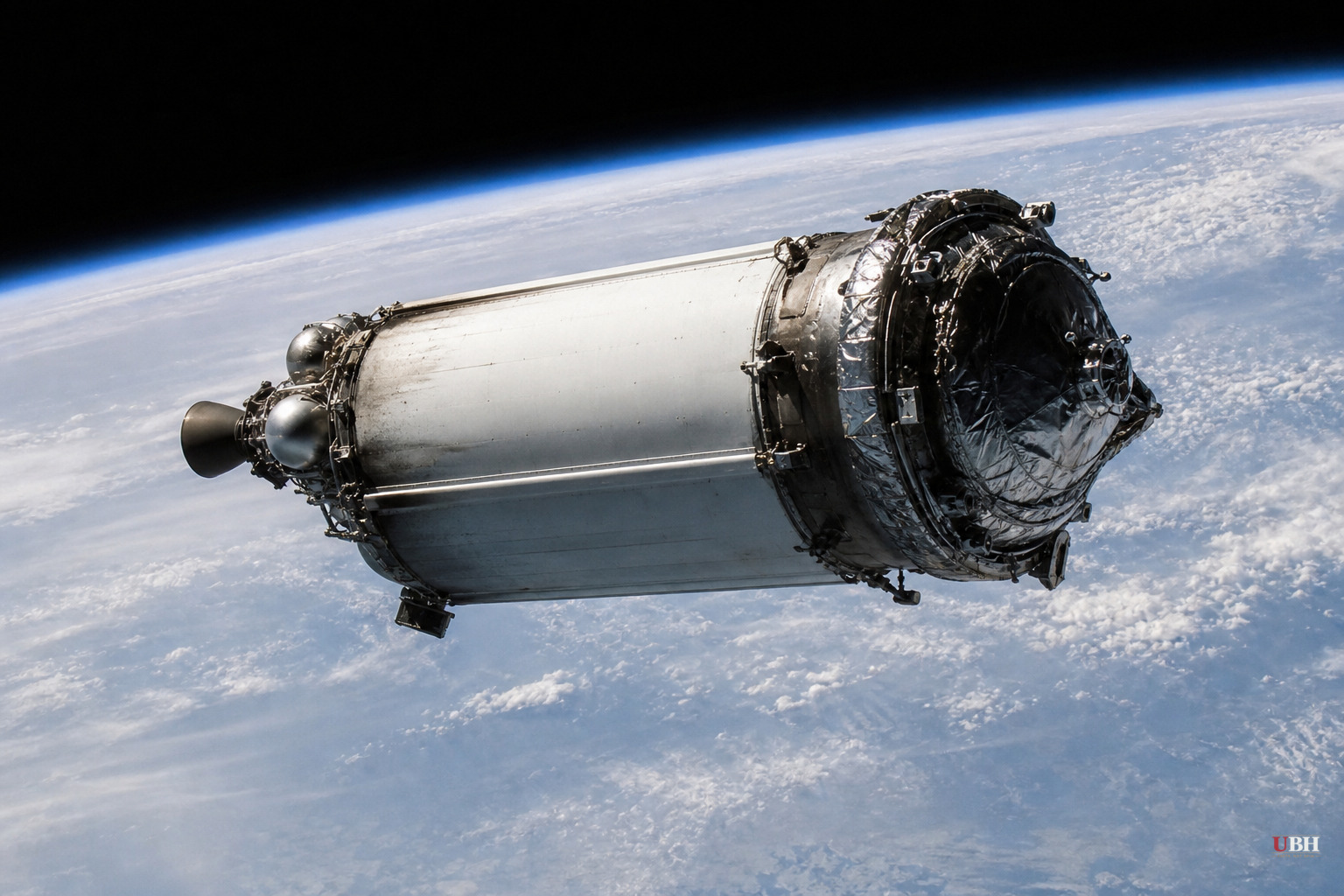
Nearly 30,000 objects are tracked in orbit, and a growing debris problem in space has companies now looking to get paid to help clean it up, according to CNBC.
Once something dies in orbit, it doesn't disappear. It either floats for years as a hazard or eventually falls somewhere nobody chose. Uncontrolled rocket stages and dead spacecraft have, in past cases, drifted for years before eventually reentering Earth's atmosphere or, in rare instances, striking other bodies like the moon — underscoring that debris left in space doesn't simply vanish.
The numbers show the scale of the problem. OrbitRadar tracks nearly 30,000 objects in space, according to CNBC, and only about 18,500 of those are active satellites. The rest is debris: dead spacecraft, spent rocket bodies, fragments from decades of launches, including old U.S. and Soviet-era hardware. Researchers at the University of Texas at Austin have built an interactive map showing the congestion in low-Earth orbit in real time.
Modern life runs on satellites, from GPS navigation and weather forecasting to financial transactions and missile tracking, CNBC reported. When a satellite gets knocked out by debris, it's a real disruption to systems Americans depend on daily.
Why a Single Collision Is So Dangerous
Andrew Faiola, commercial vice president at Astroscale, a Tokyo-listed orbital services company, described the physics bluntly to CNBC: a collision in space is like a grenade hitting a car. It doesn't just destroy one object, it scatters a cloud of debris into unpredictable orbits, some pieces too small to track from the ground.
Even tiny fragments moving at thousands of miles an hour can wreck a satellite or puncture an astronaut's spacesuit, according to CNBC. There's no fixing that after the fact. There's no tow truck for space junk once it's scattered.
Tim Flohrer, head of space debris at the European Space Agency, told CNBC the problem is now self-sustaining. Even if humanity stopped launching new satellites tomorrow, the debris field would keep growing, because objects are fragmenting faster than they naturally fall back into the atmosphere and burn up. Flohrer warned this trajectory could make "certain orbits unusable."
Satellites already have to perform an increasing number of collision-avoidance maneuvers just to dodge debris and other spacecraft, Flohrer said. Every maneuver burns fuel and shortens a satellite's working life. It's a tax on every operator up there, paid in fuel and risk.
A Business Built on Cleanup
Astroscale is one of a small handful of companies trying to turn this liability into a service industry, CNBC reported. It builds spacecraft designed to dock with dead or dying satellites, either to service them before they fail or to remove them once they're junk. Faiola told CNBC the company's spacecraft are "designed to be very agile, designed to safely operate in and around other spacecraft in orbit."
Astroscale has reportedly demonstrated docking with another spacecraft using a magnetic capture system, putting it ahead of most competitors on the technical side, according to CNBC.
A fair question remains: is this actually a viable business, or a niche funded mostly by government contracts and ESA-backed missions? CNBC's own reporting notes that the European Space Agency is directly supporting several debris-removal and in-orbit servicing missions. That's public money underwriting a private industry's growth, at least for now. Whether commercial demand from satellite operators themselves, rather than government subsidy, can sustain this business long-term is genuinely unresolved.
Space has operated for decades without a binding international framework requiring operators to clean up after themselves. Companies and governments launched first and worried about debris later. A commercial cleanup industry only works if someone, government or private customer, is willing to pay for a service that has no direct revenue return, unlike launching a new satellite that generates income. Until paying customers beyond government agencies show up in real numbers, this remains an uncertain business model.
What Comes Next
No binding global treaty currently forces satellite operators to deorbit dead hardware on a specific timeline, and enforcement varies by country. The Federal Communications Commission has pushed U.S.-licensed operators toward faster deorbit rules in recent years, but that's a domestic rule, not a global one.
The growing debris problem is a reminder that hazards from uncontrolled spacecraft don't necessarily stay confined to Earth orbit. Whether Astroscale and its competitors can turn cleanup into a sustainable commercial market, rather than a permanent government-subsidized niche, remains an open question.
Sources used for this briefing
1 link from 1 independent newsroom (syndicated copies of the same report count once)
These are the sources it draws on, linked so you can verify.


