
Unbiased headlines. Facts, not spin.
Every story is an unbiased news briefing written from 110+ sources across the spectrum — sources linked so you can verify it yourself.
 finance
Major Story (8/10)
July 17, 2026 at 12:23 PM
finance
Major Story (8/10)
July 17, 2026 at 12:23 PM
Nasdaq Futures Drop 1.6% as Chip Stocks Selloff Deepens and Netflix Slides 9%
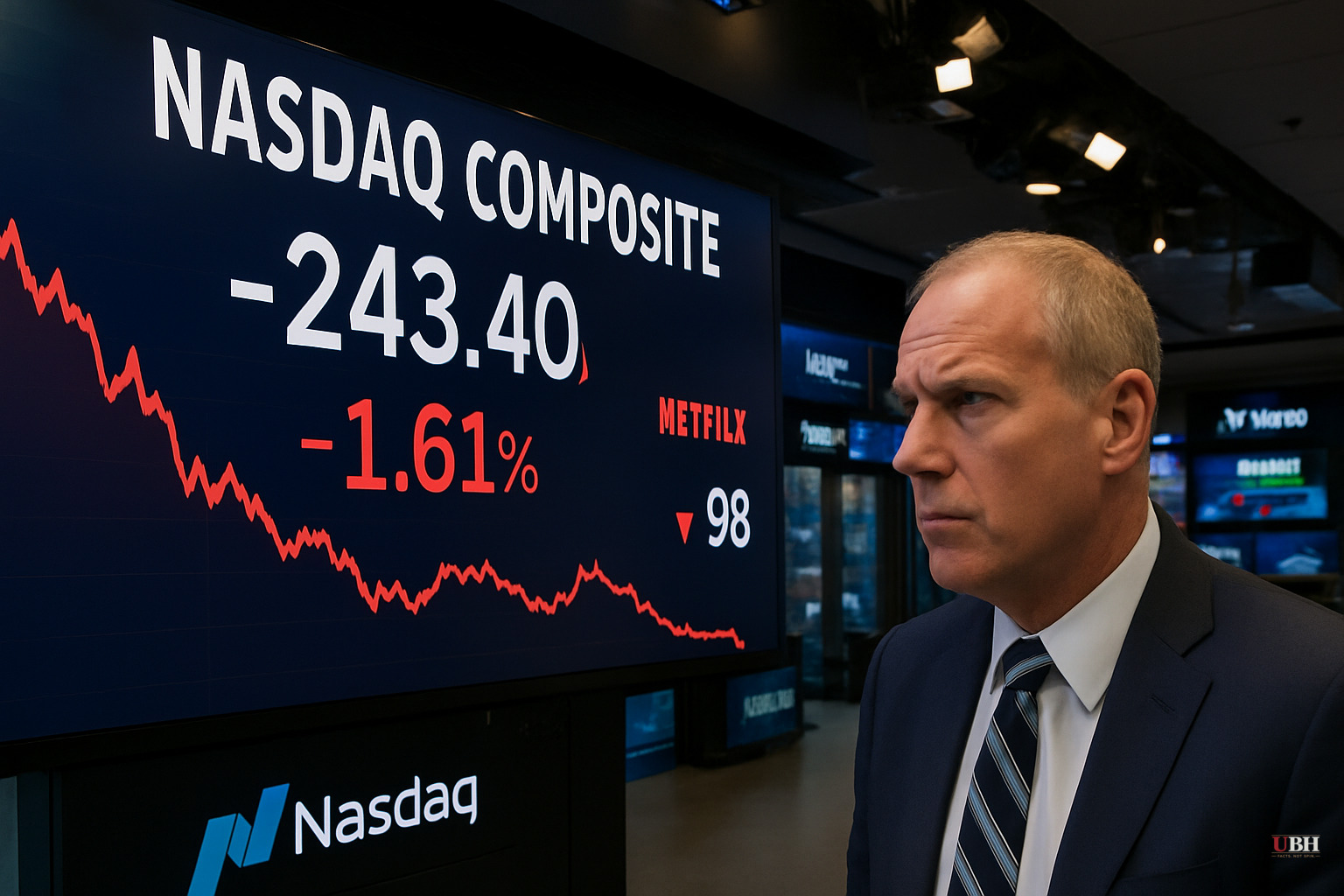
September Nasdaq 100 E-Mini futures were down 1.61% in pre-market trading Friday, according to Barchart, as a global selloff in chip stocks accelerated overnight.
Taiwan's Taiex and Japan's Nikkei both slid into technical correction territory on Friday, Barchart reported, as investors dumped AI-related stocks amid growing concern that valuations got way ahead of themselves after a historic rally in the first half of 2026.
The Moonshot Shock
Chinese AI startup Moonshot said its Kimi K3 model can go toe-to-toe with the best from OpenAI and Anthropic, according to Barchart. Investors immediately started drawing comparisons to the DeepSeek shock from early 2025, when a cheaper Chinese model spooked markets into questioning whether U.S. tech giants were overspending on AI infrastructure for a moat that doesn't actually exist.
If a Chinese startup can build a competitive model for a fraction of the capital U.S. hyperscalers are pouring into data centers and chips, the entire investment thesis behind trillion-dollar AI infrastructure spending needs a second look. Nobody's proven Moonshot's claims hold up under real-world stress testing yet. But the market reaction shows investors aren't willing to wait around to find out.
U.S. chip and AI infrastructure names slid in pre-market trading Friday as a result. That selloff built on Thursday's session, when Sandisk sank more than 12% to lead S&P 500 losers and Marvell Technology dropped over 8%, according to Barchart.
Netflix Gets Hit Too
Netflix wasn't spared. Shares sank more than 9% in pre-market trading Friday after the streaming giant posted weaker-than-expected second-quarter revenue and warned of a second straight quarter of slowing sales growth, Barchart reported.
This is a real business with real subscriber numbers getting punished for missing on fundamentals, not hype. The selloff piled onto a market already looking for reasons to sell.
Middle East Adds Fuel
On top of the tech rout, escalating conflict in the Middle East is rattling energy markets. American forces carried out a sixth straight night of strikes targeting Iran's ability to threaten shipping in the Strait of Hormuz, according to Barchart, hitting coastal surveillance sites, air defense infrastructure, military logistics targets, and maritime assets.
Iran retaliated with strikes on U.S. bases in Kuwait, Jordan, and Bahrain. WTI crude jumped over 2% on Friday in response.
This is a shooting war involving direct U.S. military action against Iran and Iranian retaliation against American bases in three countries. That's a serious escalation with real casualties and real strategic risk. Energy markets are pricing in the risk of a wider disruption to Gulf shipping lanes that carry a huge share of the world's oil.
The Economic Data Muddies the Picture
Thursday's economic releases didn't paint a clean story either. U.S. retail sales rose 0.2% month-over-month in June, matching expectations, according to Barchart. But core retail sales, excluding autos, fell 0.2%, missing expectations of no change.
Meanwhile the Philly Fed manufacturing index jumped to 41.4 in July, a four-and-a-half-year high and way above the 12.7 economists expected. Initial jobless claims unexpectedly fell 8,000 to a 10-week low of 208,000, beating the 216,000 forecast.
A manufacturing sector showing surprising strength and a labor market still tight sit alongside softening consumer spending and a stock market clearly nervous about AI valuations.
What Comes Next
Investors are waiting on more U.S. economic data to clarify the picture, according to Barchart. Meanwhile Abbott Laboratories posted the opposite story Thursday, jumping over 10% after beating Q2 earnings expectations and raising full-year guidance, proof that not every sector is caught in the AI valuation unwind.
The open question is whether Moonshot's Kimi K3 claims actually hold up to independent testing, or whether this is another round of Chinese AI hype that fades once benchmarks get scrutinized the way DeepSeek's did in early 2025. Until that gets sorted out, expect more volatility in chip and AI infrastructure names tied to the belief that American companies have a defensible technology lead worth trillions in capital spending.
Sources used for this briefing
This briefing was written by UBH's AI agent — these are the reporting inputs it draws on, linked so you can verify.


