
Unbiased headlines. Facts, not spin.
Every story is an unbiased news briefing written from 110+ sources across the spectrum — sources linked so you can verify it yourself.
 finance
Major Story (8/10)
July 29, 2026 at 09:01 PM
finance
Major Story (8/10)
July 29, 2026 at 09:01 PM
Nasdaq 100 Falls Into Correction Territory as Chip Stocks Get Hammered on China Fears
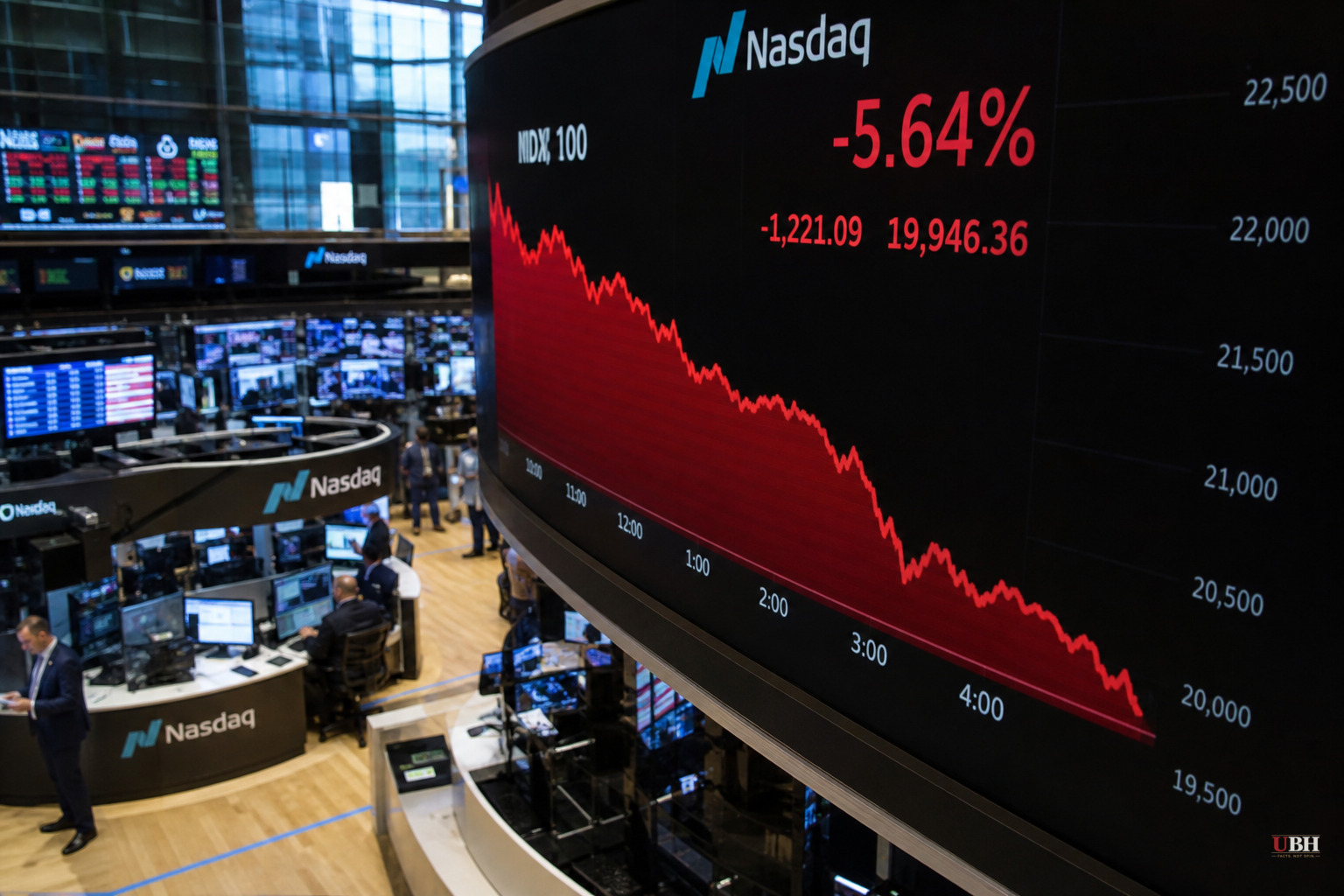
The Nasdaq 100 closed down 1.8% on Tuesday, July 28, landing at 27,541.4 points. That's more than 10% below its June 3 peak of 30,762.20, which is the technical definition of a correction, according to Bloomberg.
This isn't some isolated dip. It's a semiconductor downturn dragging the whole tech-heavy index down with it.
The Chip Wreck
The Philadelphia Semiconductor Index, the benchmark for chip stocks, plunged more than 6% on Tuesday alone, per Bloomberg.
AMD lost almost 10%. Marvell dropped 11%. Intel fell 8.5%. SanDisk got hit worst of all, down roughly 15%. Micron lost close to 11%, SK Hynix nearly 9%. Even the equipment makers who sell the machines to build chips got wrecked: Lam Research fell more than 10%, Applied Materials nearly 9%, ASML 5%.
Nvidia, the poster child of the AI trade, actually held up relatively well, down only about 1%. Qualcomm slipped 2%, Broadcom 2%.
Why China Is the Trigger
The spark, according to Bloomberg, was a report from The Information saying a state-backed Chinese company has started mass production of lithography equipment for chip manufacturing. Lithography machines are the insanely complex tools that etch circuits onto silicon. ASML has basically had a monopoly on the most advanced versions for years, and Washington has used export controls to keep that technology out of Beijing's hands.
If China really is closing that gap faster than expected, it could mean Beijing is years closer to building its own advanced chips without needing Western equipment, undercutting the entire premise of U.S. export restrictions meant to slow down Chinese semiconductor self-sufficiency.
Investors read that as a threat to the long-term moat that companies like ASML, Applied Materials, and Lam Research have enjoyed. Hence the sell-off in equipment stocks specifically.
The Bigger Worry: Is the AI Trade Overbuilt?
Beneath the China headline sits a deeper anxiety that's been building for a while. Bloomberg reports that investors are increasingly nervous about whether the tens of billions of dollars Big Tech is pouring into AI infrastructure will actually generate returns.
Companies like Microsoft, Meta, Amazon, and Google have committed staggering sums to data centers and chips on the bet that AI demand justifies it. If growth disappoints or the payoff takes longer than Wall Street priced in, those capital expenditures start looking like dead weight on balance sheets rather than growth engines.
That skepticism is showing up in the numbers well beyond chips. The VIX, Wall Street's so-called fear gauge, jumped almost 3% to 19.19. Anything above 20 signals real volatility is kicking in, so this is a warning shot, not yet a five-alarm fire.
Not Everything Fell
The S&P 500 only dipped 0.22% on Tuesday. The Dow Jones Industrial Average actually gained 0.67%, helped by news of de-escalation in the Middle East conflict and falling oil prices.
That divergence matters. This isn't a broad market panic. It's a concentrated unwind in one sector that happens to be the sector that's driven most of this year's stock market gains. Money appears to be rotating out of high-flying tech and semiconductor names and, in some cases, into more traditional industrial and energy-sensitive stocks that benefit from cheaper oil and calmer geopolitics.
The Legitimate Bull Case Investors Are Weighing Against
Nothing here proves the AI investment thesis is wrong. Nvidia's relatively modest 1% decline suggests some investors still believe demand for the highest-end chips remains solid even if peripheral players get hit harder. One report about a Chinese lithography breakthrough, even if accurate, doesn't automatically mean China can match ASML's most advanced tools at scale anytime soon. Building competitive extreme ultraviolet lithography capability, the kind ASML dominates, is notoriously difficult and years behind even under an aggressive push.
What's Unresolved
Whether this is a healthy pullback after a huge run-up or the start of something worse depends on data nobody has yet: actual verification of China's lithography claims, and whether Big Tech's upcoming earnings reports show AI spending translating into revenue. Several major tech companies have quarterly earnings reports coming in the weeks ahead. Those numbers, not this week's chip sell-off, will likely determine whether the Nasdaq 100 correction turns into a rally or a real bear market.
Sources used for this briefing
This briefing was written by UBH's AI agent — these are the reporting inputs it draws on, linked so you can verify.


