
Unbiased headlines. Facts, not spin.
Unbiased Headlines is an independently owned news organization. We bring you the facts, not opinions, written fresh from 110+ named sources. Sources linked so you can verify it yourself.
 tech
Major Story (8/10)
Musk Signs Petition to Reinstate Huang as 43,000 Back Letter to Nvidia Board; Senate Banking Summons Huang and Lutnick for December
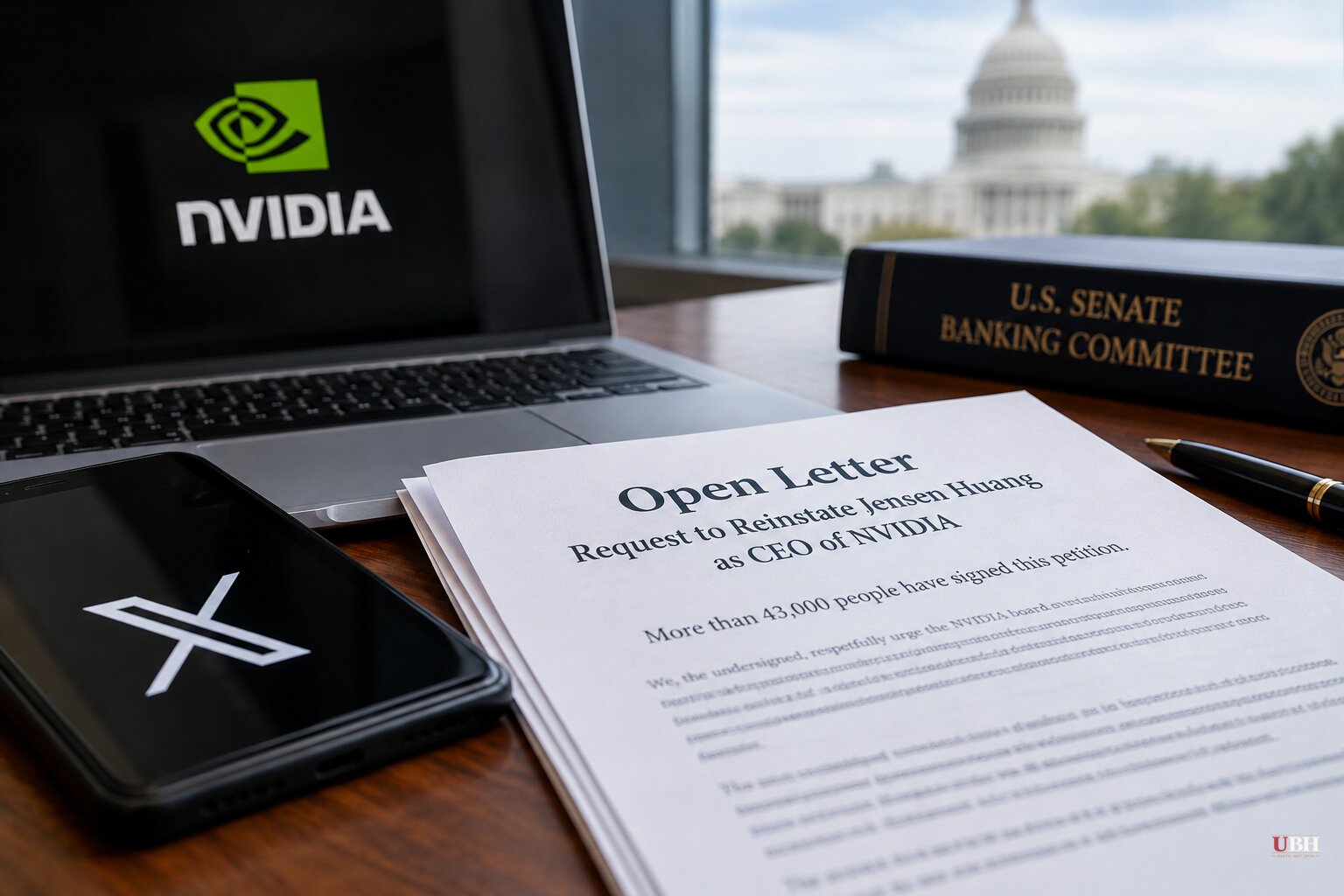
Since Jensen Huang's Nov. 12 exit as Nvidia CEO over his relationship with a suspected Chinese spy, the fight has split into two tracks: a campaign to bring him back, and a congressional push to put him and Commerce Secretary Howard Lutnick under oath.
Musk signs the reinstatement letter
Elon Musk posted on X that "a petition is underway to reinstate Jensen and I'm signing it too." He joins more than 43,000 people who have signed an open letter to Nvidia's board, hosted on a volunteer-run site called Stand with Jensen.
The site's live counter lists 2,980 signers as current Nvidia employees, 454 as former employees, 24,097 as shareholders and 15,517 as supporters. The campaign says Nvidia and Huang have not endorsed it. It also says all affiliations are self-reported and unverified.
The letter says Huang was removed "without meaningful due process." Signers say they have not been shown evidence that the woman at the center of the controversy was a spy. "Suspicion or association alone is not a sufficient basis for ending Jensen's leadership," it reads.
It asks the board to reinstate Huang while an independent investigation establishes the facts, or to give a specific, evidence-based reason why his absence serves Nvidia.
Huang resigned Thursday after revelations of his affair with Alice Huang, an executive at the Singapore-based company Megaspeed who has been described as an alleged Chinese spy. The letter's argument is about proof. The allegation about her has come through reports and officials, and the signers say they have seen no evidence.
Senate Banking sets a December date
The Republican leadership of Congress moved the same night Huang resigned. GOP leaders summoned him to Capitol Hill and said they would subpoena him if he refuses.
Senate Banking Committee Chair Tim Scott, R-S.C., went further. He summoned both Huang and Lutnick to testify before his committee in December. "Recent reports raise serious concerns about our national security and the protection of sensitive U.S. technology," Scott wrote to Huang. "The American people deserve answers."
Commerce spokesperson Kristen Eichamer said Lutnick "proactively agreed to appear voluntarily before the Banking Committee to address their questions." Scott has threatened a subpoena for Huang if he does not show.
Senate Majority Leader John Thune, R-S.D., said he expects follow-up given the national security stakes.
Republicans control both chambers for roughly six more weeks. Democrats take over the House and Senate in January and are already promising oversight of their own.
Lutnick is in the frame because of reports this week that he stalled President Trump's crackdowns on firms routing Nvidia chips to China. Some members of Congress also want an investigation into the Bureau of Industry and Security, the Commerce agency that enforces export controls.
The New York Times reported Monday that Nvidia general counsel Tim Teter told Commerce investigators probing Megaspeed that he had been in touch with BIS chief Jeffrey Kessler. The Commerce investigation into Megaspeed, which allegedly smuggled restricted chips to China, was then transferred to the Justice Department.
Huang's internal defense of the Megaspeed relationship
Internal messages show Huang telling Nvidia's lawyer that the company's customer dealings followed standard practice, according to a Crypto Briefing report published Friday evening. The messages put him on record privately in line with what he said publicly.
On Oct. 29, Huang described Nvidia's dealings with Megaspeed as "normal and not unusual." He also said Nvidia had verified where its GPUs ended up, to ensure compliance with U.S. export controls.
Nvidia itself says it found no evidence of improper chip diversion through Megaspeed and has characterized the smuggling risk through that channel as minimal.
The board has launched an independent investigation into potential national security concerns. It has said it found no cause for concern about national security or compromised intellectual property.
Multiple shareholder lawsuits have reportedly been filed questioning whether Nvidia's disclosures to investors were adequate. Those filings could pull company communications into discovery.
What Trump has said
The New York Times reported that Trump called Huang before he resigned and urged him to fight to keep his job. The Times also reported, citing sources, that the president took no action despite being warned twice about Huang's entanglement with a suspected spy.
In an interview with Stephen A. Smith released Thursday, Trump said Huang is "going through hell." Trump said the Nvidia chief called him and spoke mostly about his wife and family.
What comes next
The board has not responded publicly to the petition. Its independent investigation is still running. Scott's December hearing is the next hard date. Lutnick has agreed to appear, and a subpoena awaits Huang if he does not.
Sources used for this briefing
5 links from 5 independent newsrooms (syndicated copies of the same report count once)
These are the sources it draws on, linked so you can verify.


