
Unbiased headlines. Facts, not spin.
Unbiased Headlines is an independently owned news organization. We bring you the facts, not opinions, written fresh from 110+ named sources. Sources linked so you can verify it yourself.
 tech
Major Story (8/10)
Event date: November 12, 2026 ·
After Huang's Exit, Western Officials Point to Chinese Spy Cases From Germany to Taiwan; Beijing Calls It a Smear
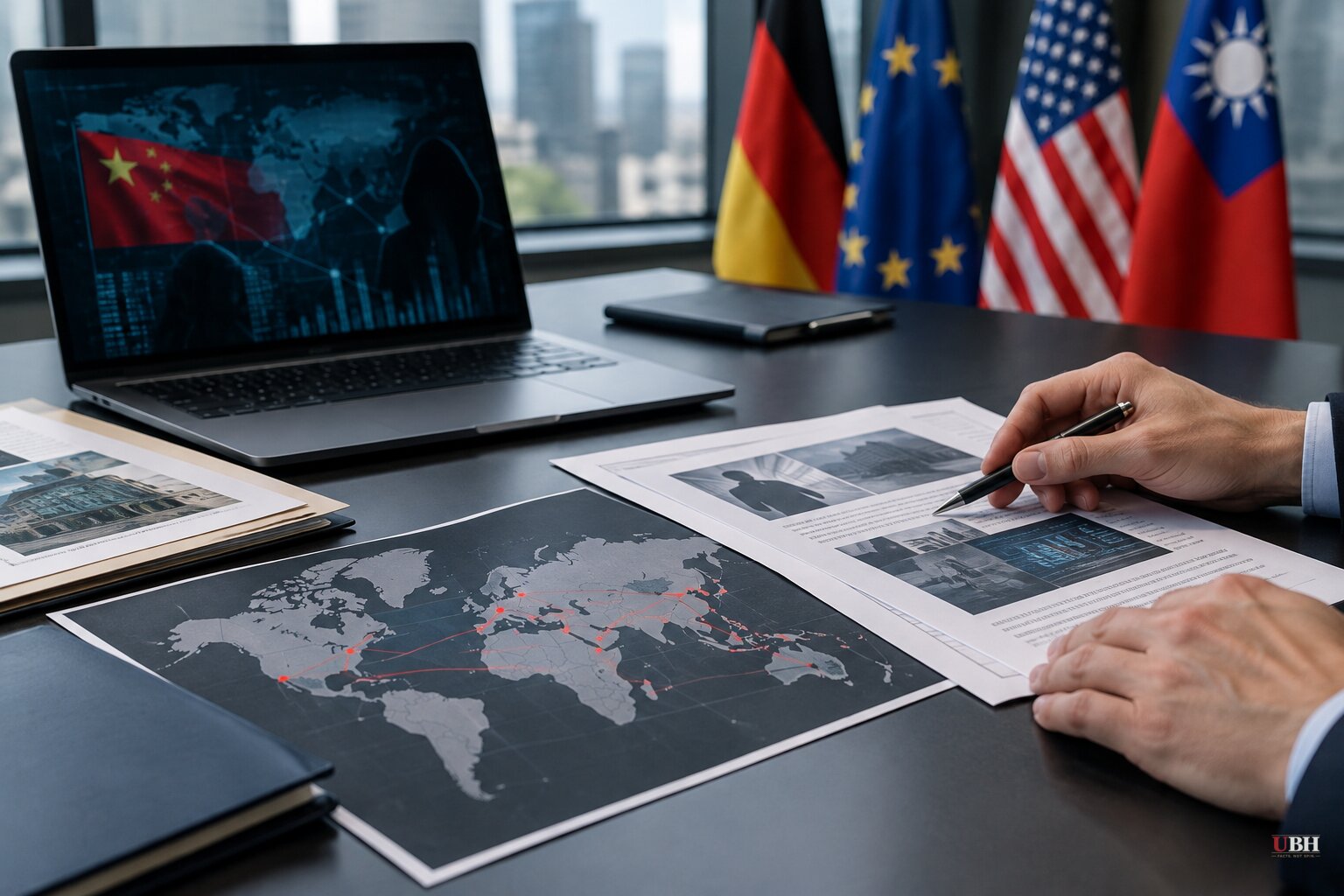
Since Nvidia's board opened its investigation and Jensen Huang left the CEO job this week, the argument has widened from one executive's conduct to how China collects information on Western technology and the people who run it.
The core allegation has not changed. U.S. officials suspect Alice Huang, a Chinese citizen and executive at Singapore-based data center firm Megaspeed, was gathering information for Beijing. The two Huangs are not related. Megaspeed bought more than $4.8 billion of Nvidia chips over two years, according to The New York Times.
Huang told employees he had been unfaithful to his wife and took "full responsibility." His letter did not name Alice Huang or address the intelligence allegations. Nvidia's board said it has "no reason to believe" national security or company secrets were compromised.
The suspected operative is reported to be in China now, and the Chinese government is aware of her presence.
Beijing's answer
China rejects the whole thing. Its government calls the allegations a smear and says Washington is manufacturing "Chinese spy narratives" to rationalize limits on technology exports. China's Foreign Ministry says the spying allegation is "purely unsubstantiated and directed at smearing China."
That is the argument on the other side, and it is Beijing's own. The facts it has to contend with: U.S. officials say they tracked the relationship, Nvidia's board thought it serious enough to investigate, and Nvidia's chips have been under U.S. export restrictions since 2022. Nigel Inkster, a former director of operations at MI6, put the evidentiary state plainly: "Is Alice Huang an agent? No one has offered solid evidence either way, so we just don't know."
President Trump has said the FBI is on the case. He also said he had not spoken to Huang and praised him when the story broke.
The wider pattern officials describe
Western security services say this is not an isolated case. The FBI calls Chinese espionage "a grave threat to the economic well-being" of the United States. Britain's MI5 said it was running seven times as many China-related investigations in 2022 as four years earlier. Canadian intelligence calls China its "greatest counter-intelligence threat." Dutch intelligence says Chinese digital espionage against technology companies happens on a "large scale."
The specific cases range widely:
- German prosecutors allege a married couple posed as interpreters and car industry employees and cultivated professors in AI, computer science and aerospace. Some were drawn to China for paid "civilian" lectures delivered to state arms companies.
- New Zealand intelligence says a Chinese observatory with close government ties tried to install space-tracking equipment through a local company. The gear could also collect military intelligence.
- Taiwan says Chinese operatives trawl social media for indebted soldiers, offer loans, then press them for secrets and introductions to colleagues.
- Taiwan has also charged nine people, including Nvidia and Super Micro staffers, over illegal AI server exports to China.
One European intelligence agency estimates the Chinese state has around 600,000 people working on intelligence and security matters, according to a Wall Street Journal analysis carried by Mint. That is an agency estimate, not an audited headcount.
Beijing's own AI priorities
In September, Chen Yixin, head of China's Ministry of State Security, wrote that advances in machine learning "directly threaten our political security, system security and ideological security." Whoever masters AI, he wrote, will have "grasped the pulse of the times."
Nicholas Eftimiades, a former Defense Intelligence Agency official who has written books on Chinese espionage, said: "The West isn't used to this approach and doesn't have mechanisms to defend against it." Holden Triplett, who ran the FBI's Beijing office, said there is "a lack of appreciation for how professional the Chinese services have become."
The scale of the stakes is not in dispute. A UN report in July found the U.S. accounts for 75% of computing power among the world's top 500 AI supercomputers and China for 15%. Beijing has spent well over $100 billion in recent years trying to catch up on chips.
Separately, leaked documents obtained by the watchdog group NetAskari describe a Chinese government big-data system that scrapes social media and public sources to profile ethnic Chinese people abroad. In some cases, NetAskari says, it helps design influence operations aimed at senior figures in the AI industry. The report was shared with Dark Reading and Sky News ahead of publication. Those are the group's findings from leaked material, not a government finding.
Markets and Congress
Nvidia shares fell 10% last week, according to the Telegraph. That decline followed the U.S. midterms, when investors worried that the results would bring stricter AI regulation, and several winning Democratic candidates opposed building the data centers needed to run and develop AI. The scandal came on top of that slide and is not cited as its cause.
Democrats are moving to investigate. Sen. Chris Coons, who will chair the Senate Foreign Relations Committee from the new year, said Congress would open an inquiry into what he called the "insane relationship between the Trump administration, Chinese spies, and AI billionaires." That is Coons's characterization.
What investigators have yet to establish is whether anything of value left Nvidia. The board's review is still running.
Sources used for this briefing
6 links from 5 independent newsrooms (syndicated copies of the same report count once)
These are the sources it draws on, linked so you can verify.


