
Unbiased headlines. Facts, not spin.
Unbiased Headlines is an independently owned news organization. We bring you the facts, not opinions, written fresh from 110+ named sources. Sources linked so you can verify it yourself.
 tech
Major Story (7/10)
Event date: November 13, 2026 ·
Singapore Held Alice Huang's Passport Eight Months in Nvidia Chip Probe, Source Says Washington Offered Little Help
Singapore's government has put a timeline on the Alice Huang file that predates Jensen Huang's resignation from Nvidia by more than a year.
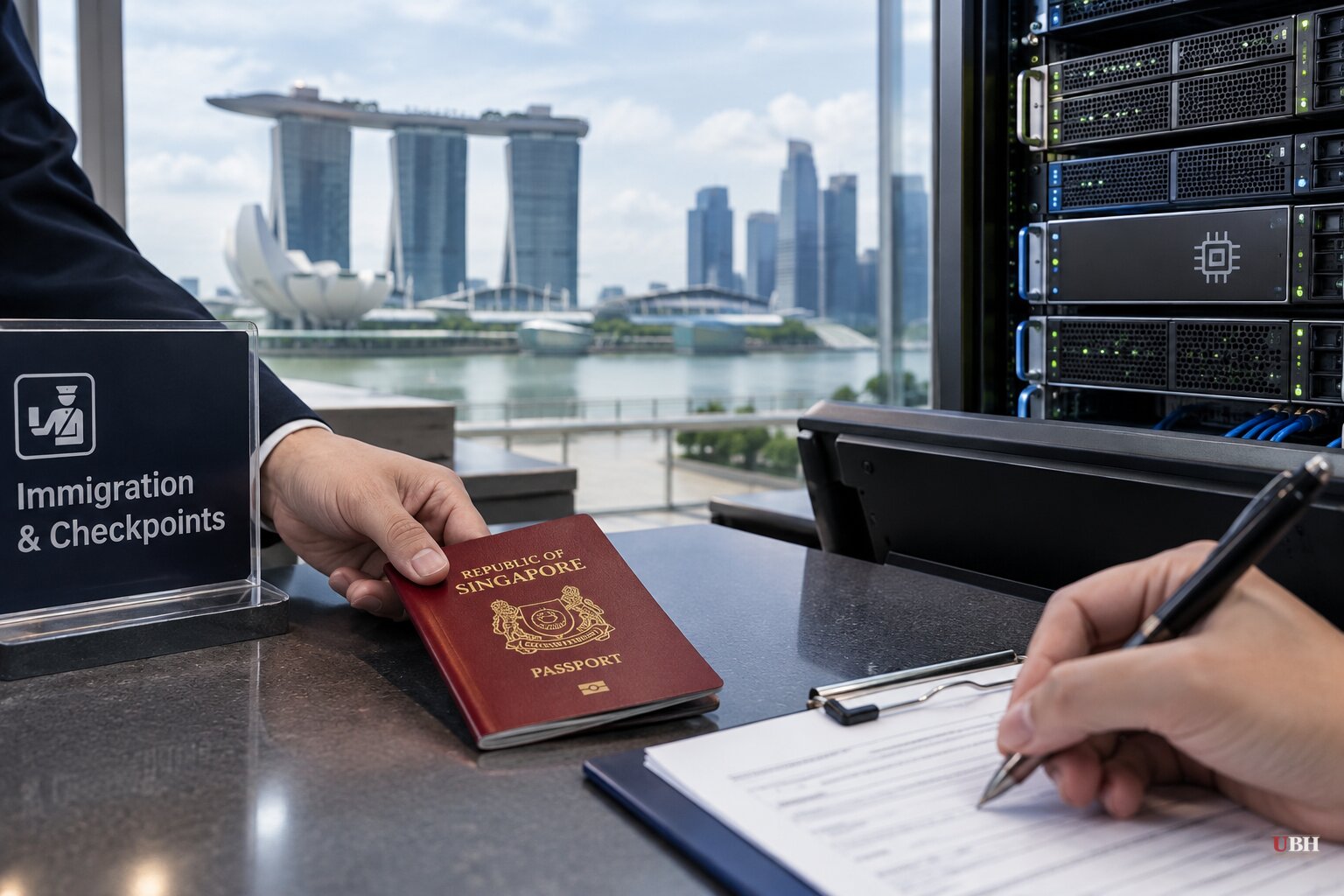
Singaporean authorities seized the passport of then-Megaspeed chief executive Alice Huang in June 2025 and held it for eight months, a source with knowledge of the matter told CBS News. The source said Singapore got no meaningful help from Washington during that period and none to date. Officials in Washington were "not forthcoming," the source said.
Singapore's government confirmed in a statement this week that it asked both the U.S. Department of Justice and the FBI for assistance with its investigation. The Home Affairs Ministry issued that statement Thursday, four days after Jensen Huang admitted to having an affair. Sources confirmed to CBS that the woman was Alice Huang. She is no relation to him.
What Singapore says it did
The Home Affairs Ministry said U.S. Bureau of Industry and Security investigators requested an interview with Alice Huang as part of a post-shipment verification check. That is the process used to determine whether imported products reached their declared recipient. The BIS sits inside the Commerce Department.
She flew into Singapore in June 2025 for the voluntary interview, according to the source. Singapore police interviewed her the same day and impounded her passport.
By February 2026 police had not charged her with any crime and had no option but to return the document, the source said. She was barred from ever returning to Singapore. The ministry said authorities assessed that she had given "inaccurate information" to downplay her role at Megaspeed.
The source said Singapore has been investigating since February 2025 whether Alice Huang and Megaspeed worked with California-based Supermicro to ship servers equipped with advanced Nvidia chips to China. The inquiry centers on whether she broke Singaporean law by lying about the details of those server purchases. Megaspeed has denied any wrongdoing.
Singapore police first raised the issue with U.S. authorities in July 2025 and repeated their requests on several occasions to the Justice Department and the FBI, according to the ministry's statement. The ministry said it also tried to contact Supermicro, which "provided limited cooperation."
The Nvidia fallout
Nvidia announced Jensen Huang's resignation as president, CEO and board member "effective immediately" on Thursday, Nov. 12. The announcement came after the New York Times reported on another alleged affair involving an Nvidia executive who reported to him. CFO Colette Kress is interim CEO. Longtime director Harvey Jones was named the company's first board chair, and the board is searching for a permanent CEO.
U.S. officials believe Alice Huang was recruited by China's Ministry of State Security, and reports say surveillance showed she was feeding information to Beijing. Those are suspicions and reported claims. China's foreign ministry has called the allegations "groundless speculation." The MI6 veteran Nigel Inkster put it plainly: "No one has offered solid evidence either way, so we just don't know."
Nvidia's board has said it has no reason to believe U.S. national security was compromised. It has opened an internal investigation. President Donald Trump says the FBI is on the case. Jensen Huang said he supports the board's probe and will cooperate.
Fortune reported that U.S. intelligence officials raised alarms about the relationship while Huang kept access to Trump and senior administration officials.
The export-control gap
The Singapore account lands on a policy problem the Council on Foreign Relations describes as long-standing. Washington has barred Nvidia from selling its top AI chips to China since 2022. Chips can still be legally sold to customers in places like Malaysia or Singapore and then illicitly reexported. Chinese firms can also legally rent remote access to advanced chips hosted outside China.
Trump allowed Nvidia to sell H20 chips to China in exchange for a cut of the revenue, a deal later extended to H200 chips, according to the Council.
CFR senior fellow Chris McGuire said Southeast Asia has become "a major hub for chip smuggling and export control circumvention," and that the U.S. government has "zero visibility" into those sales. He said existing regulations would require nontrusted companies there to apply for a license before ordering large numbers of AI chips, but that the Commerce Department is refusing to enforce them.
The New York Times reported that the Justice Department has taken over a probe started by Commerce into whether Megaspeed helped Chinese companies sidestep U.S. restrictions. The Wall Street Journal reported the Justice Department is leading multiple investigations involving Alice Huang.
The NYT also reported that Malaysia kept Nvidia's chips and installed them in its own data centers, then rented use of those centers to China. Malaysian Prime Minister Anwar Ibrahim said there was "no indication" any chips linked to the Nvidia-Megaspeed issue had been re-exported out of the country.
Companies hiring spy hunters
The scandal has sharpened demand for corporate counterintelligence. Revelio Labs data compiled by Reuters shows Anthropic hired 33 people for counterintelligence functions so far this year, up from 14 last year and nine in 2024. OpenAI hired 22 in 2026 versus nine in 2025. Nvidia hired 16 this year.
Salaries mostly run $200,000 to $500,000, according to Revelio. Christopher Falkenberg, president of Insite Risk Management and a former Secret Service agent, said demand "outstrips the supply of people with relevant experience."
The spying concern was already live. A month before the Nvidia news, an OpenAI engineer was arrested for planting a listening device in a company conference room. The Justice Department alleged he was communicating with a member of the Saudi royal family.
Nicholas Eftimiades, a former Defense Intelligence Agency official, said in a Mint report that "the West isn't used to this approach and doesn't have mechanisms to defend against it." One European intelligence agency estimates China has around 600,000 people working on intelligence and security.
What comes next
The Nvidia board's investigation has no announced end date, and the CEO search is underway. The open items are concrete: whether U.S. authorities open a case against Alice Huang or Megaspeed, and whether Washington responds to Singapore's requests for help with the Supermicro server inquiry.
Sources used for this briefing
6 links from 6 independent newsrooms (syndicated copies of the same report count once)
These are the sources it draws on, linked so you can verify.


