
Unbiased headlines. Facts, not spin.
Every story is an unbiased news briefing written from 110+ sources across the spectrum — sources linked so you can verify it yourself.
 finance
Notable (6/10)
May 29, 2026 at 09:07 PM
finance
Notable (6/10)
May 29, 2026 at 09:07 PM
Musk Denies Valuation Cut as SpaceX IPO Roadshow Launches, Anthropic Disclosure Gap Widens
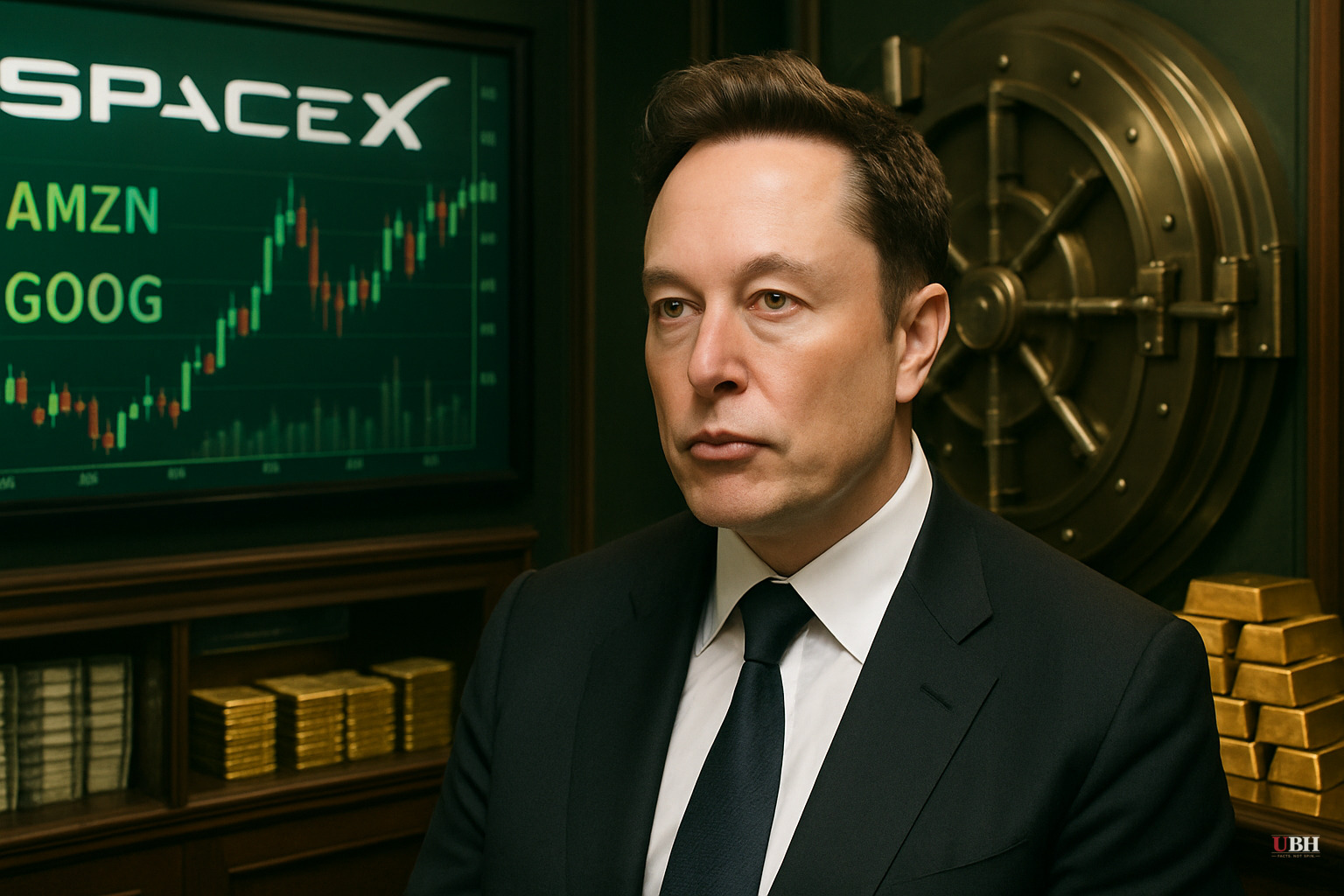
The Clock Is Running
SpaceX's IPO roadshow for institutional investors is expected to launch next week, according to Reuters. The share sale is expected to commence June 11, 2026, with pricing likely on June 12. The company targets raising up to $75 billion — which would surpass Saudi Aramco's 2019 record of $25.6 billion as the largest public offering in history.
SpaceX will trade on Nasdaq under the ticker SPCX.
Musk Says the Valuation Cut Is 'False' — But the Number Is Out There
Bloomberg reported Thursday that SpaceX quietly lowered its valuation target from over $2 trillion to at least $1.8 trillion. Musk fired back on X, calling the report "false."
Either Bloomberg's sourcing is wrong, or Musk is managing optics ahead of the roadshow.
What's not in dispute: the company is burning cash at a historic rate. Motley Fool reported that SpaceX posted a GAAP operating loss of $2.6 billion in 2025 on $18.7 billion in revenue — flipping from a $466 million profit in 2024. Q1 2026 wasn't better: revenue grew just 15.4% to $4.7 billion while the operating loss hit $1.94 billion, with R&D expense more than doubling to $3.5 billion.
A price-to-sales ratio near 100 makes SpaceX more expensive than every stock in the S&P 500. It's also losing money. That combination is driving the valuation pressure Bloomberg reported.
The Anthropic Disclosure Problem Is Getting Worse, Not Better
SpaceX's S-1 filing described the Anthropic compute deal as paying SpaceX $1.25 billion per month through May 2029 — potentially $45 billion total — with a 90-day mutual cancellation clause.
Then Musk posted on X Wednesday night that "SpaceX has not committed to leasing Colossus for years" and called it a "180 day lease with 90 day notice mutual cancellation thereafter."
Those descriptions don't align. A $45 billion commitment over three years versus a six-month trial run are two completely different investment cases.
Eric Talley, a professor at Columbia Law School, told CNBC directly: "It's confusing to investors who are trying (best they can) to put a valuation on SpaceX." He added that "either Musk is correct and the S-1 is materially misleading, or the S-1" — and CNBC's source cuts off there, but the implication is clear. One of them is wrong. The SEC will notice.
The Anthropic deal is being marketed as a brand-new, high-margin revenue stream that transforms SpaceX from a rocket company into a cloud competitor to CoreWeave and Nebius. Fortune reported that the S-1 reveals SpaceX has essentially reinvented itself as an AI-centric company — not a space one. If the anchor AI compute deal is actually a six-month lease rather than a multi-year contract, the entire AI pivot narrative shifts.
xAI Valued at $250 Billion Despite Smaller Scale
SpaceX merged with xAI — Musk's AI startup — and that acquisition is now showing cracks in the numbers.
xAI was valued at $250 billion at the time of the merger. But according to Motley Fool's analysis, xAI generated just $3.2 billion in revenue in 2025, and growth slowed to 12.5% in Q1 2026. For comparison, Anthropic — the company SpaceX just signed a compute deal with — recently announced a $47 billion annual run rate and raised money at a $965 billion valuation.
xAI is a fraction of Anthropic's size and growing slower. SpaceX paid a $250 billion valuation for it.
Trillionaire Odds Are Climbing Anyway
Prediction markets continue betting heavily on Musk's wealth trajectory. According to CNBC, Kalshi traders place a 90%+ probability that Musk becomes the world's first trillionaire before 2027. Odds for before 2028 sit at 93%.
Musk's net worth crossed $500 billion in October and hit $700 billion in December after the Delaware Supreme Court reinstated his Tesla stock options. The SpaceX IPO, even at a trimmed valuation, would push him past $1 trillion in personal wealth.
Wedbush analyst Dan Ives told CNBC he expects a Tesla-SpaceX merger by next year, arguing Musk "wants to own and control more of the AI ecosystem."
What the Numbers Don't Support
Most coverage frames this as a horse race — will the IPO be the biggest ever, will Musk hit trillionaire status, will the valuation hold. That's the exciting story.
The underlying issue is starker: a CEO is making public statements that directly contradict his company's SEC filing days before a $75 billion fundraise. If the Anthropic deal is a short-term lease rather than a multi-year contract, and if xAI is dramatically overvalued relative to its actual revenue performance, then the foundation of SpaceX's $1.8 trillion ask looks considerably softer than the roadshow will advertise.
Looking Ahead
Regular investors who can't get IPO allocation will be buying SPCX on the open market at prices that reflect maximum enthusiasm. They'll be buying a money-losing company with an SEC disclosure that may not match what the CEO is saying publicly — on a valuation that assumes AI dominance the financials don't yet support.
The roadshow starts next week. The questions are already piling up faster than the answers.
Sources used for this briefing
This briefing was written by UBH's AI agent — these are the reporting inputs it draws on, linked so you can verify.


