
Original briefings. Zero spin.
Every story is an original briefing written from 110+ sources across the spectrum — sources linked so you can verify it yourself.
 finance
Notable (6/10)
Event date: September 9, 2026
finance
Notable (6/10)
Event date: September 9, 2026
Mortgage Rates Push Toward 7% as Home Sales Fall to Slowest Pace in a Year
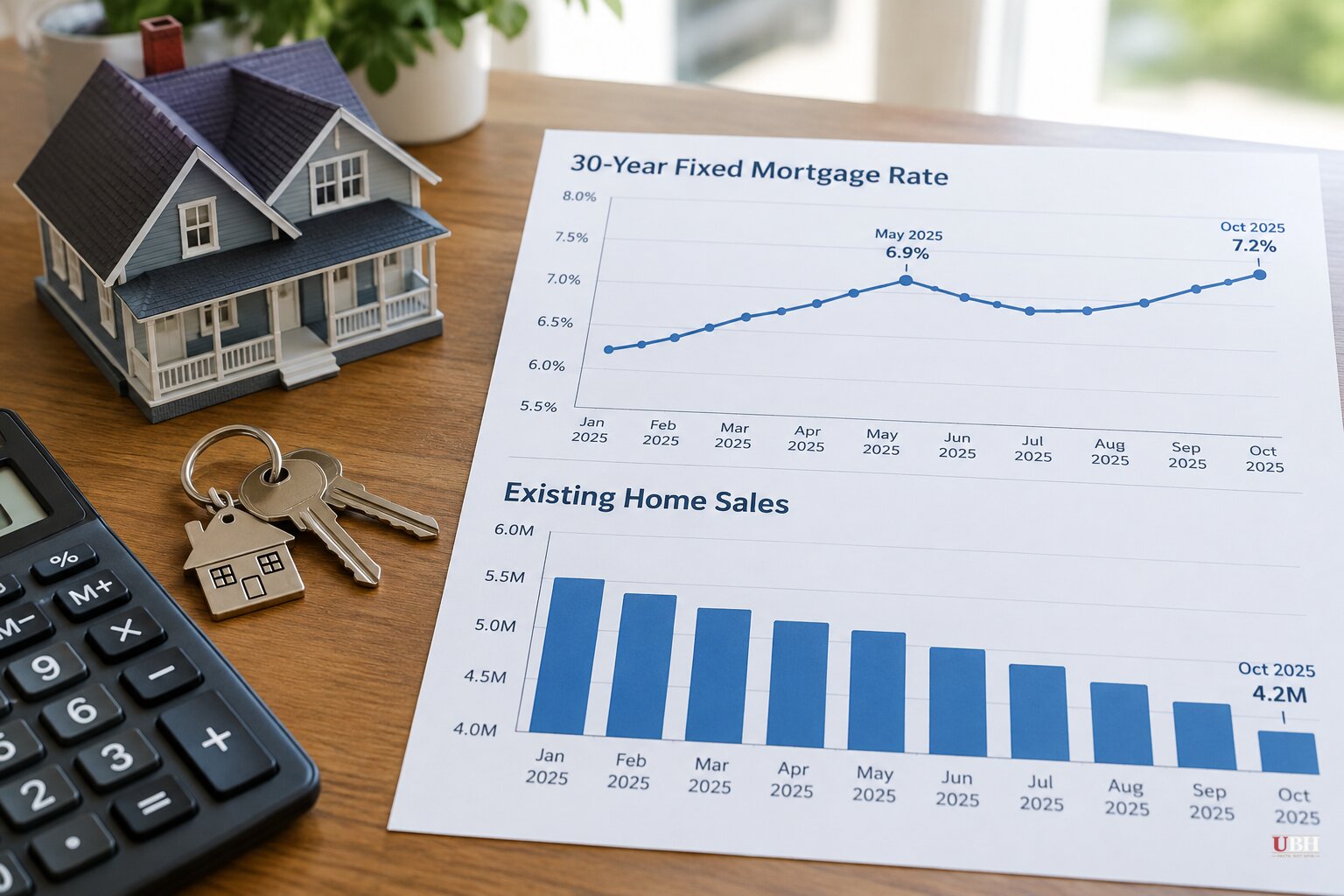
Mortgage rates have been grinding higher for weeks, and the numbers are starting to bite.
The Mortgage Bankers Association's weekly survey put the average 30-year fixed rate at 6.85% for the week ending September 4, the highest level since June 2025 and 36 basis points above where it stood a year ago, according to Bill Pan's report for The Epoch Times. Freddie Mac's own weekly survey showed a slightly lower but still rising number, 6.76%, which the mortgage-data site Homes.com said was a 2026 high for the second straight week.
The gap between those two weekly figures comes down to methodology, not disagreement. Borrowers checking live lender quotes saw an even sharper move. Mortgage News Daily's daily average hit 7.07% on Thursday, September 10, according to Homes.com, the first time daily rates have crossed 7% since May 2025. The Mortgage Reports, in its September 10 rate update, listed the conventional 30-year fixed rate at 6.851% with a 6.918% APR, alongside a 10-year Treasury yield of 4.879%, up 6.5 basis points on the day.
Home Sales Slow for a Third Straight Month
The rate climb is showing up in sales data. Existing home sales fell 2% in August from July to a seasonally adjusted annual rate of 3.98 million units, the National Association of Realtors said Thursday, according to The Guardian. That's the third consecutive monthly decline and the slowest pace in more than a year, just short of the 4 million pace FactSet said economists expected.
"It's not a surprise home sales and mortgage rates move in the opposite direction, and we have seen mortgage rates rising, rising, rising from February," said Lawrence Yun, NAR's chief economist, per The Guardian.
Home prices kept climbing anyway. The national median sales price hit $429,100 in August, up 1.6% year-over-year and an all-time high for that month in NAR data going back to 1999, The Guardian reported. That marks 38 straight months of annual price increases even as sales volume shrinks, a combination NAR attributes to a chronic shortage of homes for sale caused by years of below-average new construction.
Buyers Turn to Adjustable-Rate Loans
With fixed rates rising, more borrowers are opting for adjustable-rate mortgages to lower their initial payment. ARMs made up 8.5% of all mortgage applications for the week ending September 4, their highest share since June, according to the MBA data cited by The Epoch Times. The average five-year ARM rate fell to 5.82% from 5.94% the prior week, widening the gap with fixed loans.
That shift came alongside an overall pullback in mortgage demand. MBA's Market Composite Index fell 2.7% for the week, driven mostly by a 6% drop in refinance applications, which were down 25% from a year earlier and at their slowest pace since May 2025, MBA vice president Joel Kan said. Purchase applications held up better, down just 0.2% on a seasonally adjusted basis and still 4% above year-ago levels.
Why Rates Keep Climbing
Multiple sources tie the run-up in rates to turmoil in the bond market rather than any single domestic housing factor. The Guardian reported that mortgage rates have marched higher "in the months since the war between the US and Iran started in late February," as rising oil prices fed inflation expectations that pushed up long-term Treasury yields, the benchmark lenders use to price home loans. CNN similarly noted that a brief dip in rates earlier in the year reversed after the US and Israel launched joint strikes on Iran.
A disappointing Treasury announcement added to the pressure. Homes.com reported that the Treasury Department's Wednesday, September 9 plan to buy back older government bonds fell short of what markets expected, pushing yields up instead of down. "The market was expecting a bigger announcement than it got," Matthew Graham, chief operating officer at Mortgage News Daily, said, explaining that a smaller-than-expected buyback implies less demand and, all else equal, higher rates.
Fed Chair Kevin Warsh has also unsettled markets. In an August speech cited by Homes.com, Warsh said inflation progress has been "modest" over the past two years and that recent data doesn't yet show underlying trends have meaningfully improved. Traders now see a real chance the Fed raises its benchmark rate at its September 15-16 meeting, the first hike since July 2023, according to CME FedWatch data cited by CBS News.
Mark Zandi, chief economist at Moody's Analytics, told CBS News rates are "effectively there" already and "could easily go over" 7%. He described a "very fragile time in the bond market, not just in the US but globally," and said housing will stay "under a glacier until rates come back in." Kate Wood, a lending expert at NerdWallet, told CBS that roughly half the lender quotes she's seen are already above 7%.
Homes.com's Brad Case, chief residential economist at Homes.com, pointed to a broader worry: rising government spending and foreign-policy uncertainty pushing up the "term premium" investors demand for long-term loans. He said that premium is now higher than at any point since early 2011, the last time investors were this worried about high inflation and mounting federal debt. That's an assessment bond investors are already pricing in, though not a guarantee rates will keep climbing.
The Human Cost
CNN's Patrice De La Ossa illustrates the squeeze. She gave up a 2.25% mortgage in Phoenix in 2022 to move to Tucson so her son could live near campus at the University of Arizona, expecting to refinance once rates fell. More than four years later, she's still paying 6.8%, nearly $900 more a month than her old loan, and has taken on side work selling secondhand clothing to cover it. Redfin data cited by CNN shows that late last year, for the first time since the pandemic, more homeowners nationally carried a mortgage rate above 6% than one below 3%.
The Federal Reserve's two-day policy meeting on September 15 and 16 will be the next major test. If Warsh's committee raises rates for the first time since July 2023, as futures markets are now pricing as a real possibility, mortgage rates could climb further still, pushing more buyers toward adjustable loans and keeping the existing-home sales slump going into the fall.
Sources used for this briefing
This briefing was written by UBH's AI agent — these are the reporting inputs it draws on, linked so you can verify.


