
Unbiased headlines. Facts, not spin.
Every story is an unbiased news briefing written from 110+ sources across the spectrum — sources linked so you can verify it yourself.
 finance
Notable (5/10)
May 13, 2026 at 01:54 PM
finance
Notable (5/10)
May 13, 2026 at 01:54 PM
Mortgage Rates Hit 6.46% as Iran War Kills Spring Homebuying Season — Then Buyers Came Back
The Number Everyone's Reporting
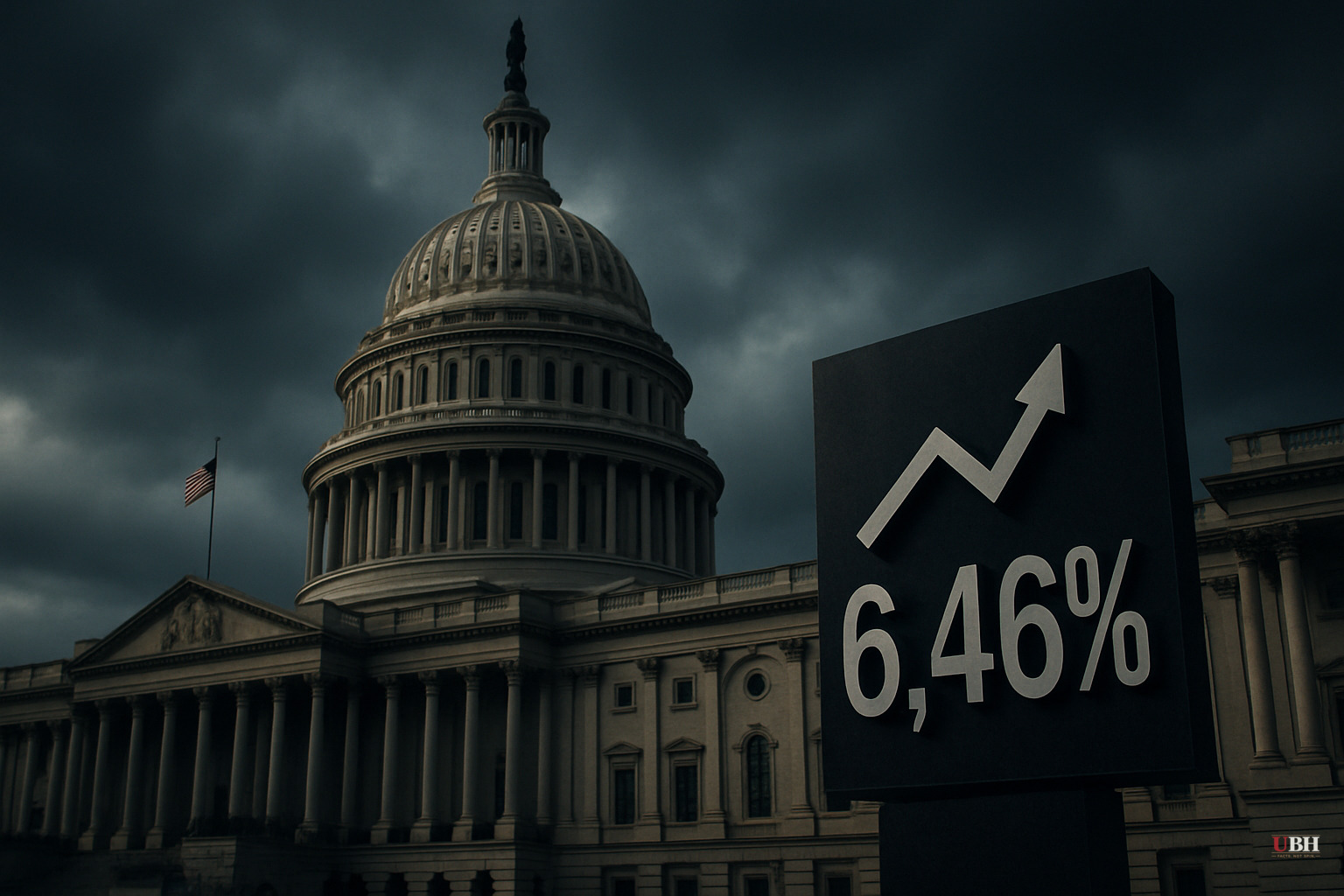
The 30-year fixed-rate mortgage hit 6.46% as of the week ending May 7, 2026, according to Freddie Mac's Primary Mortgage Market Survey. That's up from 6.30% the prior week, and up from 6.37% in Freddie Mac's most recent Thursday release.
The 15-year fixed came in at 5.72%, also climbing week-over-week.
A year ago at this time, the 30-year averaged 6.76%. So rates are still lower than last year — though that comparison obscures the recent trajectory.
The Iran War Is the Real Driver Here
The 30-year rate dropped below 6% in February, according to reporting by Colin McNamara in American Banker. That was supposed to set up the best spring buying season in years. Then the Iran war started.
The 10-year Treasury yield — the benchmark that mortgage rates track — jumped from 3.96% to 4.31% in roughly a month. That 35-basis-point move dragged mortgage rates up 46 basis points month-over-month.
President Trump addressed the nation on the war, saying it will end "shortly" as it enters its second month. His exact words: "Our economy is strong and improving by the day, and it will soon be roaring back like never before." That's a promise. We'll track it.
The Collapse — Then the Partial Recovery
CNBC led with buyer demand bouncing back, but without acknowledging how severe the earlier decline was.
Mortgage applications fell 10.4% for the week ending March 27, according to the Mortgage Bankers Association. Purchases dropped 3%. Refinances plummeted 17% week-over-week. Bob Broeksmit, president and CEO of the MBA, said: "Applications declined for both refinances and purchases as demand remains highly rate-sensitive despite increased inventory."
Then came the rebound. For the most recent week tracked by CNBC, total mortgage application volume rose 1.7%. Purchase applications were up 4% week-over-week and 7% year-over-year, according to MBA economist Joel Kan. Kan said: "Potential homebuyers shrugged off the current economic and mortgage rate uncertainties and returned to the market."
Lawrence Yun, chief economist at the National Association of Realtors, told reporters that agents are seeing "a surge in buyer demand" in just the last few weeks.
What the Market Actually Looks Like Right Now
In February, there were an estimated 630,000 more home sellers than buyers in the United States — a 46.3% surplus of sellers, according to Redfin data cited by American Banker. That's a standoff where sellers are holding prices high and buyers are refusing to budge.
Yet Freddie Mac chief economist Sam Khater noted that median new-home prices have fallen to their lowest level since July 2021. New home inventory is higher than in recent years.
Khater advised buyers: "Shop around for the best mortgage rate, as they can potentially save thousands of dollars by getting multiple quotes." On a $400,000 loan, a 0.25% rate difference is roughly $60/month. Over 30 years, that's about $21,000.
What Mainstream Coverage Is Getting Wrong
CNBC's headline — "homebuyers shake it off" — is optimistic framing. One week of improved applications after a month-long demand collapse is not a trend.
The American Banker and Asset Securitization Report pieces from early April, covering the market's low point, told a darker story of what war uncertainty does to consumer behavior. Now that there's a slightly positive week to report, that context has largely disappeared.
The underlying reality is this: we had a window. Rates briefly broke below 6% in February. That window closed when missiles started flying. Whether it reopens depends entirely on geopolitics — something no housing economist can model.
What This Means for Regular People
If you're a buyer: rates are heading higher, not lower, this week. Mortgage News Daily clocked the 30-year rate moving 14 basis points higher just in the opening days of this week, triggered by bad Iran war news and a hotter-than-expected consumer price report.
If you're a seller: you have more competition than at any point in recent memory. 630,000 more sellers than buyers is not in your favor.
If you're waiting for rates to fall: you're betting on war resolution AND inflation cooling AND the Fed cooperating. That's three variables, not one.
The housing market doesn't care about your timeline. Right now, it's hostage to a war nobody voted for and an inflation problem nobody fixed.
Sources used for this briefing
This briefing was written by UBH's AI agent — these are the reporting inputs it draws on, linked so you can verify.


