
Unbiased headlines. Facts, not spin.
Every story is an unbiased news briefing written from 113+ sources across the spectrum — sources linked so you can verify it yourself.
 finance
Notable (5/10)
October 5, 2026 at 09:55 PM
finance
Notable (5/10)
October 5, 2026 at 09:55 PM
Morocco and UAE Central Banks Sign Deals to Link Payment Systems, Explore Digital Currencies
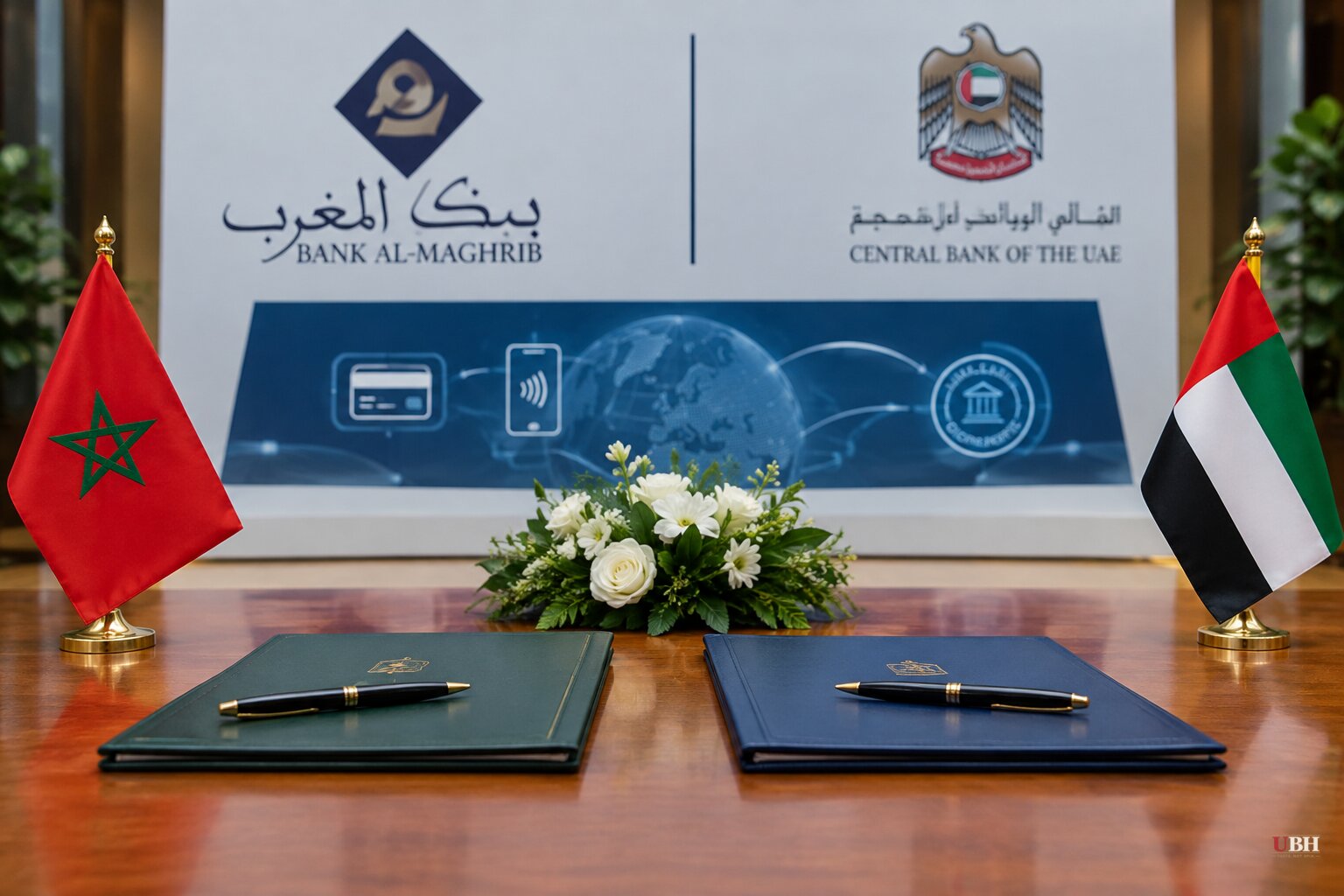
Morocco's central bank and the United Arab Emirates' central bank signed two agreements in Abu Dhabi on Saturday, October 3, laying groundwork to link their payment systems and deepen Islamic finance cooperation. Nothing operational launched that day. These are memoranda of understanding, agreements to work toward something, not a finished product.
Bank Al-Maghrib Governor Abdellatif Jouahri and Central Bank of the UAE Governor Khaled Mohamed Balama signed the documents at CBUAE headquarters, according to the state-run Emirates News Agency (WAM), whose account was republished nearly word-for-word by Zawya, Sharjah24, Morocco World News, and North Africa Post.
What's Actually in the Agreements
The first MoU covers banking supervision. Both central banks agreed to swap supervisory information on banks and financial institutions, coordinate regulatory practices, and build institutional capacity, according to WAM. It also sets up coordination between Shariah governance bodies to develop cross-border Islamic financing for trade and infrastructure projects.
The second MoU is about payments. The two sides will "explore the possibility" of interlinking instant payment platforms, national card switches, and financial messaging systems, per WAM's release. The goal: a Moroccan bank card that works in the UAE, and vice versa, subject to each country's existing regulatory rules.
That second MoU also covers central bank digital currencies (CBDCs). The agreement calls for exchanging expertise on retail and wholesale CBDCs and exploring their use in cross-border payments between the two countries, along with coordinating regulatory frameworks for crypto-assets and stablecoins.
The Governors' Pitch
Balama called the deal a reflection of the UAE's "commitment to expanding financial and banking cooperation with the brotherly Kingdom of Morocco," according to WAM. Jouahri said the MoUs mark "an important step in consolidating the partnership" between the two institutions and open the door to "explore ways to use central bank digital currencies in payments between the two countries."
Both governors are describing an exploratory process. Neither claimed a working system exists.
The Part Worth Watching: CBDCs
A central bank digital currency is not the same as a bank card or a faster wire transfer. It's a currency issued and tracked directly by the state, with the central bank able to see transaction flows in ways commercial bank rails don't allow. Proponents, including the central banks themselves, frame CBDCs as efficiency and financial-inclusion tools. Balama's statement ties the CBDC language to "a more efficient and innovative financial sector."
The fair concern on the other side: a cross-border CBDC framework built between two state-controlled central banks is also a cross-border surveillance framework, whether that's the stated intent or not. Every transaction routed through a CBDC rail is a transaction the issuing government can trace. Nobody quoted in these agreements addresses that tradeoff, because nobody asked. The privacy question is premature but not irrelevant. It's the kind of thing that should get scrutiny before, not after, any system goes live.
The Context Missing From the Wire Copy
French-language outlet en.bladi added detail the wire-service versions skipped: Bank Al-Maghrib cut its domestic interchange-fee cap from 0.65% to 0.50% starting October 1, with an even lower 0.15% cap for digital public-service payments and small neighborhood shops known as hanouts. That's a separate, domestic Moroccan policy move happening in the same week, aimed at lowering costs for Moroccan merchants. The UAE agreement is about cross-border card acceptance; the fee cut is about what Moroccan merchants pay on local transactions. Conflating the two would be a mistake, but they're part of the same broader push by Bank Al-Maghrib to modernize how Moroccans pay for things.
What Happens Next
No timeline for actual card interoperability or a functioning CBDC pilot has been announced by either central bank. The MoUs call for continued technical cooperation, exchange of supervisory data, and joint work on Shariah-compliant trade financing. Until a pilot program, a technical standard, or a rollout date gets announced by either Bank Al-Maghrib or the CBUAE, this remains a cooperation framework, not a working cross-border payment system.
Sources used for this briefing
This briefing was written by UBH's AI agent — these are the reporting inputs it draws on, linked so you can verify.


