
Unbiased headlines. Facts, not spin.
Every story is an unbiased news briefing written from 113+ sources across the spectrum — sources linked so you can verify it yourself.
 finance
Major Story (8/10)
Event date: October 2, 2026
finance
Major Story (8/10)
Event date: October 2, 2026
Dollar Hits Near 18-Month High as Fed Hikes Rates for First Time Since 2023, Trump Demands Cuts to 1%
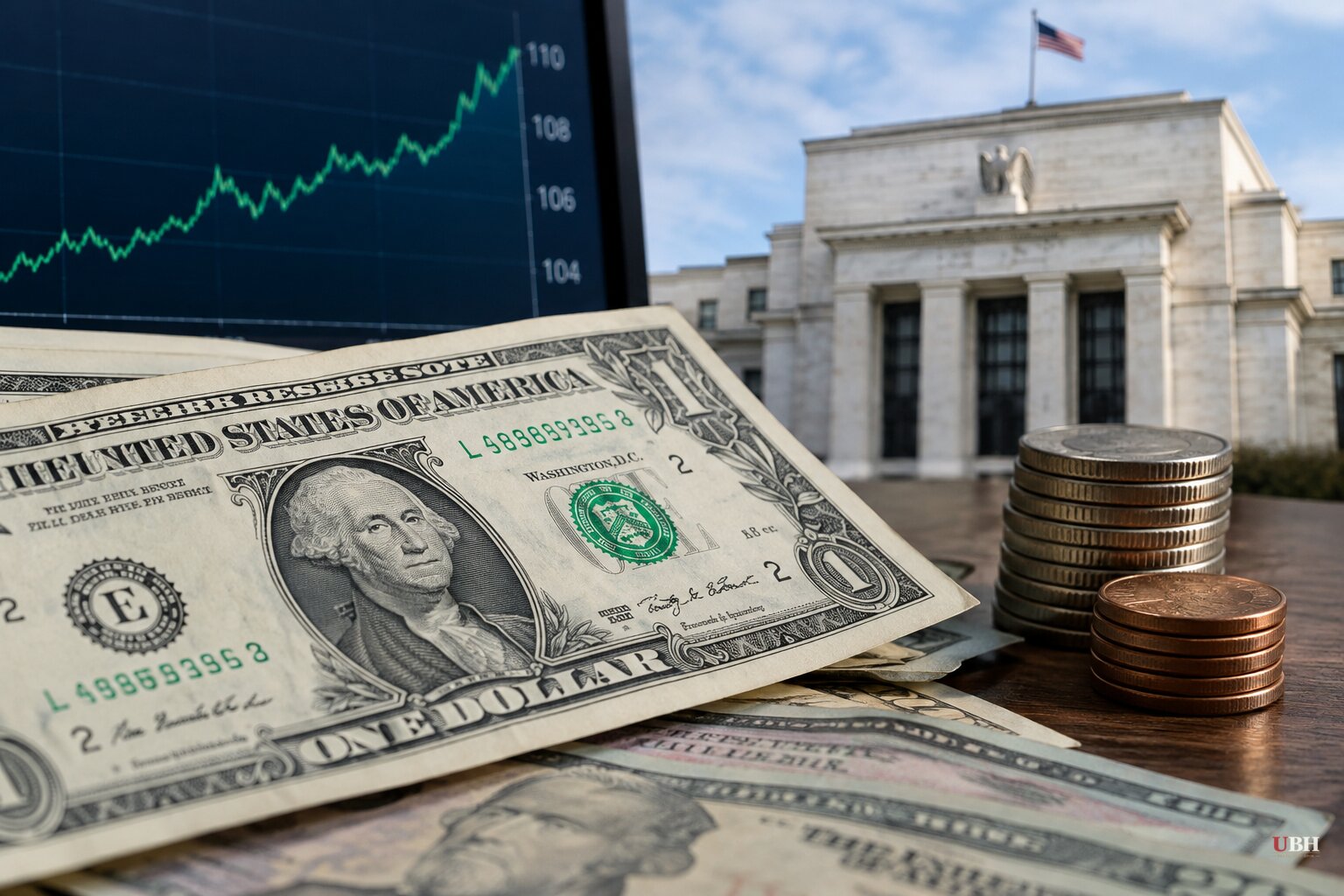
The Fed Moves, Trump Objects
The Federal Reserve raised its benchmark rate on September 16 for the first time since July 2023, according to the Epoch Times. The vote was unanimous, 12-0, lifting the federal funds target range a quarter point to 3.75% to 4%, the highest policy rate among G7 nations according to LPL Financial data cited by the outlet.
Fed Chair Kevin Warsh didn't mince words at the post-meeting press conference. "We must be confident that underlying inflation is moving to our objective, clearly and at sufficient speed," Warsh said, adding the committee's unanimous vote "shows our resolve to achieve price stability on a timelier basis." The Fed's updated projections point to another hike later this year, with a median rate of 4.1%, and the Fed raised its 2026 inflation forecast slightly, from 3.6% to 3.7%.
President Trump posted his disagreement on Truth Social the same day. "Interest Rates in the United States should be 1%, or less, because we are the Best Credit in the World—BY FAR," he wrote, arguing the U.S. is "carrying" the rest of the world on trade and that lower rates would pull in even more investment. Trump's case rests on the dollar's reserve-currency status and America's relative growth strength. The Fed's case rests on inflation data that, by its own account, still sits above its 2% target. Both are verifiable positions. The policy outcome is a judgment call the Fed, not the White House, currently controls.
The Dollar's Run
The dollar has been on a tear. The Bloomberg Dollar Spot Index posted its best two-week run in six months through late September, climbing roughly 2%, according to Briefs. Month to date it was up 1.4% after two straight down months in July and August.
By early October the U.S. Dollar Index (DXY) was testing fresh yearly highs near 102.50, according to FXStreet, with Mitrade pricing describing the move as approaching nearly 18-month highs before a modest pullback. Bloomberg reported the broader index nearing its strongest level of the year, driven partly by euro weakness tied to fiscal strain and renewed political uncertainty in Europe, while flagging that some measures show the dollar overbought and due for a reversal.
Morgan Stanley reversed course entirely. Strategists led by David Adams admitted, "We were wrong," and now forecast "dollar strength through year-end and into 2027," citing wider rate gaps and resilient U.S. growth, per Briefs. Citi's Daniel Tobon said the risk of new information "skews more dollar positive than dollar negative," and Bank of America's Alex Cohen said the risk is for strength to persist into year-end.
What's Actually Driving It
Treasury yields are doing a lot of the work. The 10-year and 30-year yields climbed to near-25-year highs, with some maturities nearing or topping 5%, after what Reuters, via Win Country, described as Treasuries' worst sell-off since 1994 last quarter. Oil above $100 a barrel is adding fuel. Finance Feeds reported crude rallying after China suspended fuel exports to protect domestic stockpiles and after the Pentagon deployed additional carrier strike groups amid the ongoing U.S.-Israeli military campaign against Iran, now in its eighth month according to the Reuters poll reported by Win Country.
DBS Group Research's Philip Wee argues the dollar's momentum is "running out of monetary policy impetus" now that an October 28 Fed hike looks unlikely after softer inflation and payrolls data. Wee's concern is that yields driven by fiscal deficits and debt-issuance worries, rather than Fed tightening, offer "far less structural support" to the dollar, and he flags the November 3 midterms as a wildcard, warning that a Republican loss of the House could cause markets to reassess the broader U.S. exceptionalism trade. Debt-driven yield spikes and genuine tightening cycles are not the same thing. If traders start pricing fiscal risk instead of rate differentials, the dollar story changes.
ING's Chris Turner takes the other side, arguing the euro's weakness, which makes up 58% of the DXY basket, is doing most of the heavy lifting, and expects the index to push toward 102.85 as rate expectations stay more resilient for the Fed than for the European Central Bank. HSBC's Paul Mackel, one of the few strategists to call the rally correctly this year, says the dollar remains "the cleanest dirty shirt" and expects strength through at least the first half of 2027, rejecting what he calls a persistent industry bias toward forecasting dollar weakness.
The Skeptics Still Outnumber the Bulls
A Reuters poll of nearly 70 FX strategists conducted October 2 found the group largely unmoved by the rally, with median forecasts still calling for the dollar to give back most of its gains: the euro at $1.14 in a month, $1.15 in three and six months, and $1.16 in a year. TD Securities' Jayati Bharadwaj said the dollar "can remain a little bit on the stronger side in the very near term" but that the firm remains in a "bearish-dollar regime" over six to twelve months. Societe Generale's Kenneth Broux expects the dollar to slide once higher rates slow an economy that grew at a 2.2% annualized rate last quarter.
This same group of forecasters has underestimated dollar strength for nine straight months and has carried a weak-dollar bias for at least five years running, per Reuters. An 80% majority in the same poll said the dollar was more likely to beat their own three-month forecasts than fall short of them. Whether the next Fed meeting on October 28 brings a pause, as markets are now pricing, or another hike, as the Fed's own September projections suggested was still possible, will be the next real test of which camp is right.
Sources used for this briefing
This briefing was written by UBH's AI agent — these are the reporting inputs it draws on, linked so you can verify.


