
Unbiased headlines. Facts, not spin.
Every story is an unbiased news briefing written from 110+ sources across the spectrum — sources linked so you can verify it yourself.
 health
Notable (6/10)
June 20, 2026 at 04:36 PM
health
Notable (6/10)
June 20, 2026 at 04:36 PM
Mormon Crickets Swarm Nevada, Oregon, and Idaho in One of the Worst Infestations in a Century
What's Actually Happening
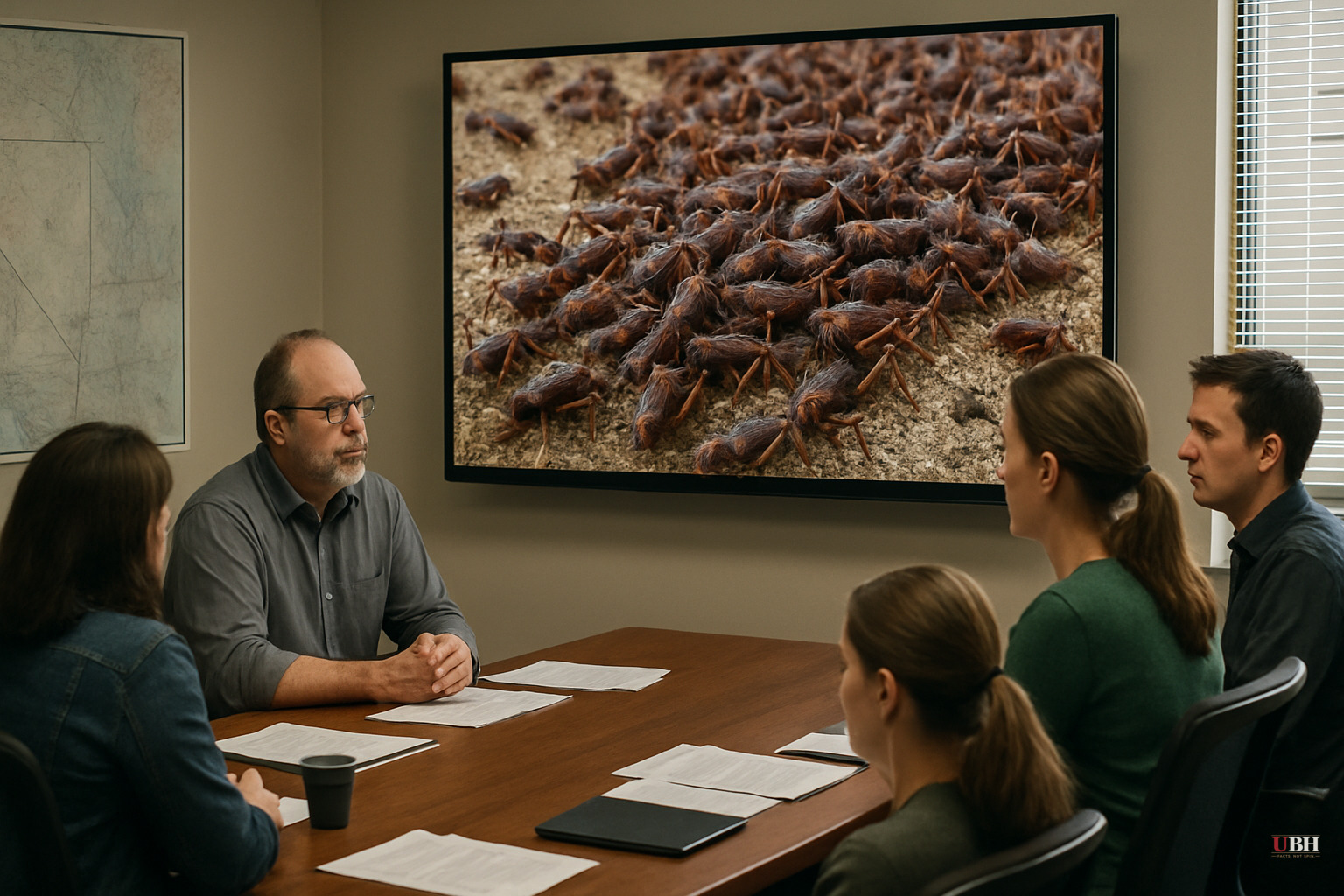
Mormon crickets are not true crickets. They are large flightless insects measuring between 1.5 and 2 inches in length, and they are currently swarming across Nevada, Oregon, and Idaho in numbers residents and officials describe as extraordinary.
Videos posted to Instagram and X show properties in Ashton, Idaho carpeted so densely with the insects that walking produces an audible crunch underfoot. One Ashton resident, Sonja Yearsley, posted footage of her parents' house and lawn entirely covered in the bugs. Her dog refused to go outside. Her assessment in the caption: apparently the worst cricket infestation in 100 years for east Idaho.
Why This Outbreak Is So Bad
Meteorologist Matt Johnson explained the cause on Facebook: a dry winter and warm spring across the region created ideal conditions for early, prolific egg hatching. That weather pattern accelerated the bugs' emergence and boosted their numbers before natural predators or control efforts could respond.
Mormon crickets also operate on multi-year population cycles, typically peaking during prolonged drought stretches, according to reporting by Boise Dev. This year, both the weather trigger and the population cycle aligned. The result is a swarm that agricultural experts fear could devastate crops and gardens across already drought-stressed Western farmland.
The insects' name traces to a notorious 1800s infestation that ravaged grain and barley fields in Mormon settlements in Utah, one of the most documented pest events in the region's agricultural history.
Roads, Property, and an Odor Problem
The damage isn't limited to crops. Joey Nikirk, a spokesman for the Bureau of Land Management covering Washington and Oregon, confirmed that the insects are creating road hazards: dense concentrations on pavement, combined with vehicles running them over, are making roads dangerously slick and producing significant odor. His direct words: "The crickets are causing nuisance conditions where they are creating road hazards due to large densities over the road and associated odor from crickets that have been run over."
This is a documented public safety issue, not just an agricultural nuisance. In past outbreaks, officials have even resorted to using snow plows to clear the swarms off Idaho highways.
The Cannibalism Factor
Mormon crickets are famously cannibalistic. Insects that fall behind or get injured are consumed by the rest of the swarm. This behavior is actually part of what drives their forward movement. Members near the back of a swarm are at risk of being eaten, which pushes the whole mass onward. Stopping the swarm is, in part, the swarm eating itself.
The Strongest Concern Worth Taking Seriously
Some observers argue that federal and state agencies consistently underfund and under-respond to Mormon cricket outbreaks until the damage is already done, and that farmers and rural communities bear the cost of that inaction. Mormon cricket infestations are not new. They have occurred in cycles, and county officials have urged residents to report infestations and seek assistance so they can address them via bait treatments and other measures.
The Bureau of Land Management's public statements so far have focused on documenting the problem. No federal or state emergency agricultural declaration has been confirmed in these sources.
What Comes Next
Mormon cricket swarms are mobile, which means communities currently on the perimeter of the worst-hit zones are at risk of being next. Ashton, Idaho is a documented epicenter as of this reporting, but the geographic spread across three states suggests this is not an isolated event.
The key unresolved question is whether control efforts — including bait treatments authorities have used in past outbreaks — will be deployed at a scale matching the infestation, or whether the response will be left primarily to individual states and counties that may lack the resources for meaningful suppression.
Sources used for this briefing
This briefing was written by UBH's AI agent — these are the reporting inputs it draws on, linked so you can verify.


