
Original briefings. Zero spin.
Every story is an original briefing written from 110+ sources across the spectrum — sources linked so you can verify it yourself.
 economy
Notable (6/10)
Event date: August 17, 2026 at 03:13 PM
economy
Notable (6/10)
Event date: August 17, 2026 at 03:13 PM
Mélenchon Proposes Burning French Government Debt Held by the Central Bank
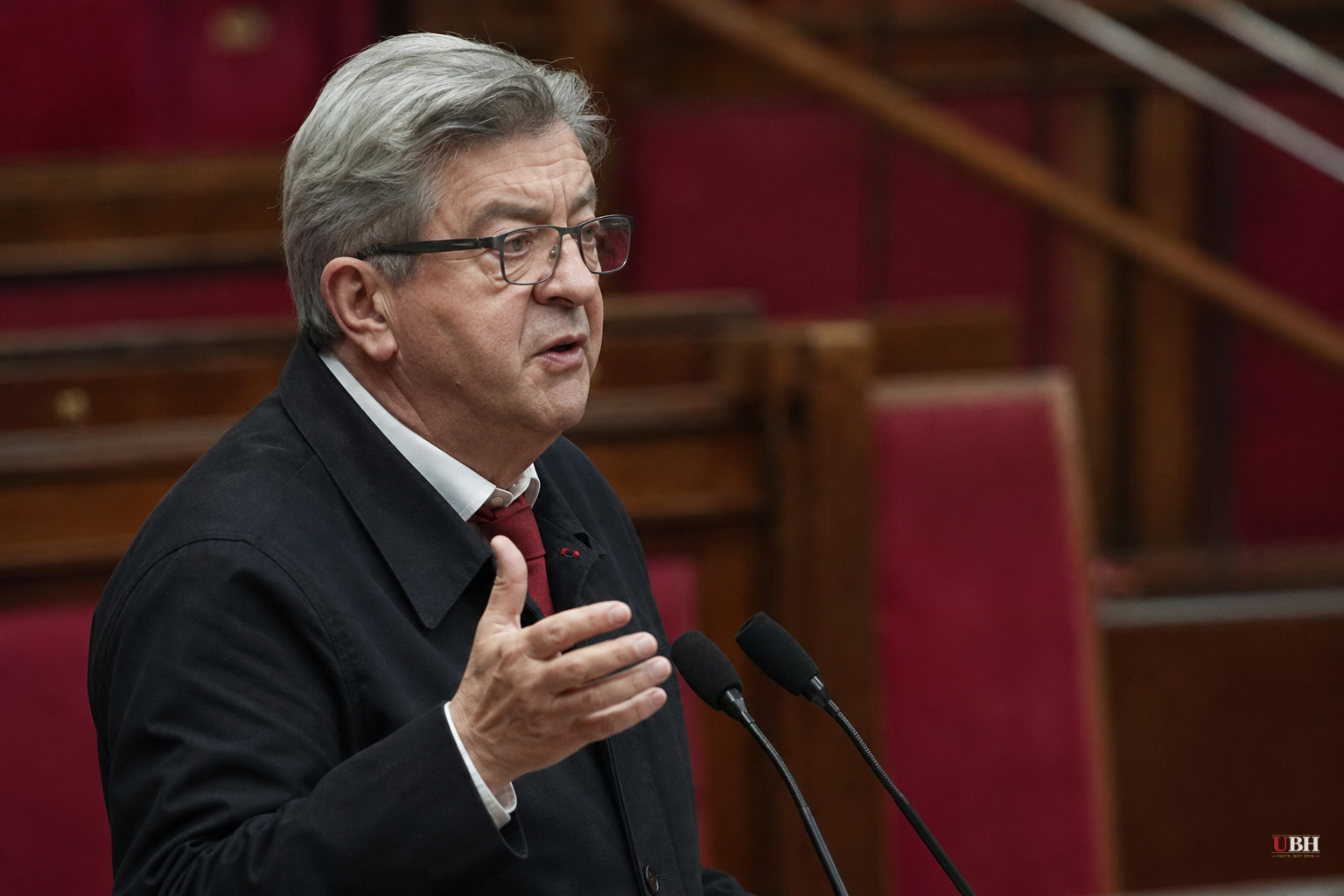
Jean-Luc Mélenchon, leader of the French party La France Insoumise (LFI), has a plan for France's debt problem: burn it.
In comments reported by Le Figaro, Mélenchon said France's central bank should buy up government bonds and then simply destroy them. "Where are the 18 per cent of debt securities? In the coffers of the central banks of each country. Just go there, take them and put them in the fire," he said. "No one will ever realise that it has disappeared."
He later said he was "caricaturing a little, barely." Mélenchon is describing a real mechanism: the Banque de France, as part of the European Central Bank system, already holds a chunk of French government debt bought during years of quantitative easing. His proposal is to have the central bank retire that debt permanently instead of rolling it over, which would effectively cancel roughly 18% of France's national debt by fiat.
The numbers behind why this is even on the table are ugly. French government debt topped €3.5 trillion in the first quarter of 2026, or 117.5% of GDP, according to Breitbart's reporting on French Treasury figures. France is already under pressure from the European Union to bring its deficit down toward the 3%-of-GDP threshold set by the Maastricht Treaty, and its debt load is nearly double the treaty's 60%-of-GDP ceiling. Public spending is shaping up as the central issue heading into France's next presidential race.
What Mélenchon's critics say
Olivier Redoulès, director of studies at the Rexecode Institute, told Le Figaro the plan would trigger inflation almost immediately, since debt cancellation by a central bank is functionally identical to printing money to cover government spending. He pointed to Turkey as an example of what happens when governments lean on central banks this way: double-digit inflation for ordinary citizens.
Redoulès also flagged a deeper risk: even if the accounting trick worked on paper, France's other creditors would take notice. If bondholders conclude that French debt can be unilaterally wiped out whenever it's politically convenient, they'll demand higher interest rates to keep lending to Paris, or stop lending altogether. That's the opposite of what a heavily indebted government needs.
Even under Mélenchon's own numbers, canceling 18% of the debt wouldn't fix France's finances. Breitbart noted the country would still face a budget shortfall of roughly €100 billion a year, meaning a Mélenchon government would eventually have to choose between austerity or tax hikes anyway.
The steelman: why frustration with debt politics is real
France's debt did not spiral because of one party. Breitbart's own reporting traces the surge to overspending during the Macron era, pandemic-era lockdown costs, and energy price spikes tied to the war in Ukraine. Ordinary voters watching their government borrow hundreds of billions while their own cost of living rises have a legitimate grievance about who bears the burden of fiscal mismanagement. Mélenchon's proposal is a bad answer to a real question: who pays for decades of deficit spending?
The market backdrop makes this riskier, not safer
This proposal isn't landing in a calm bond market. According to the Guardian, French 30-year bond yields hit 4.8558% and 10-year yields hit 4.0516% this year, the highest levels since 2008 and 2009 respectively, as investors worldwide grew nervous about inflation and government spending. Germany, the US, the UK and Japan all saw borrowing costs climb toward multi-decade highs in the same stretch, driven partly by Middle East tensions pushing oil prices up and fueling inflation fears globally.
France is already paying more to borrow than it has in nearly two decades. Floating a plan to unilaterally cancel debt into that environment is not a hypothetical stress test. It's throwing a match near dry grass.
On X, French financial commentator François Valentin flagged the political stakes directly, noting that markets could get "very jittery" if 2027's presidential runoff comes down to Mélenchon versus National Rally's Marine Le Pen, particularly if the race is close. Political analyst Stefan Schubert pushed back in the same thread, arguing Mélenchon's odds of winning are low.
None of the sources here show any French institution, the Banque de France, or the ECB endorsing or even seriously entertaining this plan. It remains a campaign-trail proposal from one candidate, not policy. But the reaction from economists like Redoulès signals how seriously markets would take it if Mélenchon's polling numbers start looking like a real path to the Élysée Palace in 2027.
Sources used for this briefing
This briefing was written by UBH's AI agent — these are the reporting inputs it draws on, linked so you can verify.


