
Unbiased headlines. Facts, not spin.
Every story is an unbiased news briefing written from 110+ sources across the spectrum — sources linked so you can verify it yourself.
 health
Notable (5/10)
July 23, 2026 at 05:10 PM
health
Notable (5/10)
July 23, 2026 at 05:10 PM
Midwest Poultry Recalls 1.6 Million Eggs Across Six States Over Salmonella Risk
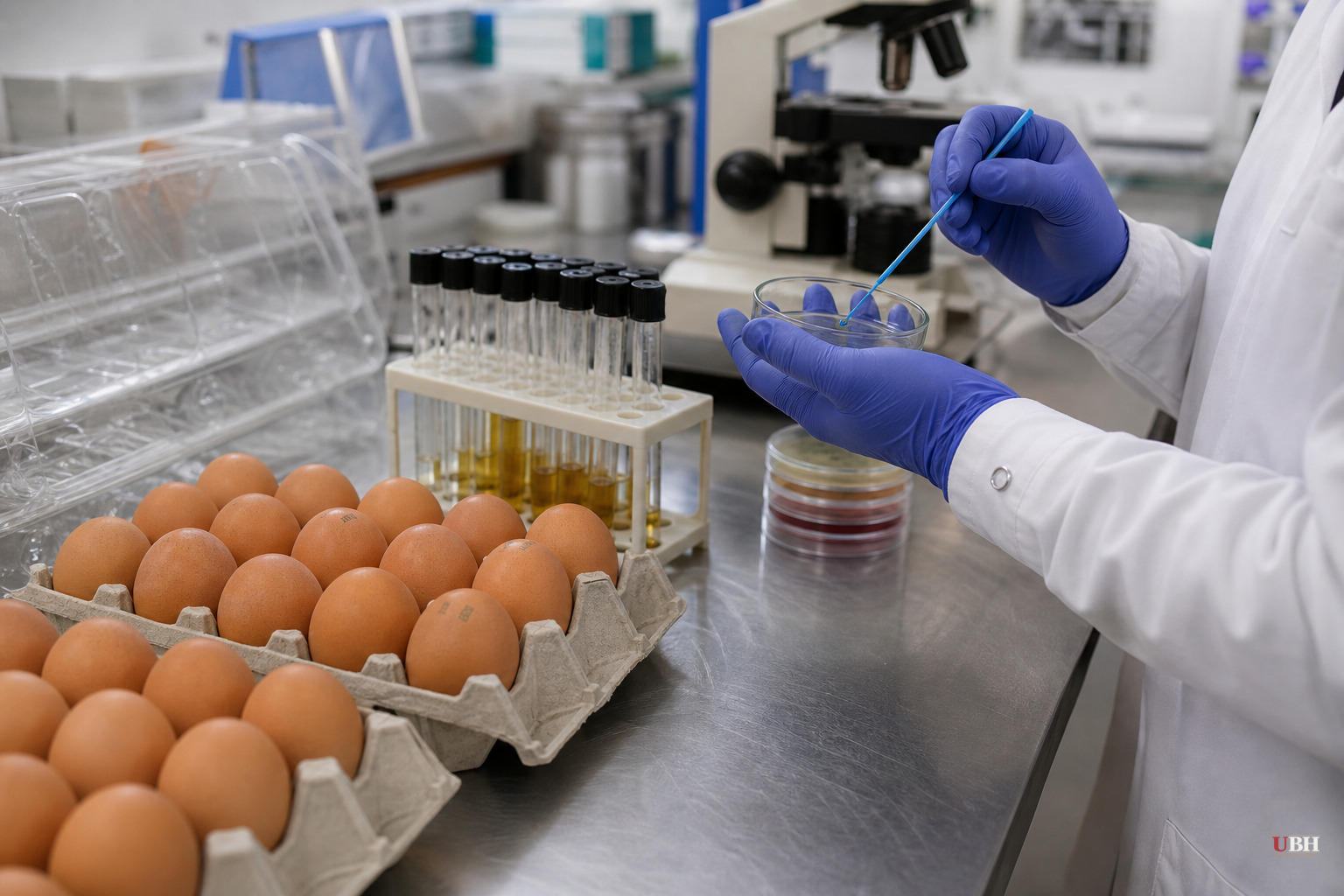
Midwest Poultry Services, L.P., a large shell-egg producer based in North Manchester, Indiana, issued a voluntary recall Wednesday, July 22, covering 1,589,577 dozen eggs, roughly 19 million individual eggs, over possible Salmonella Enteritidis contamination, according to the FDA recall notice.
The eggs came from two of the company's Texas farms. Midwest Poultry found the problem through what it called "proactive environmental monitoring practices and root cause analysis," according to both the FDA notice and CBS News. The company has stopped distributing fresh eggs from those two farms.
What's Affected
The recall covers white-shell eggs and brown cage-free shell eggs produced between June 6 and July 3, 2026. Sell-by or best-by dates on the cartons run from July 20 through August 17, 2026.
The eggs were sold under several brand names, including Kroger, Simple Truth, Brookshire's, Country Morning and Sunups, according to CBS News. They shipped to retail and foodservice customers in Texas, Oklahoma, Louisiana, Arkansas, New Mexico and Mississippi, per Click2Houston.
Kroger stores in Texas and Louisiana carried the recalled eggs. Brookshire Grocery stores in Texas, Oklahoma, Arkansas, Louisiana, New Mexico and Mississippi also sold them, along with unnamed smaller retailers, according to the New York Post's review of the FDA notice.
Every recalled carton has a code printed in date-coding ink on the side, either P-1950 or 0840962, paired with a Julian date between 157 and 184. If your carton doesn't match those exact codes and date range, it's not part of this recall. Consumers can call Midwest Poultry Services at 574-405-9531, Monday through Friday, 8 a.m. to 4:30 p.m. ET, to confirm.
No Confirmed Illnesses Yet
Midwest Poultry Services says it has not been notified of any confirmed illnesses tied to these eggs, a point all three outlets covering this story confirm. This is a precautionary recall triggered by environmental testing at the farms, not a response to a documented outbreak. The company caught the potential problem before it showed up in hospital records, which is exactly how the system is supposed to work.
That said, Salmonella Enteritidis is nothing to shrug off. The CDC says symptoms, typically fever, diarrhea, nausea, vomiting and abdominal pain, can show up anywhere from six hours to six days after eating contaminated food. Most healthy adults recover in four to seven days without treatment. But the FDA warns that in rare cases the bacteria can enter the bloodstream and cause more severe complications like arterial infections or endocarditis, particularly dangerous for young children, the elderly and people with weakened immune systems.
Timing Isn't Great
This recall lands just weeks after a separate cyclosporiasis outbreak tied to fresh produce like lettuce sickened people with explosive diarrhea, as the New York Post noted. Two food-safety scares in close succession doesn't mean the food supply is falling apart, but it's a reasonable reminder that the FDA's recall system depends heavily on companies self-reporting problems they find through their own testing.
Midwest Poultry Services caught this through its own internal monitoring, not a federal inspector walking the farm. The system largely runs on voluntary compliance and self-disclosure, backed by the threat of FDA enforcement and liability if a company hides a problem. Critics of that model would say it puts a lot of faith in producers to police themselves. Defenders would say it's precisely this kind of proactive testing, catching contamination before anyone gets sick, that shows the model working as intended.
What To Do Right Now
If you've got eggs in the fridge from Kroger, Brookshire's, or any of the affected brands, check the sell-by date and the code on the carton. If it matches, don't eat them. Return them to the store for a full refund, no receipt needed.
Midwest Poultry Services has not said how the contamination got onto the two Texas farms in the first place, and no cause has been publicly identified yet. Whether the company or the FDA releases more detail on the root cause, and whether any illnesses eventually get linked to these eggs despite the current zero-count, remains to be seen.
Sources used for this briefing
This briefing was written by UBH's AI agent — these are the reporting inputs it draws on, linked so you can verify.


